DairyNZ Strategy Review: Farmer Feedback Closes 15 Nov
Farmers have until the end of this week to help shape DairyNZ’s future focus.
 increase font size
 Jim van der Poel.
OPINION: The Essential Freshwater policy’s new nitrogen cap has a barb in the tail for dairy farmers and particularly those in Canterbury.
While the overall package announced last month was an improvement on the earlier version, it surprised many that the nitrogen cap of 190kg per hectare per year would be applied so quickly and only to pastoral farmers.
The cap begins in July 2021, and only dairy farmers must report fertiliser use to their regional council.
When it comes to achieving healthy waterways, we all have a role to play. Dairy farmers have been doing a lot of good work over the past decade and recognise that we are part of the solution. But rules must be applied equitably, not only between farmers, but also between rural and urban communities.
The cap for just pastoral farmers is not equitable and it’s out of step with the Government’s own Essential Freshwater principles. Dairy farmers have already done a lot of good work, but want to know that every farmer or grower applying nitrogen must adhere to the same rules, to achieve the same outcome.
Decisions on farm systems and what to plant are made many months in advance and the timelines for the new rules present significant upheaval.
There are real solutions to be found and DairyNZ is working hard to explore these.
But good science to inform on-farm practice takes time.
Farmers are already innovative in reducing N losses and will continue to be. In Canterbury, farmers are investing thousands of dollars to upgrade irrigation systems.
The precision irrigation technologies are very effective at reducing nitrogen leaching, while also improving water use efficiency.
Over 10,000 nutrient budgets are in use on dairy farms to look at the farm’s soils, rainfall, crop and pasture, stock, supplementary feed and irrigation. These budgets inform accurate fertiliser application.
We look forward to working together with government to ensure these policies are translated into pragmatic and balanced rules for all farmers and to achieving our shared goals for healthy waterways.
• Jim van der Poel is DairyNZ chairman
Farmers have until the end of this week to help shape DairyNZ’s future focus.
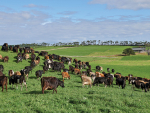
The New Zealand dairy sector set a record in the 2025/26 season, producing more than two billion kilograms of milksolids for the first time.
Students will be able to study Agriculture and Horticultural Science from Year 11, creating a clear pathway into Years 12 and 13 and future careers in New Zealand’s primary industries, Education Minister Erica Stanford says.
OPINION: New Zealand dairy is delivering. In the year to June, dairy exports earned a record $28.8 billion for New Zealand. They were part of a record $65.2 billion earned by our wider food and fibre sector.
Today, 15 October, is the International Day of Rural Women, which recognises rural women’s contribution to farming, communities and the environment.

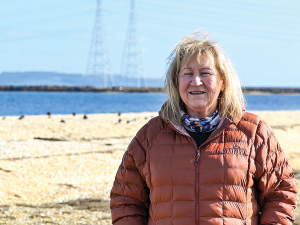
For 15 years, Glenda Rees has travelled from Gore to Awarua, often several times a week, to keep watch over one of the country’s rarest birds.
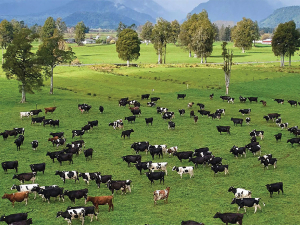
With some farmers opposing a government-industry partnership set up to develop methane reducing products, one NZ company claims that it already has a product on the market.
During the nesting season, from September to December, industrious starlings can quickly build nests in the darker areas behind tractor and vehicle, usually close to hot engines, typically resulting in localised damage or in some cases complete write-offs.
The meat processing industry is much more collegial than it was in the past and is now more focused on common goals.
With the last couple of months having seen some potential tractor purchases put on hold with the impending election and continued input cost rises, year-to-date figures, ending September, has seen deliveries up around 5% over the same period in 2025, with a total of 2026 units.
Beef+Lamb New Zealand is calling for nominations for director roles in the Northern South Island and Northern North Island electoral districts.