Ah Tatua, You've Done It Again!
Waikato milk processor Tatua has again declared a record milk payout to farmer shareholders, leaving other processors in the dust.
 increase font size
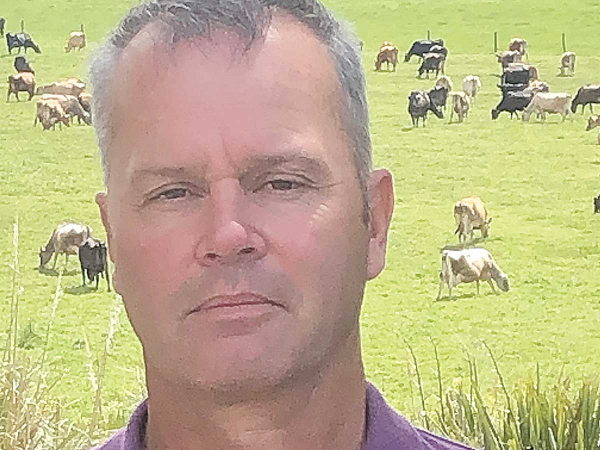 Simon Couper.
Former Fonterra Shareholders Council chair and Waipu farmer Simon Couper suggests they should be reviewing strategy, not the council.
This is the first of five articles aiming to demonstrate dairy industry strategies in NZ and provide a perspective for viewing Fonterra’s strategy.
The aim of this article is to briefly explain why strategy is important, identify the key strategic positions within the NZ dairy industry and outline three observable firms that lead in these positions.
So what is a strategy and why is it important?
A strategy is a framework for how we make business decisions. Every decision within an organisation should fit in or be guided by the strategy. A good strategy should determine an organisations purpose, what its long run goals are and scrupulously prioritise its capital of natural resources, intellectual capability and financial assets to achieve them. If a strategy is unfocused an organisation runs the risk of going in too many directions, suffering confusion and loss of its competitive advantage.
Later on we will look at the key elements a good strategy should contain.
Right now we will look at the three distinct strategic positions currently available in the NZ dairy industry.
Cost leader – (lowest cost producer)
Product leader
– customer intimacy (customer intimacy and specialised products)
Product leader
- differentiation (identifiable point of difference )
Open Country Dairy (OCD) – cost leader
OCD describes its vision, business and values as taking pride in creating quality world class dairy products.
We all know that OCD’s core strategic advantage is the low cost production of dairy commodities. OCD incurs little research and development, marketing cost and has low overheads. Producing less than 30 products keeps the operation simple and efficient. We can measure OCD’s success by observing its growing infrastructure (factories), 18% debt to debt plus equity and an 11% Return on Capital Employed (ROCE)*.
Tatua – product leader – customer intimacy
Tatua describes its vision and business as striving to be “the leading global supplier of specialised dairy products”. With a clear customer focus its values describe how it aims to achieve this.
As has been clearly observable, Tatua’s core strategic advantage as a product leader is its ability to provide specialty ingredients and value add products. Tatua’s success can be measured by its low debt to debt plus equity of 37%, leading payout to farmer suppliers and a ROCE* of 19%.
a2 Milk Company – product leader - differentiated
a2 Milk Company clearly commands a point of differentiation in the dairy market. At this stage success of a2 can be observed by its market capitalisation (now greater than Fonterra) and a stranglehold of the a2 consumer market. a2 Milk Company has achieved success by focussing on marketing the scientific differentiation of its product. With ownership of patents and clever strategic supplier agreements it has (at this stage) locked other milk producers out of this market. As a milk marketing company (a2 owns shares in Synlait) and is now potentially buying into Mataura Valley Milk)).
The triangle below illustrates the three firms occupying three different strategic positions. They have the competitive advantage for their respective strategic positions as defined by ROCE, balance sheet strength and growth of supply or capitalisation.
These three firms have been outlined to identify the three distinct areas within the NZ dairy market where a strategic business advantage can be found and how it has been achieved.
With a ROCE* of 6%, where would Fonterra sit within this framework?
In the next article we will look further into how processing companies seek to defend their strategic positions in their pursuit of operating at the efficient commercial frontier.
• Return on Capital figures are 5 year average sourced from TDB advisory 2019.
Waikato milk processor Tatua has again declared a record milk payout to farmer shareholders, leaving other processors in the dust.
Fonterra has unveiled its annual results for the 2026 financial year, posting $27 billion in revenue and close to $20 billion returned to New Zealand farmer owners and unit holders.
Fonterra Co-operative Group has confirmed the independently assessed candidates standing for election to its board in 2026.
Fonterra has revised its Farmgate Milk Price forecast for the 2026/27 season, lifting the midpoint and narrowing the range on the back of improving global dairy commodity prices.
Outgoing Fonterra Co-operative Council chair John Stevenson says that it has been a privilege to represent the co-op's farmer shareholders.

Farmer-owned fertiliser company, Ballance Agri Nutrients is welcoming National’s plan to negotiate security agreements with key supplier countries to protect New Zealand-bound products from export restrictions and greater supply chain certainty.

Carrfields has announced the appointment of Stu Hall to the newly created role of chief operating officer, Carrfields Ltd, reflecting the continued growth of their agribusinesses and the need to ensure the company has the leadership capacity and support in place as it pursues the emerging opportunities ahead.
New Zealand's role is not to compete with Indian growers, according to NZ Apples and Pears.
The potato industry is celebrating the success of two rising stars - James Blair, the 2026 Young Grower of the Year and runner-up and innovation award winner, Amber Davy.
Twenty-eight emerging leaders from across the horticulture sector spent two days last month learning valuable skills and connecting with industry experts.
There are five entrants in this year’s Young Horticulturist of the Year, competing in a series of technical, practical, business and leadership challenges.