Why Now Is the Time to Plan Farm Succession, Findex Says
OPINION: Succession and long-term planning are perennial topics because it is perpetually sidelined on busy farms.
 increase font size
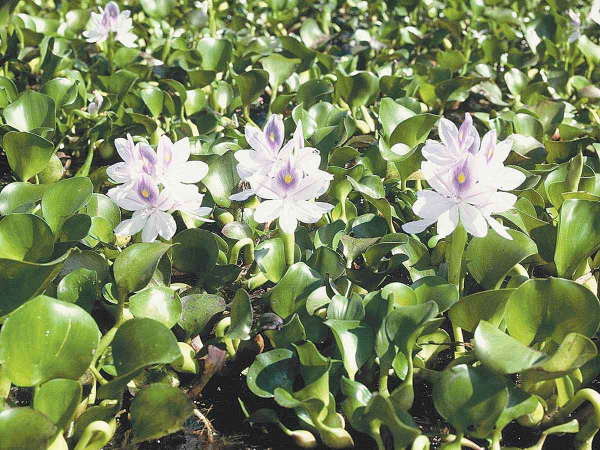 Water hyacinth is a serious water weed and is infamous for its invasive, fast-growing nature.
OPINION: Last summer, a couple out exercising their dog took their usual walk around a local public reserve in Pukekohe.
As they passed a stormwater pond, something caught their eye: a vibrant green plant with purple flowers, floating on the water's surface. It looked healthy, almost ornamental.
Only a few months later, that seemingly innocent plant had exploded across three-quarters of the water's surface, forming an impenetrable mat.
Water hyacinth (Pontederia crassipes) is a serious water weed and is infamous for its invasive, fast-growing nature. Given the right conditions, a single small infestation can double in size in just one to two weeks.
At first glance, water hyacinth may appear too pretty to be a problem with its stunning lilac-coloured flowers from mid-summer to early autumn, each stalk boasting up to 20 delicate blooms. But beneath its beauty lurks an ecological nightmare.
Water hyacinth doesn't just spread outward - it grows downward, with roots extending up to a metre deep. It forms dense mats that can reduce water quality, change water flows and increase sediment, crowdign out native aquatic plants and animals, altering ecosystems, destroying habitats, and blocking irrigation systems.
It is also an expert at long-term survival. Each water hyacinth flower, once fertilised, produces hundreds of tiny seeds that sink to the bottom of waterways where they can remain viable for three decades, waiting for the perfect conditions to sprout.
Water hyacinth is an unwanted organism in New Zealand, meaning it is illegal to sell, grow, display or distribute it. It is also a notifiable organism - so if you do spot it, you must report it immediately to Biosecurity New Zealand.
Thanks to the sharp eyes of the Pukekohe couple, the outbreak in their local park was identified before it could spread further. Biosecurity officers were able to remove the plants, and the pond will be monitored for the next 30 years.
What can you do?
New Zealand's biosecurity depends on all of us.
If you think you've found water hyacinth, report it to Biosecurity New Zealand at 0800 80 99 66 or report.mpi.govt.nz/
John Walsh is director Pest Management at Biosecurity New Zealand.
OPINION: Succession and long-term planning are perennial topics because it is perpetually sidelined on busy farms.

OPINION: One of the privileges of judging the Ballance Farm Environment Awards for more than a decade is the opportunity to spend time on farms and orchards across New Zealand and hear from people constantly looking for ways to improve their businesses.
OPINION: It appears to be difficult for people who haven’t tried to run a business to understand the difference between assets and cash.
OPINION: David Seymour and James Meager's plan to make it easier for farmers and orchardists to operate drones can best be described a 'courageous' move.
OPINION: In politics, credibility is and should be big. It must surely rank higher than charisma, which is quite trite and superficial. Yet, voters nowadays are often wooed and influenced by how someone looks or talks at a superficial level. TV plays a huge role in this.


Converting a longstanding cropping farm to dairy was the only way to ensure the land stayed in the family long term, says new dairy farmer Rod May.

As the election heats up, Organics Aotearoa New Zealand (OANZ) has launched its election scorecard designed to help voters wanting to support policies that grow organic and New Zealand's organic sector.
A 'tsunami' of milk from key exporting countries is winding down and this may be good news for New Zealand dairy farmers.
Will the good times last? That's one of the key issues to come out of the latest Federated Farmers confidence survey.
Outgoing Fonterra Co-operative Council chair John Stevenson says that it has been a privilege to represent the co-op's farmer shareholders.
Have a plan in place for your cows and staff.