
Why Now Is the Time to Plan Farm Succession, Findex Says
OPINION: Succession and long-term planning are perennial topics because it is perpetually sidelined on busy farms.




 increase font size
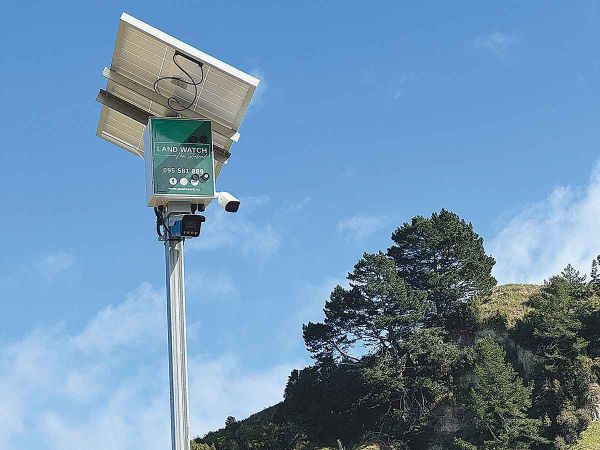 Advances in on-farm surveillance technology are now helping farmers take a more proactive approach to security.
OPINION: Dairy farmers are under increasing pressure to safeguard their livestock, equipment and operations from a range of security threats.
From biosecurity breaches, cattle theft, activist trespassing and cybersecurity threats to occupational health and safety, protecting productivity is becoming just as important as managing herd health and milk output.
While traditional security measures play a role, advances in on-farm surveillance technology are now helping dairy producers take a more proactive approach to security and farm management.
Rigorous protocols, systems and processes required within the dairy industry often leave producers overwhelmed in 24/7 monitoring activities. But how do you monitor employee welfare and safety, as well as biosecurity, whilst also keeping an eye on the cows in the paddock and the milking shed?
Integrating the entire operation through multiple watchful eyes is Land Watch New Zealand’s way of keeping dairy producers, their cattle and their farms safe.
Land Watch New Zealand has witnessed a rapid increase in interest in surveillance solutions among dairy farmers as producers look for ways to enhance security, improve efficiency, and reduce risks. With this insight, we reviewed the multiple operational points within a dairy farm that could be suspect to security threats, as well as considering where overall management of the property could be optimised.
Farm entry points - the first barrier of security. Staff vehicles, couriers, trucks delivering fuel and other suppliers all enter dairy farms multiple times a day. Controlling access and keeping a record of vehicle movements helps track milk collection and deliveries. With Automatic Number Plate Recognition (ANPR), footage can now be cross-referenced with farm records for greater accountability. Biosecurity breaches often occur mostly at this first point of entry. Whether it is the delivery driver or the employee, having eyes on this point of entry can enable linkages to the biosecurity breach.
Shed security - the operational hub. Machinery, tools, supplies and parts are all located within the sheds and can be exposed to free picking by thieves. Monitoring movement within and around the sheds can help deter theft and unauthorised usage of farm machinery. Video records of work areas can also provide crucial insights in case of an accident, ensuring that safety protocols are being followed and providing evidence for incident reviews.
Animal and employee welfare - important adherence to industry welfare standards. Surveillance can clarify events in case of an injury or dispute, assisting in investigations and safety improvements.
Quality control - monitor adherence to dairy hygiene control measures. Reviewing footage of milk transfers can help maintain hygiene standards and track any anomalies in the collection process.
Paddock surveillance - livestock is at the heart of all operations. Keeping an eye on stock movements, herd conditions, and calving paddocks can improve feed and stock management, as well as animal welfare.
Fuel surveillance - Fuel is one of the most expensive inputs on a farm, and its proper management can save thousands of dollars annually.
New Zealand’s biosecurity has been a recent topic of conversation with the consultation and amendment to the Biosecurity Act 1993. The proposed amendments aim to modernise and strengthen the country’s biosecurity system across six key areas, including improved decision- making, funding, border processes, emergency response, and longterm pest management. The changes also seek to enhance surveillance and align the Act more effectively with other relevant legislation.
Every stakeholder along the agricultural supply chain has a role to play. Having an extra set of eyes on all operational points means manual checks can be reduced, whilst ensuring compliance is being adhered to. Backed by industry-leading surveillance technology, producers have the confidence that their biosecurity measures are being upheld—even when they themselves aren’t watching.
Rather than leaving things to chance, implementing a well-structured security plan can provide peace of mind and operational efficiency.
In an industry where every drop of milk counts, having a structured security plan ensures that nothing is left to chance.
John Hill is co-founder of Land Watch New Zealand.
OPINION: Succession and long-term planning are perennial topics because it is perpetually sidelined on busy farms.

OPINION: One of the privileges of judging the Ballance Farm Environment Awards for more than a decade is the opportunity to spend time on farms and orchards across New Zealand and hear from people constantly looking for ways to improve their businesses.
OPINION: The stats speak for themselves.
Farms across the upper North Island are trialling different pasture mixes as part of a research programme that aims to build greater resilience into farming systems.
Election years are always a concerning time for farmers, according to DairyNZ chair Tracy Brown.


National’s pledge to introduce 19 new national standards shows the party is serious about getting Wellington out of farming, Federated Farmers says.
The National Party’s policies to make it easier to grow fresh vegetables, secure reliable water and energy and simplify farm planning are practical changes that will give growers the confidence to invest, according to Horticulture New Zealand (HortNZ).
Fonterra Co-operative Group chief financial officer Andrew Murray has resigned to take up a role outside the dairy giant.
A major move is about to get underway to improve the quality and viability of dairy beef and cattle in NZ.
Veterinarians say changes to the code of welfare for dairy cattle provides a positive foundation for improved cattle welfare across the country.
Today, 15 October, is the International Day of Rural Women, which recognises rural women’s contribution to farming, communities and the environment.


OPINION: The same mainstream media muppets that brought you Jacindamania in 2017 have been flat out pimping for the Opportunities…
OPINION: Your old mate reckons the atrocious way farmers in the UK are treated by their lords and masters in…




