Fonterra's New Roadmap Targets Climate, Nature, Animals
Climate, nature and animal wellbeing make up Fonterra's refreshed sustainability roadmap released last week.
 increase font size
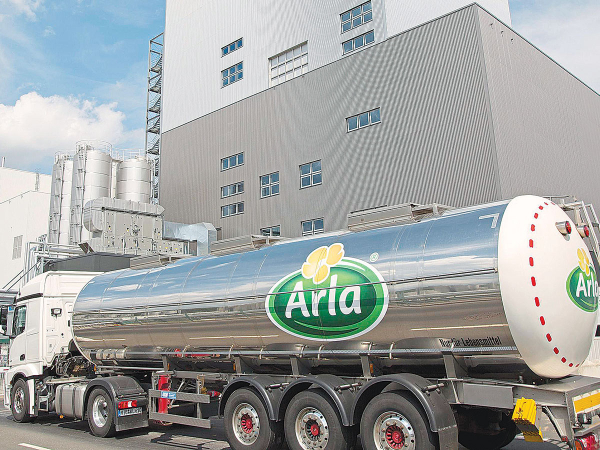 Arla says more and more of its retail and foodservice customers are increasing focus on reducing their scope 3 emissions.
Danish dairy co-operative Arla Foods is accelerating sustainability efforts on farm to help customers achieve their reduction targets for scope 3 emissions targets.
The programme will be launched in the UK first where commercial agreements covering more than 1 billion kilograms of milk are already in place, Arla says.
More and more of Arla's retail and foodservice customers are getting their climate ambitions approved by The Science Based Targets Initiative, which means an increasing focus on reducing their scope 3 emissions. And for some customers, dairy constitutes a significant part of their scope 3, notes Arla.
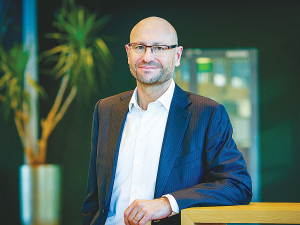
Arla chief operating officer Peter Giortz-Carlsen says driving down scope 3 emissions is another way of bringing value to its customers.
"We want to be a strategic partner for them in that journey. Dairy is an important category for our retail and foodservice customers, and for some of them, emissions from dairy constitute a significant part of their scope 3 emissions.
"Currently, this translates into increased interest in entering into partnerships, which we welcome. Our scope 3 leadership also provides us with new commercial and strategic opportunities for our milk pool," says Giortz-Carlsen.
Customers who have signed up to the Customer Sustainability Programme will partner with Arla, seeing extra money go into the cooperative's ongoing efforts to reduce emissons on-farm. Arla will also run projects with the participating customers and their aligned Arla farmers that look to reduce on-farm emissions through new research and testing new innovations for potential scaling within areas such as feed additives, herd genetics, biodiversity and fertiliser use.
The Sustainability Customer Programme will be launched firstly in the UK where the first contracts with customers Aldi, Asda, Morrisons and Starbucks covering more than 1 billion kilos of milk is already in place. The programme will be rolled out across Asda's core European markets during 2024.
"In our strategy we focus extensively on driving down our on-farm scope 3 emissions as they make up the vast majority of our emissions," says Giortz-Carlsen.
"In Arla, the breakthroughs are happening now. We believe we have found an impactful route and levers to drie down scope 3 emissions, and we are strongly committed to this effort as it benefits the planet and brings value to our customers. But we do it for dairy too - dairy provides significant nutritional benefits to human diet, which must not be jeopardized due to its impact on climate and the environment."
The milk pool available to the customers in the programme is covered by Arla's Climate Check programme and is also part of the new Sustainability Incentive Model which was developed in close collaboration with the 8,500 farmer owners in Arla. In the model, Arla has earmarked up to 500m Euro annually until 2030 to reward and incenrtivise climate initiatives on farm via a new point-based supplement to the monthly milk price.
Arla's scope 3 emissions constitute about 96% of total emissions and if isolating emissions from the dairy farms, these constitute 81% of Arla's total emissions. In 2019, Arla was among the first dairy companies globally to set an SBTi scope 3 emissions reduction with a target of 30% per kg of milk towards 2030 against a 2015 baseline.
Climate, nature and animal wellbeing make up Fonterra's refreshed sustainability roadmap released last week.
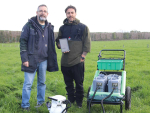
Researchers at Massey University are using a special piece of scientific equipment to improve the measurement of greenhouse gas emissions from pasture soils.
A hypothesis in a major dairy research programme that bulls genetically proven to be low methane producers could pass this trait onto their lactating daughters has been proven to be incorrect.
New research suggests sheep and beef farmers could improve both profitability and emissions efficiency by increasing lamb weaning weights, with only marginal changes in total greenhouse gas emissions.
Reducing emissions is a constant battle at Yealands Wines in the Awatere Valley, with nearly 20 years chipping away at carbon.

Farmer-owned fertiliser company, Ballance Agri Nutrients is welcoming National’s plan to negotiate security agreements with key supplier countries to protect New Zealand-bound products from export restrictions and greater supply chain certainty.

Carrfields has announced the appointment of Stu Hall to the newly created role of chief operating officer, Carrfields Ltd, reflecting the continued growth of their agribusinesses and the need to ensure the company has the leadership capacity and support in place as it pursues the emerging opportunities ahead.
New Zealand's role is not to compete with Indian growers, according to NZ Apples and Pears.
The potato industry is celebrating the success of two rising stars - James Blair, the 2026 Young Grower of the Year and runner-up and innovation award winner, Amber Davy.
Twenty-eight emerging leaders from across the horticulture sector spent two days last month learning valuable skills and connecting with industry experts.
There are five entrants in this year’s Young Horticulturist of the Year, competing in a series of technical, practical, business and leadership challenges.