NZ Apples Head to India: Apple Action Plan Gets a Leader
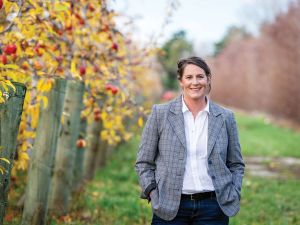
A seasoned horticulturist has been appointed to deliver the Apple Action Plan, a key initiative of the India-New Zealand Free Trade Agreement.
 increase font size
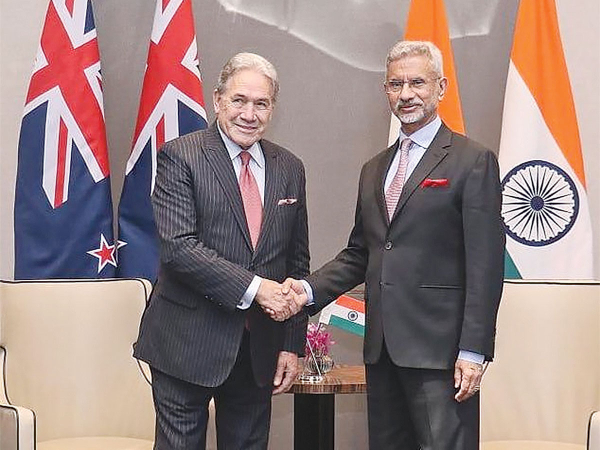 Foreign Affairs Minister Winston Peters meeting his Indian counterpart Subrahmanyam Jaishankar during a visit to New Delhi.
This past week has seen another round of negotiations between India and New Zealand to produce a free trade agreement (FTA) between the two countries.
A team of NZ officials from several government departments, led by the Ministry of Foreign Affairs and Trade (MFAT), have been in Delhi for talks with their Indian counterparts. These talks are between officials only and no politicians have been involved in the negotiations.
This latest round of talks is part of the ongoing process to reach agreement on an FTA. Every month there are four or five days of 'virtual' negotiations, followed up by face-to-face meetings between the two parties.
The FTA consists of 19 chapters or separate parts and is identical in structure to other FTAs that NZ has secured. The focus ranges from issues around rules, phytosanitary standards, a chapter on composition, services and, of course, trade.
While NZ is pressing for dairy to be included in the FTA, the chances of this are nil, and we are not being singled out in this regard. Britain and Australia, who have FTAs with India, also had dairy excluded from their respective agreements.
A couple of issues on the trade side that NZ is pushing hard on are apples and honey. Currently, India imposes a 50% tariff on apples which limits our ability to access that market. While India does produce apples, they are of course seasonal and what the NZ negotiators are trying to do is convince the Indians to allow NZ fruit in only when the local supply dries up.
The NZ position is that having apples on the market for 12 months of the year ensures that consumers have continuous supply which makes good marketing sense.
What NZ is saying is we will fill that gap in local supply and be gone when Indian fruit come on the market. This is an argument that we have successfully pursued with other primary products in the Northern Hemisphere.
The other issue is honey, and NZ is again trying to get access for manuka honey which has a high price point, well above the local produce.
The FTA with India is seen as a high priority for our government and it's proceeding at pace. The stakes are high. Over the past couple of weeks, NZ will have had about 15 people in Delhi at various stages of this latest round of talks. It's believed India will likely have double that number of people.
At the same time, the political tempo is being kept up with Trade Minister Todd McClay making regular trips to India along with Prime Minister Christopher Luxon there in March and Foreign Minister Winston Peters there some weeks ago.
A seasoned horticulturist has been appointed to deliver the Apple Action Plan, a key initiative of the India-New Zealand Free Trade Agreement.

National’s much-touted free trade deal with India featured in the Rural Issues Debate at Mystery Creek, Hamilton on Wednesday night.
OPINION: The United States wine market has changed forever, and companies cannot use same old playbook, said Erin Kirschenmann at the New Zealand Wine 2026 Wine Business Forum in August.
OPINION: Get offside with New Zealand First leader Winston Peters at your own peril.
Chinese beef trade quotas and a looming suspension of Brazilian beef imports into the European Union are expected to reshape global beef trade flows over the remainder of 2026, with implications for New Zealand exporters, according to Rabobank's Q3 Global Beef Quarterly report.


National’s pledge to introduce 19 new national standards shows the party is serious about getting Wellington out of farming, Federated Farmers says.
The National Party’s policies to make it easier to grow fresh vegetables, secure reliable water and energy and simplify farm planning are practical changes that will give growers the confidence to invest, according to Horticulture New Zealand (HortNZ).
Fonterra Co-operative Group chief financial officer Andrew Murray has resigned to take up a role outside the dairy giant.
A major move is about to get underway to improve the quality and viability of dairy beef and cattle in NZ.
Veterinarians say changes to the code of welfare for dairy cattle provides a positive foundation for improved cattle welfare across the country.
Today, 15 October, is the International Day of Rural Women, which recognises rural women’s contribution to farming, communities and the environment.