Diplomatic Incident
OPINION: Your old mate hears an international incident is threatening to blow up the long-standing Anzac alliance as Kiwis and Aussies argue over who wants new Australian resident and former NZ Prime Minister Jacinda Ardern.
 increase font size
 Figures for the month of February show a 13% increase on the same time last year and 6.5% growth since the start of the 2015-16 financial year.
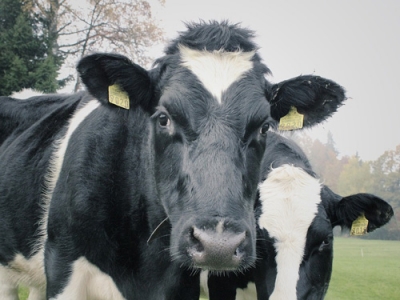
West Australian milk production is booming on the back of its higher farm milk price of more than A$7/kgMS.
The latest Dairy Australia milk production figures for the month of February show a 13% increase on the same time last year and 6.5% growth since the start of the 2015-16 financial year.
"That's solid growth, by and large the result of farmgate prices," says industry analyst John Droppert.
"Not necessarily so much now, but in the last few years there have been many contracts at higher prices with strong competition for milk supply and those in turn have stimulated production."
Droppert avoids generalising about different prices across Australia but he estimates for West Australia (WA) it is A43c-55c/L.
"There's a fair bit of variation, but around A50c/L (about A$7/kgMS) and over is a good price compared to Victoria and it's pretty good historically for WA."
He said the farmgate milk price had been reasonable in WA this season and the one before. "Sustained pricing drives growth," Droppert says.
He said the WA market has recovered well from the days when milk was trucked across the Nullarbor Plain at a high cost.
"The aim of the game a few years ago was to secure the milk supply and so the three companies operating there were competing for a scarce supply," he says.
"That's when there were good prices long-term; three year contracts were being offered."
Contrast that to the south-eastern states: Victoria experienced a 3.3% drop in production vs the same time last year.
"It was a bigger drop than I expected," he says. "The milder weather might have been expected to moderate things a bit but a lot of the decisions already made can't be undone and a lot of farmers short of feed are budgeting on a lower milk price than they might have hoped for."
With dry conditions lasting through the next month, he didn't expect the March figures for Victoria to change dramatically.
"The fall in Victoria is largely climatic but also highlights the southern states' increased exposure to international markets," he says. "We hope some closer-to-average rainfall will help to put feed in front of them going into winter."
Despite a dry month, Tasmania production was 2.2% higher than the previous year.
Nationally, production was down 1.5% on the same time last year. Year to date the nation's dairies have produced 6.98 billion L (down 0.7%).
OPINION: Your old mate hears an international incident is threatening to blow up the long-standing Anzac alliance as Kiwis and Aussies argue over who wants new Australian resident and former NZ Prime Minister Jacinda Ardern.

OPINION: Your old mate hears that at a recent China Business Summit, PM Christopher Luxon delivered a none-too-subtle "could try harder" report card on the red meat industry regarding its exports to China - particularly when compared to Australia.
More Australian states are embracing virtual fencing technology, opening growth opportunities for Kiwi companies like Halter.
Fonterra says its ongoing legal battle with Australian processor Bega Cheese won’t change its divestment plans.
Farmers in the Australian state of New South Wales will soon be able to use virtual fencing and herding technology to boost farm productivity.


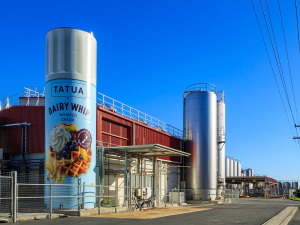
Waikato milk processor Tatua has again declared a record milk payout to farmer shareholders, leaving other processors in the dust.

A Labour-led Government won’t be bringing back the controversial freshwater rules of 2020.
National’s much-touted free trade deal with India featured in the Rural Issues Debate at Mystery Creek, Hamilton on Wednesday night.
New Zealand's 2026-27 freshwater fishing season has opened, with anglers encouraged to head to rivers and lakes over the coming days as conditions look favourable across much of the country.
Central Otago District Council (CODC) has voted against a plan to spread treated sewage sludge from Cromwell and Alexandra on farmland near Lauder, a decision Federated Farmers says reflects strong opposition from rural residents.
Pāmu has released its FY26 Integrated Annual Report, reporting a Net Operating Profit of $113 million, more than double the $49 million recorded in FY25.