
Diplomatic Incident
OPINION: Your old mate hears an international incident is threatening to blow up the long-standing Anzac alliance as Kiwis and Aussies argue over who wants new Australian resident and former NZ Prime Minister Jacinda Ardern.




 increase font size
 NFF president David Jochinke
Australian farmers advocate NFF says this year’s Federal Election will be a defining moment for Australian agriculture.
The possibility of a minority Australian government, global trade uncertainty with Donald Trump at the helm of the US, and the climate targets hurled at farmers could all have an impact on sector this year, says National Farmers Federation president David Jochinke.
In an article first published on Farm Online, Jochinke says elections are expected before May 17 and the NFF is hitting the ground running.
“Our policy team is working closely with our members to develop the industry’s asks for our current and future political representatives’ consideration.
“I know how sensitive our industry is to being perceived as ‘whinging farmers’, but the harsh truth is there is a long list of challenges that urgently need federal attention.
“If the next government can get policy settings right for agriculture, it will give Australia’s productivity slump a leg up in the right direction. Also, we all know getting these things right can also position agriculture to directly influence the cost of living situation all Australians are sorely feeling.”
He singled out taxes as the one of the main issues.
The proposed ‘super tax’ could be the first cab off the rank this sitting year when both houses return next month to Canberra. The Government attempted to rush the super tax through parliament in the dying moments of 2024, but was ultimately unsuccessful, thanks to a handful of crossbench senators.
“We believe the super tax would be disastrous for the thousands of families who set up self-managed superannuation funds for their farm’s future. We urge the government to reshape this policy before the election,” Jochinke says.
"We’re also seeking commitments to maintain the diesel fuel rebate. Industry is backed by economists in the predication any changes to the treatment of fuel tax credits will cost Australian families and businesses. Then there’s the Biosecurity Protection Levy. This must be scrapped once and for all and replaced with a new funding model developed with industry.
“At every barbecue across regional Australia, usually the first topic that comes up is the state of our roads, which is why we are calling for $1 billion to address the freight supply chain issues plaguing our industry. Current road and rail infrastructure is inefficient and often unsafe. It’s time to invest heavily to save time, money, and most importantly, lives.
“Telecommunications are still treated as a luxury and not a necessity in the bush. This must change. We’re hopeful the Regional Telecommunications Review recommendations will be fully implemented, one of which is to develop a Regional Telecommunications Strategy.
“Australian ag industry remains steadfast in its opposition to the policy to phase out live sheep exports by sea. We will continue to petition the reinstatement of this trade in West Australia.”
Workforce woes continue to be a thorn in productivity’s side. The NFF wants to see the implementation of a dedicated farm visa, ensuring the Working Holiday Maker program continues, and the winding back of harmful Pacific Australia Labour Mobility (PALM) scheme changes.
OPINION: Your old mate hears an international incident is threatening to blow up the long-standing Anzac alliance as Kiwis and Aussies argue over who wants new Australian resident and former NZ Prime Minister Jacinda Ardern.

OPINION: Your old mate hears that at a recent China Business Summit, PM Christopher Luxon delivered a none-too-subtle "could try harder" report card on the red meat industry regarding its exports to China - particularly when compared to Australia.
More Australian states are embracing virtual fencing technology, opening growth opportunities for Kiwi companies like Halter.
Fonterra says its ongoing legal battle with Australian processor Bega Cheese won’t change its divestment plans.
Farmers in the Australian state of New South Wales will soon be able to use virtual fencing and herding technology to boost farm productivity.



LIC shareholders have elected a new North Island representative to the co-operative's Board, along with five representatives to its Shareholder Reference Group (SRG), following the company's Annual Meeting held in Invercargill.
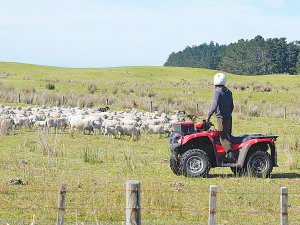
Farmers across parts of Southland and South Otago are continuing to deal with difficult conditions after a prolonged run of wet weather, with pressure building around feed supply, stock management, pasture damage, farm infrastructure and everyday workloads.
Federated Farmers says it welcomes Labour's commitment to reviewing the Sharemilking Agreements Act, calling on other major parties to do the same.
For Canterbury dairy farmers Sian Meijer and Rick Wobben, wearable technology has become one of their most valuable on-farm tools - helping manage 1850 cows across an expansive, high-performing dairy operation while improving efficiency, mating outcomes and day-to-day decision making.
Fonterra has unveiled its annual results for the 2026 financial year, posting $27 billion in revenue and close to $20 billion returned to New Zealand farmer owners and unit holders.
The first major update to the Dairy Cattle Code of Welfare in more than a decade has been released, marking what DairyNZ describes as an important step in ensuring animal welfare standards continue to evolve alongside scientific evidence and on-farm realities.





OPINION: The same mainstream media muppets that brought you Jacindamania in 2017 have been flat out pimping for the Opportunities…
OPINION: Your old mate reckons the atrocious way farmers in the UK are treated by their lords and masters in…




