NZ Apple Sector Pushes for Japan & Korea Market Access
The apple sector is working with the Government to unlock access to two key markets that could bring millions in revenue for apple growers.
 increase font size
 New Zealand Apples and Pears chief executive Karen Morrish.
New Zealand’s apple and pear industry has surpassed $1 billion in orchard gate returns (OGR) for the first time.
Two years on from Cyclone Gabrielle, New Zealand Apples and Pears’ (NZAPI) 2024 economic impact data shows an annual OGR of $1 billion and a total economic impact of $2.5 billion to the New Zealand economy.
It marks a 27% increase on the $1.9 billion total economic impact reported for 2023.
NZAPI says that the upward trajectory is expected to continue with its annual crop estimates predicting the 2025 crop will deliver a 10% increase on exports, from 19.1 million Tray Carton Equivalent (TCE) in 2024 to a potential 21 million TCE in 2025.
NZAPI chief executive Karen Morrish says this season’s crop is a return to form following multiple challenging years for the industry, adding that it is reflective of a move towards more high-value varieties.
“New Zealand apples and pears are renowned as a premium product,” Morrish says.
“While New Zealand is not the biggest supplier of apples in the world, we punch well above our weight globally. Our growers take pride in producing fruit that is healthy, clean and sustainable, and this year’s crop is exactly that.”
Morrish says demand in key export markets is strong, with consumers consistently returning for New Zealand fruit.
“We take immense pride in the economic impact that our industry contributes to New Zealand and the regions we live and work in and our economic impact statistics highlight the value of the industry’s work,” she says.
“With little change in planted area, increasing costs and yet a growth in our economic contribution, we can be confident that this has come from increased productivity, investment in high-value IP varieties and a diversification of international markets,” Morrish says.
“Our industry is pulling sustainable levers to grow our contribution and NZAPI wants to ensure a healthy operating environment that is conducive to prosperity remains.”
The apple sector is working with the Government to unlock access to two key markets that could bring millions in revenue for apple growers.

For 50 years, Tasman's Mel Ewers has been helping the apple sector navigate through compliance issues and training.
For over 50 years Mel Ewers has been supporting the apple sector navigate through compliance and quality assurance issues.
New Zealand apple and pear industry stakeholders are out in force for the annual conference in Queenstown.
More than 300 growers, exporters, researchers, service providers and industry leaders will descend on Queenstown later this month for EXPO 2026, the annual conference for New Zealand’s apple and pear sector.


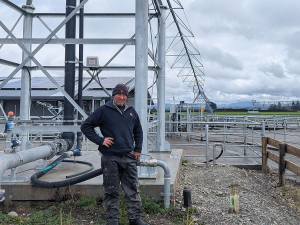
Converting a longstanding cropping farm to dairy was the only way to ensure the land stayed in the family long term, says new dairy farmer Rod May.

As the election heats up, Organics Aotearoa New Zealand (OANZ) has launched its election scorecard designed to help voters wanting to support policies that grow organic and New Zealand's organic sector.
A 'tsunami' of milk from key exporting countries is winding down and this may be good news for New Zealand dairy farmers.
Will the good times last? That's one of the key issues to come out of the latest Federated Farmers confidence survey.
Outgoing Fonterra Co-operative Council chair John Stevenson says that it has been a privilege to represent the co-op's farmer shareholders.
Have a plan in place for your cows and staff.