Future of NZ Agriculture Takes Centre Stage at E Tipu 2026
The New Zealand Future Food and Fibre Summit, E Tipu 2026, is the place for farmers who want to stay ahead in a rapidly changing sector, says FoodHQ chief executive Dr Victoria Hatton.
 increase font size
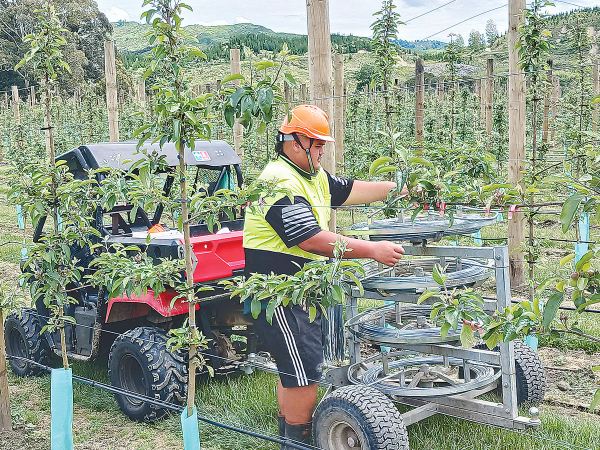 Wairoa iwi is moving into high-production horticulture.
A post settlement treaty organisation in Wairoa is banking on horticulture to boost employment and income for its people.
Tatau Tatau o Te Wairoa Trust’s first foray into horticulture – its commercial arm E Tipu planting 18ha of apples in partnership with Ohuia Incorporation – has been a success and a stepping stone for further growth. This venture was funded through a Provincial Growth Fund loan in 2021 and is already contributing $800,000 annually in salaries to the local economy.
Robin Kaa, general manager of Tatau Tatau Horticulture (Haumako), a subsidiary of E Tipu, told Hort News that this venture has provided them with invaluable lessons and growth. “These have been crucial for the further development we’ve achieved in 2023, and the upcoming projects planned for 2024.”
The Trust has a 109ha farm and currently leases sections for grazing and cropping, with a primary focus on transitioning to high-production horticulture.
“While we haven’t actively engaged in farming as such our focus is on conversion,” says Kaa.
“Horticulture presents a significant opportunity for economic growth and increased returns, creating more jobs, training, and income for our people.
“Situated on the outskirts of Hawke’s Bay and Gisborne, Wairoa benefits from an ideal climate for horticulture. I believe it’s only a matter of time before the horticultural industry and development expand into our region, and who better to lead that growth than the people of Wairoa.”
The Trust has developed a six-year strategy focused on a range of potential crops to ensure both their viability in Wairoa and their marketability.
Kaa points out that their approach to land use and development is guided by their commitment to economic growth, high returns and the creating of sustainable long-term employment.
The Trust has reached out to the Government for more financial support. Recently, Minister for Rural Communities Mark Patterson visited their two orchards.
Kaa says to date they have received support from Ministry for Maori Development, Ministry for Primary Industries and Ministry for Social Development.
“Their support has been crucial to our operations,” he says.
“Minister Patterson’s visit provided an excellent opportunity for us to showcase our achievements and highlight several challenges we are facing.
“These challenges include the need for infrastructure investment, workforce development and training, access to funding and financial support, regulatory support, and assistance for Māori landowners and businesses.”
Kaa says Haumako’s plans include water storage facilities, orchard infrastructure, and the establishment of a first stage packhouse which will provide vital infrastructure for current and future economic growth.
Their goals are to grow diversified crops, employ 35 fulltime orchard staff and develop their own IP brand of fruit. Another goal is to upskill their people to address the high skill demand in horticulture.
Kaa notes that the horticulture industry, like the bigger food and fibre sector, is experiencing labour shortages.
“While horticulture is projected to grow 100%, labour growth is expected to grow only 9%,” he says.
“This highlights the importance of our labour strategy, which focuses on growing and upskilling our people to address the high skill demands. We plan to address labour shortages by primarily developing local talent and only outsourcing labour during peak seasons as needed. Wairoa has a wealth of talent and whānau eager to contribute, making it crucial to harness and develop this local potential.”
The New Zealand Future Food and Fibre Summit, E Tipu 2026, is the place for farmers who want to stay ahead in a rapidly changing sector, says FoodHQ chief executive Dr Victoria Hatton.

The road between Napier and Wairoa is on the mend.
Rugby league legend Tawera Nikau is set to inspire, celebrate and entertain at the East Coast Farming Expo's very popular Property Broker's Evening Muster.
Wairoa Mayor Craig Little says things are still not back to normal for farmers in his district and they are still suffering from problems caused by Cyclone Gabrielle.
The small east coast township of Wairoa is still waiting for an apology from the Hawke's Bay Regional Council (HBRC) following the devastating floods which hit the town in June and damaged hundreds of houses.

For Taupiri dairy farmers Logan and Sian Dawson, their involvement in the NZ Dairy Industry Awards has been a key catalyst in the growth of their business - the experience helping shape how they approach the farm ownership pathway they are pursuing today.
West Otago dairy farmer Luke Kane has been awarded the 2026 Rabobank Dr John Morris Business Development Prize.
OPINION: As the general election approaches, political parties are churning out policies in the hope of attracting more votes.
An LIC bull, Tronnoco AR Sadio-ET S3F, bred by Tony and Keri O'Connor of Tronnoco Farming Co Ltd near Timaru, has won the 2026 Mahoe Trophy.
With forecasters advising El Niño conditions will develop through winter and strengthen into spring and summer, Ballance Agri-Nutrients is encouraging farmers and growers to think ahead about nutrient planning and be prepared to work around challenging weather conditions.
A Palmerston North shearer has been sentenced to six months' community detention and 12 months' supervision after being found to have physically abused three lambs while shearing them.