DairyNZ's Tracy Brown Flags El Nino Risk for Dairy Farms
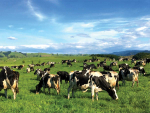
Most dairy regions around the country have had a pretty good season so far says Tracy Brown.
 increase font size
 ASB analyst Nate Keall says dairy demand continues to hold up and proves to be relatively inelastic.
Resilient global demand for dairy and a weaker New Zealand dollar are pushing this season’s forecast milk price towards a record $10/kgMS.
ASB Bank has already lifted its 2022-23 forecast milk price by 80c to $10/kgMS, its first ever double digit forecast.
Fonterra has followed by lifting its milk price forecast range to $8.75 to $10.25/kgMS.
ASB attributes the dramatic rise to two factors: low global milk supply and the New Zealand dollar’s direction of travel.
ASB analyst Nat Keall says that dairy prices underperformed a tad at the recent Global Dairy Trade (GDT) auction, where whole milk powder prices slipped 0.6%.
But he says the last auction result “is not a biggie”.
“A modest dip isn’t a big deal. It’s been a volatile end of autumn and beginning of winter with markets still finding their feet after the lockdowns in China, and Fonterra’s decision to flex the balance of regular and instant WMP on offer over recent auctions.”
Keall points out that WMP prices only need to sit around their current levels (US$4,125/MT) to deliver a record farmgate milk price, so every auction where they hold their ground is effectively a win.
“And as we’ve repeatedly emphasised, it’s important not to panic off the back of modest auction-to-auction shifts. The dairy market fundamentals remain the same.
“Despite mounting headwinds circling the global economy, dairy demand continues to hold up well and prove relatively inelastic.”
Chinese buyers appear to be lifting their purchasing, but with ‘North Asia’ still below where it usually is at this time of year in terms of market share, there is more room for growth.
Keall notes that the most important development recently has been the lower NZD.
He says that a fresh bout of risk aversion among investors and aggressive moves by the Federal Reserve in the US to boost US interest rates have helped snuff out any tentative lift in NZD/USD.
“We’ve adjusted our currency view and think it will be a while before the Kiwi takes flight again.
“Fonterra will have done something like 60-70% of its hedging for the season but, with the NZD dramatically underperforming what we once forecast, the impact on its effective exchange rate for the season will be significant.
“We think a $10/kgMS farmgate milk price could well be on the cards.”
Keall says it may seem odd to boost their forecast after an auction where prices have underperformed.
“But it’s our view on the fundamentals – and more significantly the change in our expectations for the season’s effective exchange rate – that really matter.”
However, Fonterra warns that the global market remains volatile.
Fonterra chief executive Miles Hurrell says the lift in the forecast milk price reflects the milk supply and demand picture and the current strong US Dollar.
The co-op also announced a 2022-23 earnings guidance range of 30-45c/share and provided an update on the co-op’s progress towards its long-term aspirations.
Hurrell says that the strong earnings guidance for next financial year reflects an expected recovery in some of the co-op’s key markets, which have experienced margin pressures this financial year, coupled with ongoing favourable Ingredients margins.
“The wide earnings range for 2022/23 reflects the current high level of uncertainty that comes with operating in a globally-traded, volatile market.
“While the co-op is in the position to be forecasting both solid earnings and a healthy milk price for the next year, significant volatility remains. These near-term headwinds have the potential to impact some of the co-op’s targets.”
Most dairy regions around the country have had a pretty good season so far says Tracy Brown.

Wool Impact and ASB have signed a new partnership with the bank set to provide financial backing to support the revitalisation of New Zealand's strong wool industry.
Fonterra says its interim results show continued momentum in its performance, with revenue of $13.9 billion in the first half of the 2026 financial year.
A solid recovery of global dairy prices this year makes a $9.50/kgMS milk price almost a shoo-in for this season.
Fonterra has slashed another 50c off its milk price forecast as global milk flows shows no sign of easing.


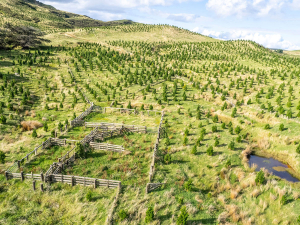
The New Zealand Institute of Forestry (NZIF) says unnecessary changes to New Zealand’s Emissions Trading Scheme (NZ ETS) will seriously erode investor confidence and result in significant reductions in forest planting rates.

For the first time in a quarter of a century, Federated Farmers has something positive to say about the Labour Party’s climate change policy leading into a general election.
A warning for New Zealand seed and grain companies – be prepared for an exodus of farmers from the arable sector.
Now in its fourth year, the 2026 Fencing Industry Awards, formed part of the proceedings of the FCANZ Conference, held in Nelson during August.
DairyNZ deputy chair Cameron Henderson has been re-appointed unopposed for another term.
OPINION: The stats speak for themselves.