Farm Safety Improves Through 'Incremental Gain', Says Birkett
Improving health and safety is about incremental gain rather than a sudden decision, says Leeston farmer and Federated Farmers health and safety spokesman David Birkett.
 increase font size
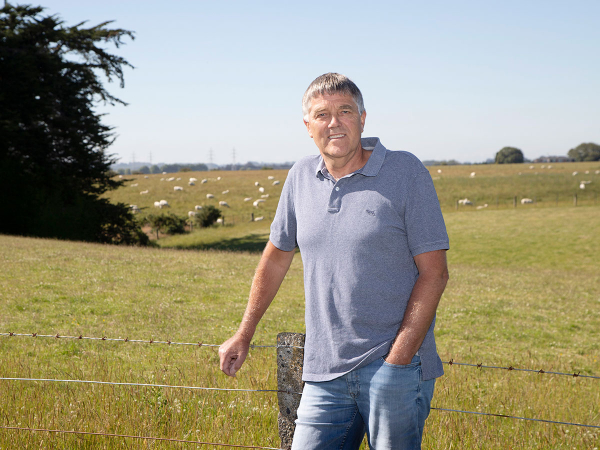 Murray Donald
Southland farmer Murray Donald has been appointed as chair of Safer Farms, the industry-led organisation focused on reducing harm, injuries and fatalities in the agricultural sector.
Donald says he feels privileged to be stepping into the role.
"After more than 40 years in farming, I know first-hand the realities of the job," he says.
"The hard truth is that too many good Kiwi farmers, workers and family members are getting seriously hurt or killed just doing their jobs - producing meat, milk, wool, fruit and vegetables for New Zealand and the world.
The hard truth is that too many good Kiwi farmers, workers and family members are getting seriously hurt or killed just doing their jobs - producing meat, milk, wool, fruit and vegetables for New Zealand and the world.
As well as owning his Southland sheep and beef farm, Donald’s current roles include chairing the Mount Linton Station board. He is also a trustee of the Agri Women’s Development Trust.
His 30-plus years of governance service have included serving on the boards of FMG, Alliance Group, Farmlands and Southern Institute of Technology.
Donald takes over from Wairarapa farmer Lindy Nelson who will remain as a director and ambassador for Farm Without Harm, the sector's strategy to stop preventable harm.
Nelson says she is looking forward to continuing to support the programme.
“This change will allow me the opportunity to do what I love and lean more fully into the Farm Without Harm ambassadorial role, helping bring our vision of everyday farming people protecting one another from preventable harm to life.”
Donald says overseeing the delivery of Farm Without Harm is Safer Farms’ key responsibility and it was encouraging to see how the industry was engaging with it.
“It’s been signed by 170 organisations who regularly engage with over 40,000 farmers and farm workers, because this isn’t about ticking health and safety boxes. It’s about changing culture. Letting farmers farm but making sure we can fail safely and still get home at the end of the day.
“Since 2015, ACC claims for the sector have dropped by more than 26 per cent and farmers deserve a lot of credit. However, there is still much work to be done and we need all farmers on-board.
“Real safety starts with caring - looking out for each other, spotting risks early, fixing systems, and ditching the old ‘she’ll be right’ mindset. Experience is gold, but good systems are what protect us when things don’t go to plan.
“Safer Farms understands farmers and has the trust to lead change. I’m looking forward to getting out and about, talking with farmers, and working together so we can all farm without harm.”
Improving health and safety is about incremental gain rather than a sudden decision, says Leeston farmer and Federated Farmers health and safety spokesman David Birkett.
A huge reduction in ACC claims from on-farm accidents over the last five years is due to thousands of small, practical decisions being made in sheds, yards, paddocks and around kitchen tables across the country, says Safer Farms ambassador Lindy Nelson.
Lindy Nelson, Safety Farms ambassador, has been named the winner of the Leadership category at the 2026 New Zealand Workplace Health and Safety Awards in Auckland.
A safety push across New Zealand has revealed significant gaps in hazardous substances management, farm vehicles, tractors, quad bikes and side-by-sides.
Safer Farms ambassador Lindy Nelson's dedication to "rethinking how the primary sector works together to reduce harm on farm" has been recognised with a finalist place in the New Zealand Workplace Health and Safety Awards for 2026.


New Zealand's citrus growers were challenged to build their future on the value embedded in their fruit rather than the volume they produce, at Citrus New Zealand's annual gathering in Gisborne on 17 September.
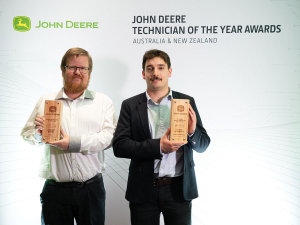
Leading John Deere technicians and apprentices from New Zealand and Australians were recognised at the recent sixth annual JD Technician of the Year Awards, held in Brisbane.
In Dacre, near Invercargill in New Zealand’s South Island, Bruce Dinnington is running a dairy operation unlike any other.
A free online platform aggregating governance vacancies across rural and regional New Zealand has been launched.
Environment Minister Nicola Grigg has announced details of a new rural plastics recycling scheme.
Agricultural drone operators say that a government decision to allow lower-risk drone work without certification won’t lower standards but drive innovation and efficiency.




