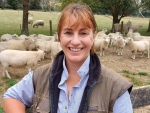
Mary Bowron Named Best Sheep and Beef Vet of the Year
B+LNZ's Wormwise veterinarian Mary Bowron has won the Best Sheep and Beef Vet of the Year Award in recognition of her outstanding contribution to New Zealand’s sheep and beef sector.
 increase font size
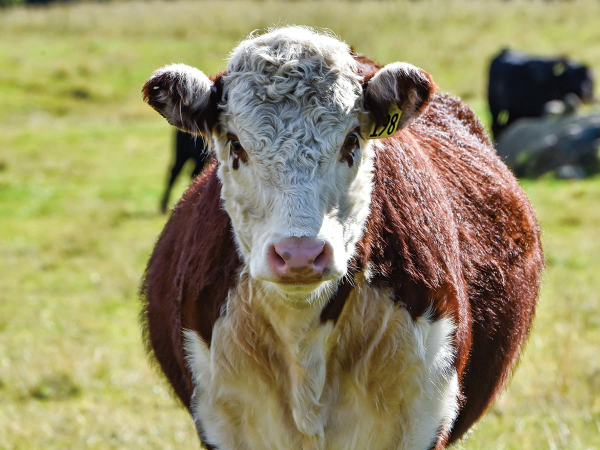 Right now, there are no BCS breeding values calculated for most kiwi bulls.
This is the third in a series of articles from Beef + Lamb New Zealand's Informing New Zealand Beef programme. The seven-year INZB partnership, supported by Beef+Lamb New Zealand and the Ministry for Primary Industries' Sustainable Food and Fibre Futures fund, aims to boost the sector's profits by $460m.
Focused on increasing the use of high-quality genetics in the beef industry, the four main components of the programme are developing New Zealand-specific breeding indexes, supporting the development of an across breed genetic evaluation and development of data infrastructure, running a beef progeny test and linking in data from commercial herds.
Cow body condition score is one of the key factors to manage throughout the farming calendar. A breeding cow with a bit of spare energy stacked on her back is more productive, more robust, and better-looking. But where does genetics come into all this? Could your bulls be working harder to produce full-bodied bovine goddesses of fertility?
Right now, there are no body condition score (BCS) breeding values calculated for most kiwi bulls. But outcomes from the B+LNZ Genetics Beef Progeny Test have shown that there could be.
Over 240 sires have been assessed for cow BCS in the B+LNZ Genetics Beef Progeny Test and more than 4,500 cows have had their BCS measured at three time points: prior to mating, at weaning and prior to calving. There was quite a range of average cow BCS scores between sires (graph below). The heritability of cow BCS was 0.26 indicating that around 26% of variation in cow chunkiness can be attributed to genetics. So, there is plenty of opportunity to add extra love-handles to your herd via bull selection.
The researchers also looked at related traits. There was a genetic correlation between cow BCS and the existing rib fat depth trait (measured via ultrasound in finishing animals). Bulls with a higher genetic merit for rib fat depth tended to have daughters with higher cow BCS. However, the genetic correlation (0.29) was not strong enough to consider rib fat depth a good predictor for cow BCS on its own.
This means that rib fat depth EBVs only explains 8% of the variation in cow BCS. Likewise for the eye muscle area trait (4%). And since rib fat depth and eye muscle area are measured in finishing animals which don’t have the demands of calving and lactating, there is a case to be made for adding a dedicated cow BCS breeding value to future genetic evaluations.
B+LNZ's Wormwise veterinarian Mary Bowron has won the Best Sheep and Beef Vet of the Year Award in recognition of her outstanding contribution to New Zealand’s sheep and beef sector.
With lambing underway in many regions, Beef + Lamb New Zealand is encouraging farmers to put together a wellequipped lambing kit to help minimise lamb losses, particularly in bad weather.
It's only just hit the market, but a new forage rape bred for dryland farms has already won the approval of lambs and young cattle both north and south.
New Zealand's Emissions Trading Scheme (NZ ETS) encourages afforestation while not achieving climate goals, says a new report released by the Parliamentary Commissioner for the Environment, Simon Upton.
Are you ready for El Nino? That’s the question asked by Beef+Lamb NZ’s Ian Tarbotton who leads B+LNZ’s farm extension service.


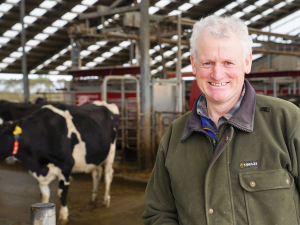
In Dacre, near Invercargill in New Zealand’s South Island, Bruce Dinnington is running a dairy operation unlike any other.

A free online platform aggregating governance vacancies across rural and regional New Zealand has been launched.
Environment Minister Nicola Grigg has announced details of a new rural plastics recycling scheme.
Agricultural drone operators say that a government decision to allow lower-risk drone work without certification won’t lower standards but drive innovation and efficiency.
OPINION: Warning bells are ringing in the arable sector.
Farmgate lamb prices are down by 8%, beef cattle by 4.5% and farm expenditure up by 4.2%.