Once-a-Day Calf Feeding: How Probiotics Boost Heifer Growth
Matt Collier, Probiotic Revolution, says calves will drink a lot of milk once-a-day with their probiotic Calf Xtreme.
 increase font size
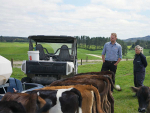
 Len and Diane Pickett on their Stratford property
For Len Pickett, working as a St John’s paramedic is the perfect complement to his “other career”, working as a commercial calf rearer, suggests the company that supplies him calf feed – Fiber Fresh.
Pickett has worked as a paramedic in Taranaki for 46 years, and he and wife Diane 30 years ago began rearing calves to supplement their income and to help him ‘de-stress’ from his work.
“I work for St John four days on four days off, 12 months of the year. It’s a juggling act come calving time and we work long hours, but I wouldn’t have it any other way.
“Working with the calves is totally different from St John and I’m able to de-stress by mixing with the animals.”
This year the Picketts are rearing 280 Friesian calves on their 9ha property near Stratford.
For them, the key to calf development is what they feed them. After experimenting with different feeds last year and not seeing the same results they had in the past, Len decided to return to previously methods.
“We start the calves on Fiber Fresh and then later they’re put onto 16% pellets. I like to mix things around. After experimenting with a third feed last year, some of the calves ended up with laminitis. I can’t say for sure what caused it, but I’ve never had problems before. So this season I’m going back to what I know gets good results.”
Pickett says the calves don’t have the opportunity to run free on the small property so nutrition is crucial.
“The calves get everything they need to grow with Fiber Fresh. We don’t have any major health issues in the shed and we find that calves grow well, develop large rumens and have nice shiny coats. Once they’re ready to go out in the paddock they’re already at 90kg and keep growing from there.”
The Picketts sell mostly through a stock agent, but they have some buyers come direct to them because they are impressed with their calves.
“Our stock agent has also commented that our calves are big and glossy and they put weight on quickly.”
Picketts have fed Fiber Fresh for 10 years; they say the calves are happy to get on it and easily adapt from there.
He plans no changes despite this season’s difficult economic environment. “We would never cut back on the quality or amount of food just to try and save a bit of money. This season we’re sticking to what we know works,” he says.
Matt Collier, Probiotic Revolution, says calves will drink a lot of milk once-a-day with their probiotic Calf Xtreme.
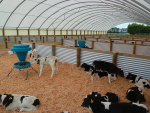
Rearing facilities should be set up and maintained well to ensure calves stay healthy.
Clean and comfortable calf sheds help create a nurturing environment for calves, reduces the risk of disease and encourages high growth rates.
Giving calves the best possible start to life has been shown to boost growth and resilience.
If growing more feed at home adds up to $428 profit per tonne of dry matter to your bottom line, wouldn’t it be good to have a ryegrass that gets you there quicker?


Farms across the upper North Island are trialling different pasture mixes as part of a research programme that aims to build greater resilience into farming systems.
Election years are always a concerning time for farmers, according to DairyNZ chair Tracy Brown.
The Ballance Farm Environment Awards are coming to the West Coast of the South Island.
Most dairy regions around the country have had a pretty good season so far says Tracy Brown.
Rural leader Mark Hooper has been appointed as an independent director to the NZPork board, bringing extensive farming, governance and advocacy experience to the role.