Early Weaning Lambs: What the Massey Trials Found
Farmers with high-quality feed available in late spring could consider weaning at least a proportion of their lamb crop early to benefit both lambs and ewes.
 increase font size
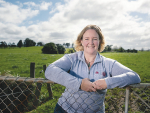
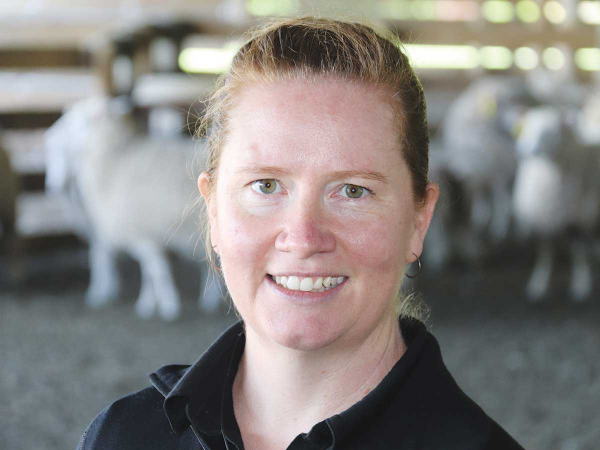 Rene Corner-Thomas has come up with a novel way of how farmers can help their stock.
The vagaries of the weather pose challenges for animals, as well as people. Work by Massey University researcher and senior lecturer in sheep production, Dr Rene Corner-Thomas, has come up with a novel way of how farmers can help their stock. Peter Burke reports...
Dr Corner-Thomas says sheep are highly intelligent when it comes to seeking shelter - be it in winter or in summer.
She says if it gets cold they seek the shelter of trees or other forms of protection and in summer they seek shade.
"Unfortunately, over the last 20 to 30 years the amount planting of trees and shrubs on farm has reduced," she told Rural News. "A lot of that is due to infrastructure, with things like pivot irrigation, but also there appears to be a general trend of removing shade and shelter from farms."
Corner-Thomas points out that providing shelter is part of the animal welfare codes for sheep and cattle and all livestock. But she dds that many farmers are still not doing this and her work has been directed at finding ways that are practical, cost effective and improve the welfare of animals.
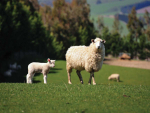
She says there is a particular problem at lambing time when newly born lambs are susceptible to cold winds, which is a significant factor in lamb survivability. Corner-Thomas says research has shown that providing some form of shelter can improve lamb survivability by up to 10%.
"So, what we have come up with in the case of lambs is a very 'high-tech' solution in the form of straw bales. We have a paddock where we have but eight bales in a cross shape and that creates a little micro climate. This is only one bale high, but when you think of the size of a lamb, that is quite sufficient to provide the necessary shelter."
As part of the trial, they have put the bales in one paddock and none in the other, just to see what use the lambs make of their artificial shelter. She says, while they haven't done a detailed analysis of the data, their own observations suggest the sheep use the bales in different ways.
Corner-Thomas says in some cases the lambs play on the bales the same as they would if they were tree stumps in the paddock.
"In the Manawatū where the trials were conducted we also notice that lambs were often sleeping on top of the straw bales. This, we believe, is because it's been very we in the region with puddles in many paddocks - so the lambs were seeking a dry place to sleep."
Corner-Thomas explains that when they started the study they never anticipated that the lambs would utilise the straw bales in such a way, but says it goes to prove that, given options, sheep can make good choices.
She says during the lambing period the ewes will seek natural shelter, be it trees or stumps of trees to tuck their lambs away and keep them warm and dry. She adds, in some cases, ewes will look for big tufts of grass or reeds - anything to keep their offspring safe from the cold and wet.
Farmers with high-quality feed available in late spring could consider weaning at least a proportion of their lamb crop early to benefit both lambs and ewes.

Vetekina Pau'u is the first Tongan to win the William Gearish Memorial prize and sadly she will also be the last recipient.
The first major update to the Dairy Cattle Code of Welfare in more than a decade has been released, marking what DairyNZ describes as an important step in ensuring animal welfare standards continue to evolve alongside scientific evidence and on-farm realities.
Bovine Viral Diarrhoea (BVD) is sometimes viewed as a dairy industry issue, but the reality is that the disease can have serious consequences for beef breeding herds as well.
Animal health company Bovonic is gearing up for its next stage of growth after increasing New Zealand sales of QuadSense by more than 50% in the last 12 months, including a record quarter for the business this year.


Federated Farmers has welcomed new rural policies released by ACT, saying they align closely with its own election priorities.

Rural Contractors NZ says proposed changes to land transport rules for agricultural vehicles are a welcome response by the Government to out of date regulations which have seen members hit with huge fines.
Alliance is calling for final applications for its 2027 Graduate Programme, with applications closing on Sunday 25 October.
Decades piloting planes has ensured vet and farmer David Hayes is focused on safety. So, after a serious accident while welding on farm, he is sharing his experience so others can learn from it.
Canterbury milk processor, Synlait Milk has confirmed Leon Fung as its chief executive officer.
OPINION: Making it easier to collect rainwater and use it to grow crops and livestock is a no brainer.