Beef + Lamb NZ's Lambing Kit Checklist for a Tough Season
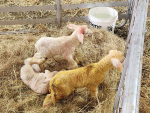
With lambing underway in many regions, Beef + Lamb New Zealand is encouraging farmers to put together a wellequipped lambing kit to help minimise lamb losses, particularly in bad weather.
 increase font size
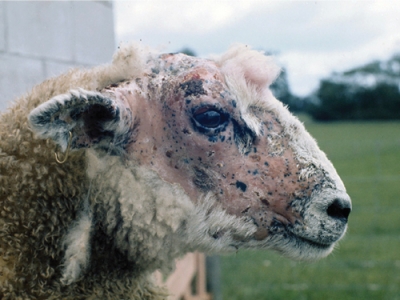 Farmers are being encouraged to consider the risk of facial eczema (FE) in the coming months.
Farmers are being encouraged to consider the risk of facial eczema (FE) in the coming months as weather conditions point to a 'bad' season with dry conditions looming.
"Plan for the worst and have a robust FE preventative plan that protects animals from this insidious disease," says Andrew Oakley, technical manager of Agritrade, the supplier of the Time Capsule zinc bolus.
He says rain after warm drought conditions and a shortage of pasture brings conditions ripe for spore counts to soar.
"The most favourable condition for the growth of spores causing FE is rain following long periods of dry. Dead pasture material at the base of the sward is the medium on which Pithomyces spores grow and warm ground temperatures (>12°C) following rain are perfect for rapid spore growth," Oakley says.
"As the pastures disappear with drought FE risk increases as animals are forced to graze lower into the litter where the spores reside. It's critical that farmers continuously monitor, using either pasture or faecal testing, to determine when preventative action is necessary to ensure animals are adequately protected."
Oakley says March and April are often the peak months for FE spore counts but high counts can happen in January or even earlier. "But animals need not be at risk.... FE is preventable with a sound management plan."
Sheep farmers especially should take note; often the breeding season coincides with peak spore counts. "Many ewe losses can be attributed to liver damage caused by FE and ewes exposed to even a moderate FE challenge can show a delayed onset of oestrus, a decreased numbers of oestruses and a reduced lambing percentage."
Oakley says spore testing is easy to do and is available from most veterinarians and takes the guesswork out of the equation. He advises to use district spore counts as a guide only as they are not applicable to individual properties.
While no one method is 100% effective against FE, he says the Agritrade Time Capsule zinc bolus has been a reliable preventative option for sheep and cattle for 20 years.
"By the time FE becomes visible, the damage to the liver has already occurred. Prevention is the cure."
With lambing underway in many regions, Beef + Lamb New Zealand is encouraging farmers to put together a wellequipped lambing kit to help minimise lamb losses, particularly in bad weather.
Will a stronger, more coordinated voice help rebuild confidence and improve returns in the wool sector?
Scanning is a great time to start identifying and managing groups of ewes based on feeding priorities. Wormwise's Mary Bowron discusses some of the possible reasons ewes lose condition in early winter - and it's not necessarily internal parasites.
The Eliminating Facial Eczema Impacts programme recently hosted a webinar about the progress the sheep poo study has made in helping understand facial eczema (FE).
Recent rainfall has made for a fantastic growing season in many regions, but farmers are also reporting a proliferation in pests and diseases such as facial eczema, flystrike, porina and internal parasites.


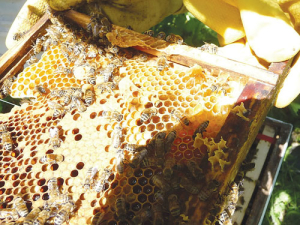
New Plymouth-based Manuka honey exporter Egmont Honey has completed its acquisition of Taihape beekeeping business Tweeddale's Honey, with settlement finalised on Friday, 18 September.

Westpac NZ is calling on farmers and growers to start preparing now for the possibility of a dry summer, as likely El Niño conditions raise the risk of drought across parts of the country.
Fonterra Co-operative Group has confirmed the independently assessed candidates standing for election to its board in 2026.
Fonterra has revised its Farmgate Milk Price forecast for the 2026/27 season, lifting the midpoint and narrowing the range on the back of improving global dairy commodity prices.
New Zealand's citrus growers were challenged to build their future on the value embedded in their fruit rather than the volume they produce, at Citrus New Zealand's annual gathering in Gisborne on 17 September.
Leading John Deere technicians and apprentices from New Zealand and Australians were recognised at the recent sixth annual JD Technician of the Year Awards, held in Brisbane.