TB plan review to focus on possum hot spots
New Zealand is closer to eradicating bovine TB than ever before, but possums remain a threat, says Beef + Lamb New Zealand.
 increase font size

FARMERS AND environmentalists alike are touting the benefits of planned aerial bovine tuberculosis (TB) control operations this winter in Waipunga near the Taupo to Napier highway.
Dennis Ward, of Ngatapu Station, fits into both groups and is also a keen recreational hunter.
"When you look at the practicalities of 1080 in improving the quality of life of our native species, it's a no brainer. People don't appreciate that possums, stoats, ferrets and rats do more to decimate our native bird populations than anything else," says Ward.
He says scientific research has shown the positive effects of 1080 on native birds and forests. "The evidence has convinced me that it is the best method for use, particularly in rugged terrain like the Waipunga area, where ground control is impractical."
"It is absolutely amazing to see the bush come alive with native birds following a 1080 operation. The way in which the operations are approached and how contractors are careful of sensitive areas, they do their job very well," says Ward.
TBfree Hawke's Bay committee chairman Dennis Mitchell has had first-hand experience with bovine TB and how it affects farmers' livelihoods. In TB-risk areas, possums cause the majority of new herd infections in farmed cattle and deer.
"The battle against bovine TB has been waged in Hawke's Bay for 25 years and currently there are no infected cattle or deer herds in the region. Although the war goes on as we seek to methodically control pests, especially possums, which can sustain the disease in wildlife," says Mitchell.
Possum control in the Hawke's Bay backcountry now poses the biggest challenge to completely eradicating TB in the region. The co-operation of farmers and landowners in testing their animals and allowing access to their land for TB control operations is paramount in achieving freedom from the disease.
"Effective pest control in our rugged bush is vital to protect our farmed livestock and valuable export markets," says Mitchell.
The Waipunga pest control operation is situated over a combination of private, government and Māori-owned land.
Department of Conservation Senior Ranger Dave Wills said some of New Zealand's rarest bird and plant species will benefit from the pest control operation.
"DOC is working closely with TBfree New Zealand to ensure the best results possible for native wildlife," says Wills.
About 1659ha of Whirinaki Forest are included in the operation and the area targeted for treatment contains North Island brown kiwi, whio, kaka and threatened native bats.
"A wide range of other forest birds, trees and wildlife also stand to benefit from the knock back of predators like possums, rats and stoats," says Wills.
New Zealand is closer to eradicating bovine TB than ever before, but possums remain a threat, says Beef + Lamb New Zealand.
As an independent review of the National Pest Management Plan for TB finds the goal of complete eradication by 2055 is still valide, feedback is being sought on how to finish the job.
The move to bring bovine TB testing in-house at Ospri officially started this month, as a team of 37 skilled and experienced technicians begin work with the disease eradication agency.
New Zealand's TBfree programme has made great progress in reducing the impact of the disease on livestock herds, but there’s still a long way to go, according to Beef+Lamb NZ.
OSPRI will carry out on-farm TB testing, following AsureQuality's decision not to renew their contract.


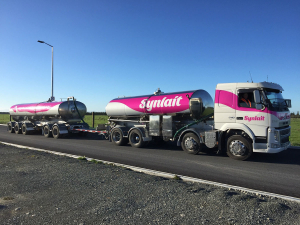
Synlait has swung to second-half profit as operations stabilise, but the dairy processor still posted a $75.4m annual loss.

LIC shareholders have elected a new North Island representative to the co-operative's Board, along with five representatives to its Shareholder Reference Group (SRG), following the company's Annual Meeting held in Invercargill.
Farmers across parts of Southland and South Otago are continuing to deal with difficult conditions after a prolonged run of wet weather, with pressure building around feed supply, stock management, pasture damage, farm infrastructure and everyday workloads.
Federated Farmers says it welcomes Labour's commitment to reviewing the Sharemilking Agreements Act, calling on other major parties to do the same.
For Canterbury dairy farmers Sian Meijer and Rick Wobben, wearable technology has become one of their most valuable on-farm tools - helping manage 1850 cows across an expansive, high-performing dairy operation while improving efficiency, mating outcomes and day-to-day decision making.
Fonterra has unveiled its annual results for the 2026 financial year, posting $27 billion in revenue and close to $20 billion returned to New Zealand farmer owners and unit holders.




