Leadership Shake-Up at Alliance Group with Two Key Appointments
Alliance has announced two key appointments within its senior leadership team.
 increase font size
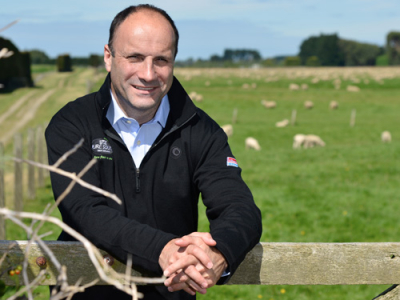 David Surveyor, chief executive of Alliance Group.
David Surveyor, chief executive of Alliance Group, says the cooperative’s focus over the past year was on ensuring the business strategy gained traction.
“The weakening of market prices and global volatility over the year reduced group revenues but the value created from our strategy projects meant the cooperative was able to act as a buffer and absorb some of the impact on our farmer shareholders,” he says.
“We would have liked to have absorbed more and remain committed to finding ways to pay farmers more for their livestock.
“It’s important because as New Zealand’s only 100% farmer-owned major red meat co-operative, farmers are at the heart of every decision we make. Every cent Alliance Group makes goes back to the farmer or is invested for the benefit of the farmer-owned business.”
His comments come as Alliance Group announced a $9.8 million distribution to farmer shareholders on the back of an improved financial result.
The 100% farmer-owned cooperative has reported a pre-tax profit of $10.1 million for the year ending September 30, 2016, compared to a $7.9 million pre-tax profit last year. The result is based on a turnover of $1.36 billion.
Alliance Group will continue to invest in improving its operational performance, says Surveyor.
“This is already being achieved in a variety of areas including lowering our operating costs and improving productivity, automated measurement and cutting of the carcass, maximising yield, building our brands and matching products to optimal market opportunity.
“Investment in robotics within production and systemised planning solutions enabling efficient production runs are vital to making gains in processing. We will also be deploying further processing and packaging technologies that deliver efficiencies, lower running costs and enhance revenue opportunities.”
The company has also significantly improved its overall safety performance, which was a crucial part of the cooperative’s strategy, he says.
“The 43% reduction in our Total Recordable Injury Frequency Rate (TRIFR) means fewer people getting hurt in our workplaces, which is good for our people and our business.”
The company’s balance sheet remains strong with shareholders’ funds of $302.5 million (2015 $308.9 million) providing an equity ratio of 71%.
“Our loyal committed farmer-shareholders and our 5,000 employees deserve a lot of credit for the improved financial performance,” says Surveyor.
“As a cooperative, we owe it to our farmer shareholders to make greater strides to ensure we’re an attractive option for farmers and a place where people want to work.
“We still have a long way to go and our focus over the next 12 months will be diligently working on creating a better result for New Zealand’s best farmers.”
Alliance has announced two key appointments within its senior leadership team.
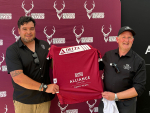
Alliance Group and the Southland Stags rugby team have joined forces in a partnership that will see the the meat co-operative's farmgate brand feature on players' team kits and replica jerseys.
Alliance Group chief executive Willie Wiese is leaving the company after three years in the role.
Alliance Group has commissioned a new heat pump system at its Mataura processing plant in Southland.
Alliance and Dawn Meats have completed their new strategic partnership.

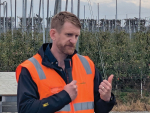
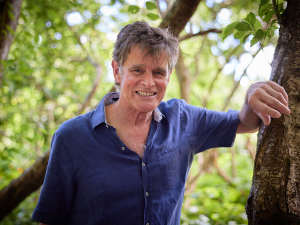
Āta Regenerative is bringing international expertise to New Zealand to help farmers respond to growing soil and water challenges, as environmental monitoring identifies declining ecosystem function and reduced water-holding capacity across farms.
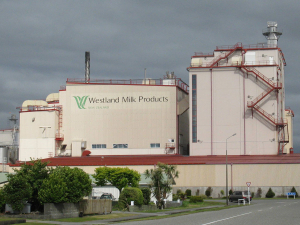
Yili's New Zealand businesses have reported record profits following a major organisational and strategic transformation.
Owners and lessees of certain Hino Trucks New Zealand diesel vehicles have just 10 days remaining to register or opt out of a proposed $10.9 million class action settlement.
Silver Fern Farms has successfully produced and delivered 90 tonnes of premium chilled New Zealand lamb and beef to the United Arab Emirates via airfreight.
For the first three months of 2026, new tractor deliveries saw an increase over the previous two months, resulting in year-to-date deliveries climbing to 649 units - around 5% ahead of the same period in 2025.
QU Dongyu, director-general of the Food and Agriculture Organization of the United Nations (FAO), has issued a warning saying that global fertiliser scarcity caused by disruptions in the Strait of Hormuz will lead to lower yields and tightening food supplies into 2027.