NZ Apple Sector Pushes for Japan & Korea Market Access
The apple sector is working with the Government to unlock access to two key markets that could bring millions in revenue for apple growers.
 increase font size
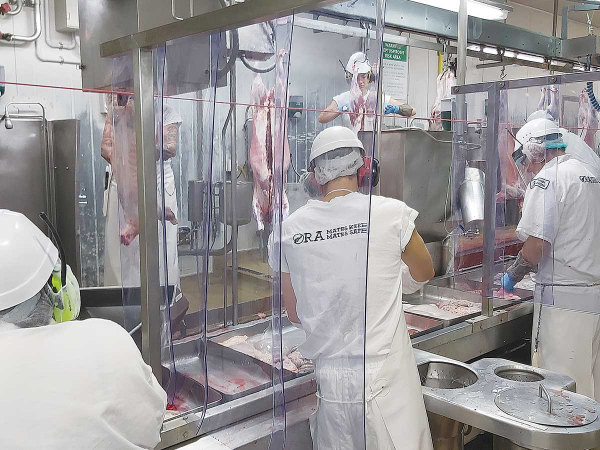 Beef + Lamb NZ chief executive Sam McIvor says the Australian deal sets a good benchmark for eventual tariff-free access for our sheep meat and beef in the NZ-UK negotiations.
New Zealand's meat sector will be hoping to benefit from a yet-to-be-signed Free Trade Agreement (FTA) that its Australian counterparts are about to enter into with the UK.
Last week, an agreement on a UK/Australia FTA was announced. It will eventually see Australian meat exports gain tariff-free access to the British market.
Australian Prime Minister Scott Morrison described the deal as among the "most comprehensive and ambitious agreement that Australia has concluded".
"I said we would wait for the right deal, and I think we've got the right deal between the UK and Australia."
Of the few details confirmed is the reduction of Australian beef tariffs into the UK over a 15-year transition period, and sheep meat over 10-years.
The deal, once signed and ratified, will result in Australian beef, sheep and goat meat exports entering the UK under a tariff rate quota (TRQ) regime.
Beef tariffs will be eliminated after 10 years. During the transition period, Australia will have immediate access to a duty-free quota of 35,000 tonnes, rising in equal installments to 110,000 tonnes in year 10. Over the following five years, a safeguard will apply on beef imports exceeding a further volume threshold rising in equal installments to 170,000 tonnes.
Sheep meat tariffs will be eliminated after 10 years. During the transition period, Australia will have immediate access to duty-free quota of 25,000 tonnes, rising in equal installments to 75,000 tonnes in year 10.
Meanwhile, the NZ red meat sector is looking on with envy at the UK/Australia deal. Meat Industry Association chief executive Sirma Karapeeva says it is a significant milestone for the UK as it seeks to forge an independent trade policy post-Brexit.
<p"It is the UK's first FTA since it left the EU and, based on what we have seen, it demonstrates a shift away from the EU protectionist model," she told Rural News.
"Based on what we have seen, we will be looking to achieve similar if not better outcomes in the NZ/UK FTA and we look forward to a swift conclusion of our own FTA negotiations."
Beef + Lamb New Zealand chief executive Sam McIvor says the Australian deal seems to set a good benchmark for the NZ-UK negotiations with eventual tariff-free access for sheep meat and beef, with zero tariff rates on in-quota trade in the interim.
"But the devil is often in the detail in trade agreements, and we will be studying this closely when it eventually comes out," he adds. "Unfortunately, we are still seeing a gap between rhetoric and action in our own FTA negotiations."
British farmers have raised concerns that they will struggle to compete under the deal and the market will be flooded with Australian products. However, Prime Minister Boris Johnson has denied that UK farmers had been sold out in the agreement.
"There are indeed safeguards... we are opening up to Australia, but we are doing it in a staggered way, and we are doing it over 15 years," he said.
Australia-UK Red Meat Market Access Taskforce chair Andrew McDonald said the deal would open up the UK to more Australian meat exports.
"While our ability to service the market has previously been constrained by a highly restrictive UK import regime, the FTA will facilitate an easier response to British consumers seeking to 'buy Aussie' should they wish to do so."
Currently, of Australia's $50 billion in agricultural exports, just $730 million is sent to the UK.
The trade deal still needs to be ratified by both countries before it becomes official.
The apple sector is working with the Government to unlock access to two key markets that could bring millions in revenue for apple growers.

Esther Guy-Meakin has been announced as the new chief executive of the New Zealand Meat Board (NZMB).
As expected, the US has launched a safeguard investigation into lamb imports, a move that could impact New Zealand sheepmeat returns.
New Zealand's red meat sector says it welcomes the Government's focus on trade ahead of the general election in November.
New Zealand red meat exports are booming but a pending decision in the White House, Washington D.C., could dent sheepmeat earnings.


Synlait has swung to second-half profit as operations stabilise, but the dairy processor still posted a $75.4m annual loss.

LIC shareholders have elected a new North Island representative to the co-operative's Board, along with five representatives to its Shareholder Reference Group (SRG), following the company's Annual Meeting held in Invercargill.
Farmers across parts of Southland and South Otago are continuing to deal with difficult conditions after a prolonged run of wet weather, with pressure building around feed supply, stock management, pasture damage, farm infrastructure and everyday workloads.
Federated Farmers says it welcomes Labour's commitment to reviewing the Sharemilking Agreements Act, calling on other major parties to do the same.
For Canterbury dairy farmers Sian Meijer and Rick Wobben, wearable technology has become one of their most valuable on-farm tools - helping manage 1850 cows across an expansive, high-performing dairy operation while improving efficiency, mating outcomes and day-to-day decision making.
Fonterra has unveiled its annual results for the 2026 financial year, posting $27 billion in revenue and close to $20 billion returned to New Zealand farmer owners and unit holders.