Diplomatic Incident
OPINION: Your old mate hears an international incident is threatening to blow up the long-standing Anzac alliance as Kiwis and Aussies argue over who wants new Australian resident and former NZ Prime Minister Jacinda Ardern.
 increase font size
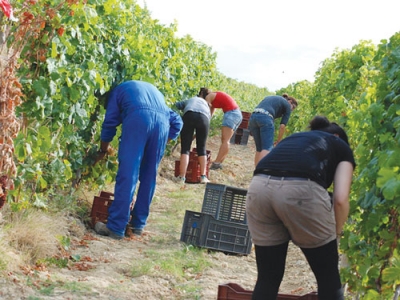 Backpackers working on Australian farms will have to pay more tax.
Australian farmers are worried that a proposed 'backpacker tax' will cause labour shortages on farms.
The new tax comes into effect on July 1; all working holiday makers will be taxed 32.5% on income up to A$80,000.
This is a huge change from the current system where people on working holidays in Australia can be treated as local residents for tax purposes. If casual workers are there for more than six months they pay no tax on income up to about A$20,000, then they pay a tax rate of 19% for income up to A$37,000 and receive benefits through the low-income tax offset.
Each year backpackers contribute A$3.5 billion to the Australian economy and 40,000 find jobs on Australian farms.
The National Farmers Federation is leading an online campaign, pleading with the Federal Government not to proceed with the new tax.
Chair of the NFF workforce productivity committee, Charlie Armstrong, says backpackers are critical to ensuring an adequate workforce for primary producers, particularly at busy times of the year.
"The agriculture industry relies on backpackers to fill severe labour shortages which are often seasonal and temporary, for example, when crops are being harvested or milk production is at its peak," says Armstrong.
"Taxing backpackers at a rate of 32.5% will make work in Australian agriculture a highly unprofitable proposition.
"Furthermore, it will lead to reduced agricultural productivity and will strip regional communities and businesses of much needed tourism spending.
"Already we are seeing signs that the proposed tax rate of 32.5% is scaring working holidaymakers away from Australia. In nations like Canada and New Zealand they are just as likely to be able to find farm work that incurs much less tax."
Armstrong warns that any further decline will further throttle the current trend of 12% fewer backpacker arrivals to Australia each year.
Announcing the backpacker tax in his budget last year, former Treasurer Joe Hockey said the 32.5% tax rate will raise A$540 million.
The rate of 19% proposed by the NFF would generate only A$315.7 million.
But Armstrong says any perceived losses incurred in containing the rate at 19% would be dwarfed by the serious economic impacts of reduced backpacker tourism and associated agricultural losses a 32.5% rate would bring.
"What is the point of increasing revenue through the implementation of this tax only to strip back the contribution of agriculture, tourism and regional spending to the economy?" he asked.
OPINION: Your old mate hears an international incident is threatening to blow up the long-standing Anzac alliance as Kiwis and Aussies argue over who wants new Australian resident and former NZ Prime Minister Jacinda Ardern.

OPINION: Your old mate hears that at a recent China Business Summit, PM Christopher Luxon delivered a none-too-subtle "could try harder" report card on the red meat industry regarding its exports to China - particularly when compared to Australia.
More Australian states are embracing virtual fencing technology, opening growth opportunities for Kiwi companies like Halter.
Fonterra says its ongoing legal battle with Australian processor Bega Cheese won’t change its divestment plans.
Farmers in the Australian state of New South Wales will soon be able to use virtual fencing and herding technology to boost farm productivity.


High country stations, mixed sheep and beef farms, Māori-owned farms, corporates and family operations are among the nine commercial farms taking part in the Livestock Innovation Farming Transformation programme, known as LIFT.
OPINION: New health and safety guidance unveiled by the Government recently provides farmers greater certainty about what is expected of them when managing risks on farm.
The National Animal Welfare Advisory Committee (NAWAC) is seeking public feedback on proposed changes to the Code of Welfare for Rodeos.
A New Zealand initiative supporting farmers to restore the health of grazing landscapes has received international backing through the Regenerative Fund for Nature, a global collaborative fund supporting regenerative agriculture and the communities that produce natural fibres for the fashion industry.
Combine premium New Zealand products, blend in a family ritual and what do you get? A world-class functional drink.
Entries are now open across eleven regions for the 2027 New Zealand Dairy Industry Awards (NZDIA).