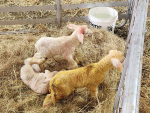
Beef + Lamb NZ's Lambing Kit Checklist for a Tough Season
With lambing underway in many regions, Beef + Lamb New Zealand is encouraging farmers to put together a wellequipped lambing kit to help minimise lamb losses, particularly in bad weather.
 increase font size
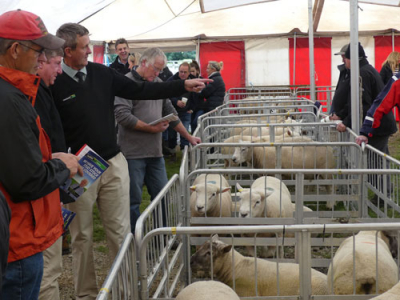 The second annual Beltex sale will be held at Mt Somers on March 1.
All eyes will be on the second annual sale of Beltex purebred and crossbred rams at Rangiatea, Mt Somers on March 1.
Some young crossbred ewes will also be on offer.
Beltex crossbred lambs sold well at the Surrey Hills sale last month, and the vendors are again hoping for good prices; buyers are expected from around the country.
The former head of Invermay Research, Jock Allison, Mt Somers farmer Blair Gallagher and farm adviser John Tavendale brought the Beltex breed to New Zealand in 2017.
“It is a double-muscled Texel offshoot from Belgium and it has a seriously big backside and eye muscle,” says Gallagher.
He points out that when the original Texels came to NZ from Scandinavia there were no double muscled animals among them.
According to Allison, Beltex crosses bring substantial premiums in the UK, particularly in butchers’ markets.
“MPI’s decision to allow the direct import of sheep embryos from Europe without quarantine provided the opportunity, which we have taken on behalf of the NZ sheep industry.”
Allison says the the Beltex produces a carcase particularly suitable for premium markets and so provides increased value.
“Increased killing-out percentage and meat yield are the benefits, and particularly a greater eye muscle area and muscling in the leg.”
Allison says there are no lambing difficulties with Beltex rams mated over commercial ewe breeds; the lambs are born “small and vigorous”.
He says this is universally accepted in the UK; the pronounced muscling is not apparent at birth but starts to develop shortly afterwards.
“In the purebred, lambing performance is on a par with the imported Texels in the early 1990s when they first arrived,” he told Rural News.
“NZ breeders will be selecting to improve the pure Beltex over time and to improve other productive characteristics in exactly the same way as with the Texel breed since its introduction.”
Gallagher says the breed is used as a terminal sire that offers specific attributes that will enhance the NZ sheep industry. He claims that it has extra killing-out percentage of live weight to deadweight and also the dressing-out percentage of meat to bone is higher than a lot of animals grown in NZ.
“The other major attribute of the Beltex is the carcase conformation. In the UK saleyards they pay a 15% premium to get a Beltex-cross carcase,” he says.
Beltex rams have made big dollars for breeders: the top price last year for a Suffolk x Beltex ram was $15,000, and a pure-bred ram made $12,000.
Allison says they hope to get similar, if not better, prices at the March 1 sale.
With lambing underway in many regions, Beef + Lamb New Zealand is encouraging farmers to put together a wellequipped lambing kit to help minimise lamb losses, particularly in bad weather.
Will a stronger, more coordinated voice help rebuild confidence and improve returns in the wool sector?
The vineyards at Pyramid Farm in Marlborough’s Avon Valley have never been run of the mill, with plantings that follow the natural contours of the land, 250 metres above sea level.
Sheep and cattle numbers continue to decline, and this year's drought hasn't helped, according to Beef + Lamb New Zealand (B+LNZ).
High quality feed, reduced stocking rates and shelter will all help enhance triplet lamb survival and ultimately benefit the bottom line.


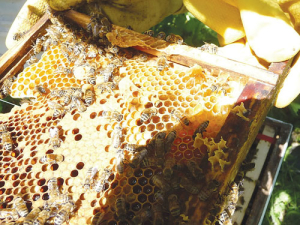
New Plymouth-based Manuka honey exporter Egmont Honey has completed its acquisition of Taihape beekeeping business Tweeddale's Honey, with settlement finalised on Friday, 18 September.

Westpac NZ is calling on farmers and growers to start preparing now for the possibility of a dry summer, as likely El Niño conditions raise the risk of drought across parts of the country.
Fonterra Co-operative Group has confirmed the independently assessed candidates standing for election to its board in 2026.
Fonterra has revised its Farmgate Milk Price forecast for the 2026/27 season, lifting the midpoint and narrowing the range on the back of improving global dairy commodity prices.
New Zealand's citrus growers were challenged to build their future on the value embedded in their fruit rather than the volume they produce, at Citrus New Zealand's annual gathering in Gisborne on 17 September.
Leading John Deere technicians and apprentices from New Zealand and Australians were recognised at the recent sixth annual JD Technician of the Year Awards, held in Brisbane.




