Can Drones Destroy Hornet Nests?
Will drones be the answer to tackling the problem of wasp and hornet nests high up in trees and other inaccessible places?
 increase font size
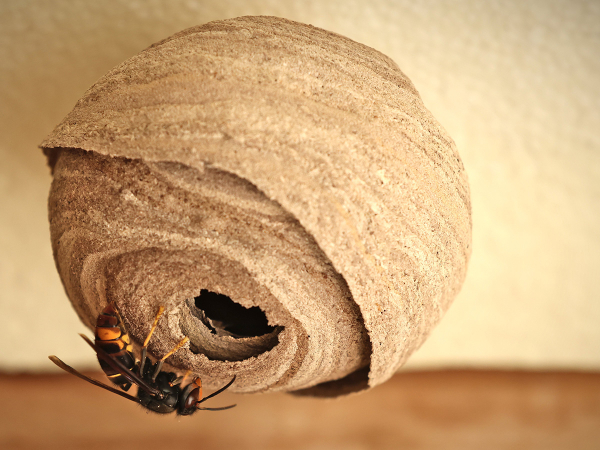 Biosecurity New Zealand wants to hear from anyone who has a suspected hornet specimen, has located a possible nest, or has taken a clear photo.
Biosecurity New Zealand says Kiwis should continue to keep an eye out for yellow-legged hornets (Vespa velutina) over the holiday season.
Mike Inglis, Biosecurity New Zealand Commissioner North, says there has been great response from the public so far, with more than 6,870 notifications.
He says that the Biosecurity New Zealand team will be working over the holiday season to track and eradicate the hornet.
To date, 38 queen hornets have been found and 25 of those hornets were found with nests.
“Our intensive ground surveillance work and operations across Auckland’s North Shore to find hornet nests has been working well with more than 6,540 ground surveys completed, and that will continue as we move through summer," Inglis says.
"Based on overseas experience, the science tells us that we may find more hornets over in the next few months and we’re prepared for that," he adds.
“We now have more than 780 traps in place out to 11km from where the hornets were found in Glenfield and Birkdale. The international experts guiding our response are providing the most up-to-date advice and information about the hornet and that is feeding into our work.”
Inglis says that next month, with the help of visiting hornet experts from the United Kingdom, Biosecurity New Zealand will look to attach advanced trackers to hornets so they can be traced back to nests.
“As the weather continues to warm, hornets can start to make bigger nests high up in trees and this technology from the Netherlands will help us find and destroy them alongside our continuing surveillance work on the ground.
“If the public can continue to keep an eye while they are enjoying their Christmas break, that will help the work we are doing,” says Inglis.
“We’ll continue to adapt our work to what we see over the summer in line with our Technical Advisory Group’s advice. The TAG draws on the expertise from New Zealand scientists and our overseas colleagues with extensive first-hand experience of the hornet.”
Biosecurity New Zealand wants to hear from anyone who has a suspected hornet specimen, has located a possible nest, or has taken a clear photo.
You can report sightings:
Will drones be the answer to tackling the problem of wasp and hornet nests high up in trees and other inaccessible places?
Bovine Viral Diarrhoea (BVD) is sometimes viewed as a dairy industry issue, but the reality is that the disease can have serious consequences for beef breeding herds as well.
Election years are always a concerning time for farmers, according to DairyNZ chair Tracy Brown.
Testing confirms H5 bird flu in a single northern giant petrel, found dead on a remote Cape Palliser beach in the Wairarapa, says Dr Mary van Andel, the Ministry for Primary Industries' (MPI) Chief Veterinary Officer.
Bovine Viral Diarrhoea (BVD) is sometimes viewed as a dairy industry issue, but the reality is that the disease can have serious consequences for beef breeding herds as well.



Fonterra chief executive, Richard Allen says being resilient has helped the dairy industry overcome extreme volatility in recent years.

The head of the Ministry for Primary Industries (MPI) trade and international relations group says New Zealand is well-positioned to secure trade access and compete internationally as the world becomes more complicated, demanding and uncertain.
Northland farmer Greg Collins has taken over as chair of the Fonterra Co-operative Council.
The head of global dairy organisation, International Dairy Federation (IDF) is calling for accurate use of ‘dairy' term.
Be alert but not alarmed about El Niño. That’s the message from Professor Danny Donaghy, deputy head of the Massey University’s school of agriculture and the environment.
Farmers opposing rural trader Farmlands’ investment in AgriZeroNZ are warning the co-operative board not to brush away their concerns.