McRae Wins Southern South Island B+LNZ Director Vote
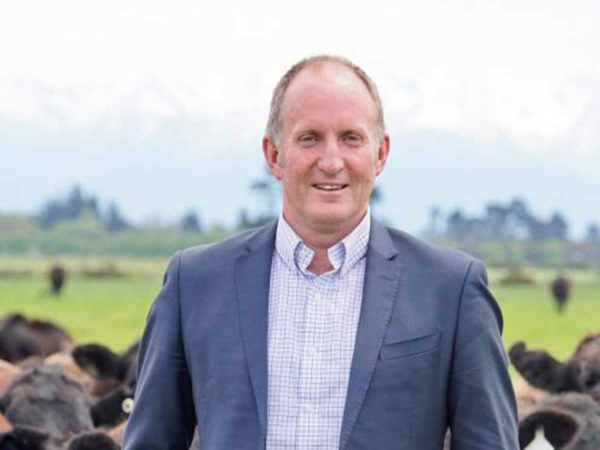
Matt McRae, a farmer from Mokoreta in Southland who runs a sheep, beef and dairy support business alongside a sheep stud, has been elected to the Beef +Lamb NZ Board as a farmer director.
 increase font size
 BLNZ chair Andrew Morrison told levypayers he shares their concerns and frustrations with the deluge of poorly thought-out environmental policies.
On the back of growing criticism of its advocacy efficacy, Beef+Lamb NZ recently emailed farmer levypayers a list of its advocacy efforts.
B+LNZ has come under sustained attack from the likes of rural ginger group Groundswell and a collection of unhappy farmers behind the 'Waka Adrift' advertisements over its advocacy - especially around the controversial He Waka Eke Noa agreement.
"We share your concerns and frustrations with the Government's deluge of poorly thought-out environmental policies," chairman Andrew Morrison and chief executive Sam McIvor told farmers in the email. "Pushing for sensible outcomes is our main priority."
Both claim that B+LNZ's advocacy work 'is a constant grind'.
"The Government isn't listening and is trying to rush things through before the next election," the pair explain. "However, we won't give up and we'll keep working with other industry organisations to increase our influence."
Morrison and McIvor also add that they are working on a plan in the lead-up to next year's General Election.
"If there is a change of government then that new government will be up to speed on what needs to change and quickly," they say.
The email to farmers lists a number of areas which B+LNZ claims to be working on their behalf with the Government, bureaucrats and regional councils.
"Along with Federated Farmers and DairyNZ, we have spoken with and again written to Environment Minister David Parker to reiterate our concerns about the intensive winter grazing rules, which are becoming more confusing," it outlines.
B+LNZ says the three organisations wrote to Parker in August asking for him to postpone the start date for the new rules (currently 1 November).
"We are yet to receive a response and wrote to Minister Parker again last week, calling for urgent action to delay the implementation of the regulations while an appropriate alternative solution is developed."
It says the intensive winter grazing rules are just one example of the way the Government has rushed out rules that need extensive re-work.
"We've had lots of meetings with opposition MPs and environmental NGOs on the wholesale conversion of sheep and beef farmland to carbon farming and are looking at short and long-term policy options," the email adds.
"We're calling on the Government to urgently clarify its plans to address this. While there is a place for forestry for New Zealand to meet its climate change commitments, too many sheep and beef farms are going into forestry driven by the carbon price."
B+LNZ says it has "released an explainer" for sheep and beef farmers on the He Waka Eke Noa emissions pricing recommendations.
"This sets out our positions and addresses some common questions and misconceptions."
B+LNZ concedes that some people have concerns about He Waka Eke Noa's recommendations.
"We're continuing to meet with farmers to discuss these concerns. Farmers are right to ask questions and we welcome debate."
However, it says it B+LNZ supports the He Waka Eke Noa process and partnership.
“While we’d prefer farmers didn’t face a price for their emissions, we believe He Waka Eke Noa is the best available option and is better than the Emissions Trading Scheme (ETS).”
Meanwhile, the organisation says it continues to push for a rethink on the definition of Significant Natural Areas in the biodiversity rules.
“We have arranged to get officials on-farm this week (late September) to get a practical farm-level view,” it claims.
The email to levypayers from Morrison and McIvor finishes up by saying that B+LNZ is open to hearing from farmers.
“We’re always happy to talk about what we’re doing so please get in touch if you have any questions.”
Matt McRae, a farmer from Mokoreta in Southland who runs a sheep, beef and dairy support business alongside a sheep stud, has been elected to the Beef +Lamb NZ Board as a farmer director.

The red meat sector is poised for a strong rebound this season, with export receipts forecast to top $10 billion and farm profitability to almost double.
Progeny testing at Pāmu’s Kepler farm in Southland as part of Beef + Lamb New Zealand’s Informing New Zealand Beef programme is showing that the benefits of hybrid vigour could have a massive impact on the future of beef breeding.
Beef + Lamb New Zealand (B+LNZ) has reiterated calls for New Zealand to revise its methane targets after the Government's "disappointing" announcement of its revised Nationally Determined Contribution (NDC).
Beef + Lamb New Zealand (B+LNZ) is having another crack at increasing the fees of its chair and board members.


New Zealand's citrus growers were challenged to build their future on the value embedded in their fruit rather than the volume they produce, at Citrus New Zealand's annual gathering in Gisborne on 17 September.
Leading John Deere technicians and apprentices from New Zealand and Australians were recognised at the recent sixth annual JD Technician of the Year Awards, held in Brisbane.
In Dacre, near Invercargill in New Zealand’s South Island, Bruce Dinnington is running a dairy operation unlike any other.
A free online platform aggregating governance vacancies across rural and regional New Zealand has been launched.
Environment Minister Nicola Grigg has announced details of a new rural plastics recycling scheme.
Agricultural drone operators say that a government decision to allow lower-risk drone work without certification won’t lower standards but drive innovation and efficiency.




