Editorial: Stay the Course
OPINION: The United States wine market has changed forever, and companies cannot use same old playbook, said Erin Kirschenmann at the New Zealand Wine 2026 Wine Business Forum in August.
 increase font size
 China market strategist Claire Tan.
Additional tariffs introduced by the Chinese Government last month on beef imports should favour New Zealand farmers and exporters.
That's according to China market strategist Claire Tan, who points out that NZ has been allocated a quota much higher than its recent annual exports to China.
Tan, who led brand strategy and marketing for Silver Fern Farms in China, says the safeguard strategies introduced by China create several strategic opportunities for New Zealand beef exporters beyond short-term volume.
China shocked its major beef suppliers by announcing 55% duties on beef imports above quota levels, dealing a blow to major suppliers including Australia, Brazil and the US.
According to Tan, China's decision reflects increasing pressure on its domestic beef sector following several years of rapid import growth.
"The safeguard measures are primarily aimed at protecting China's domestic beef cattle industry," she told Rural News.
But New Zealand exporters need not worry.
Under the safeguard framework, New Zealand has been allocated an annual beef quota of 206,000 tonnes for 2026, rising to 214,000 tonnes in later years.
Tan says this is significantly higher than New Zealand's recent annual export volume to China, which has been around 150,000 tonnes.
"Crucially, beef exported within this quota continues to enjoy duty-free access, shielding New Zealand from the additional tariffs that will apply to volumes exceeding quotas for other major suppliers."
New Zealand is also expected to benefit from reduced Australian supply.
"One of the most immediate benefits for New Zealand is likely to come from reduced Australian supply," says Tan.
"Based on historical export data, Australia faces the risk of reaching its quota relatively early in the year, potentially creating a supply gap of up to 200,000 tonnes in the Chinese market.
"New Zealand is well positioned to help fill part of this gap, particularly with grass-fed beef and premium chilled products."
She says reduced competition from Australia is also expected to ease price pressure, allowing New Zealand exporters - especially those focused on higher-value segments - to achieve stronger pricing power and improved margins.
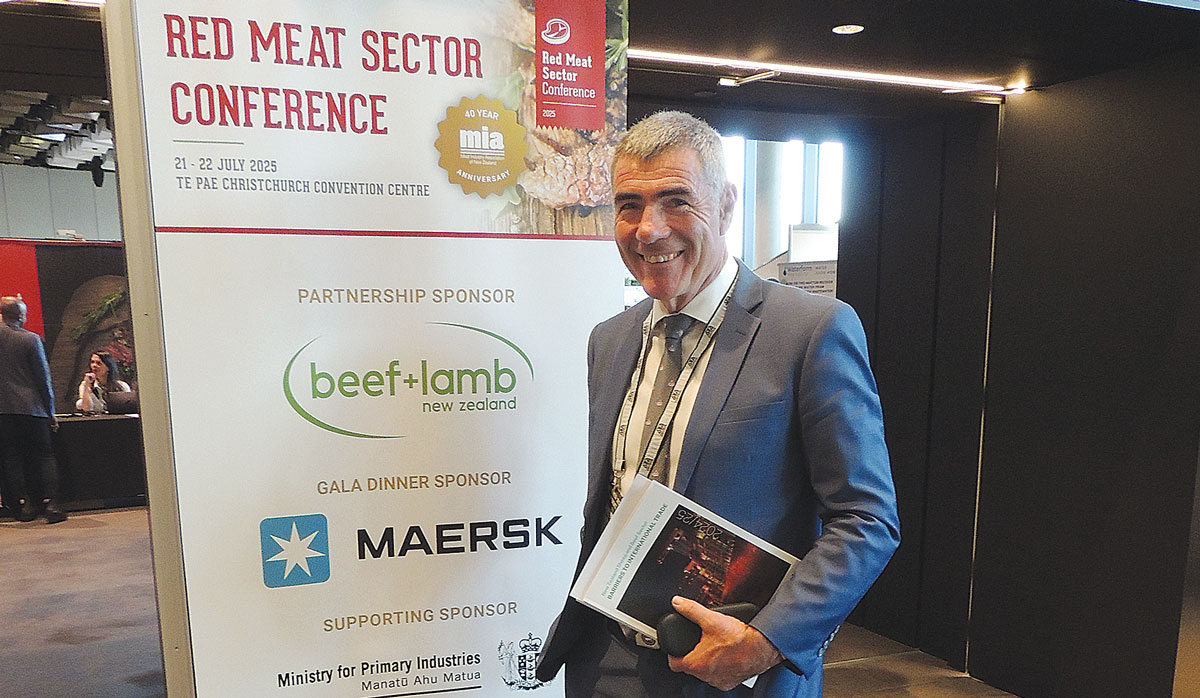
Nathan Guy, independent chair of the Meat Industry Association, says that while they maintain that safeguard measures being applied to New Zealand are unjustified, this quota is currently only for three years and has room to grow from 206,000 tonnes to 214,000 tonnes by 2028, maintaining New Zealand's current market share.
 |
|---|
|
Meat Industry Association chair Nathan Guy. |
"We are working closely with the Ministry of Foreign Affairs and Trade, the New Zealand Government and Chinese authorities on the administration and management for this quota."
Beef + Lamb NZ chair Kate Acland says that between 2019 and 2024, New Zealand's beef exports to China have averaged 193,000 tonnes.
"Therefore, the Chinese decision to impose a country-specific zero tariff rate quota volume of 206,000 tonnes is broadly in line with New Zealand's historic average exports.
"However, the out-of-quota tariff rate of 55% means growth above that volume is unlikely.
"Importantly, demand for beef globally is strong at present and New Zealand has alternative markets available."
OPINION: The United States wine market has changed forever, and companies cannot use same old playbook, said Erin Kirschenmann at the New Zealand Wine 2026 Wine Business Forum in August.

Chinese beef trade quotas and a looming suspension of Brazilian beef imports into the European Union are expected to reshape global beef trade flows over the remainder of 2026, with implications for New Zealand exporters, according to Rabobank's Q3 Global Beef Quarterly report.
As dairy farmers lock in plans for the upcoming mating season, a partnership between Fonterra and Silver Fern Farms has been formed with the aim of making it simpler to create additional value from calves not entering the replacement herd.
China remains New Zealand’s biggest market, taking $23 billion of our exports, but it’s no longer a commodity story, says Prime Minister Christopher Luxon.
Fonterra is strengthening its foodservice presence in China with the launch of a new cream for professional bakeries at Bakery China 2026 in Shanghai.


Safer Farms is urging farmers to make sure everyone working on farm has safe, suitable footwear for the job.

The Government is backing work on a community-led water storage scheme that could irrigate up to 11,000 more hectares of the Poverty Bay flats, Agriculture Minister Todd McClay says.
Agri-tech company Herd-i has become a new all-region sponsor of the New Zealand Dairy Industry Awards (NZDIA), the largest nationwide celebration of excellence in the dairy sector.
Four candidates have been confirmed for two director positions on Fonterra’s board.
Returning to the family dairy farm after playing 20 years of professional rugby around the world is no easy task.
After delivering another record farmgate milk price to 100 supplying farms, independent milk processor Tatua is entering thee new financial year with a positive outlook.