
Mark Hooper Joins NZPork Board as Independent Director
Rural leader Mark Hooper has been appointed as an independent director to the NZPork board, bringing extensive farming, governance and advocacy experience to the role.
 increase font size
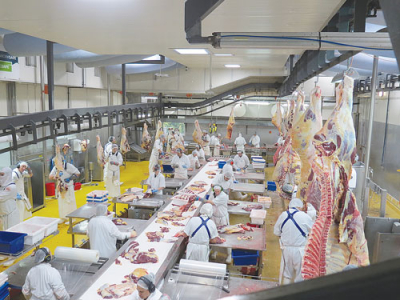
African swine fever’s huge impact on China’s pork production this year will be a huge opportunity for New Zealand’s meat industry.
Rabobank’s global strategist for animal protein Justin Sherrard believes the market hasn’t yet fully picked up on the impacts the disease will have.
“This has become a major issue in China,” he told Rural News.
“China’s pork production could be down by as much as 20% during 2019 and China produces and consumes about a half of the world’s total pork. You are talking about a 10% reduction in global pork meat production this year.
“It is not possible to find that much more pork meat in the world to send to China. It just doesn’t exist and it cannot be produced within the timelines – within the course of calendar year 2019.”
Sherrad is confident demand will rise for more beef, sheepmeat, poultry and seafood to substitute for pork in China. Beef and sheepmeat may not be the number-one substitute, he concedes; that will likely be poultry.
“But China cannot produce enough poultry to close the gap. And the world does not have enough pork to close the gap.
“So there will be increased demand for all the proteins. We probably will not see that until the second half of this year.
“How strong the demand signal is for sheepmeat and beef is not easy to say; there are many uncertainties about this disease. But it is important to understand this change is coming during the course of this year.”
This is an opportunity for the NZ meat industry, Sherrard says.
“NZ’s beef exports to China went up markedly in the fourth quarter of 2018.
“They even went higher than exports to the US. China is already well in the sights of NZ’s beef supply chains.
“Here’s a signal that they might become even more important.”
Trade uncertainties could play well
Trade complexities also add to uncertainties on what will happen with the African swine fever situation, Sherrard says.
That includes the US-China trade war. “The US is the producer that can increase pork production faster than any other in the world but the US is facing very high tariffs to export that pork meat into China.
“You have increased demand but you’ve also got increased complexity in trade so it is hard to know who will be allowed to send pork to where.”
The European Union is the world’s biggest pork exporter, but may be reluctant to turn away from good long-standing customers to focus on the strong demand and presumably price signal coming from China.
“You have to pick the behaviour of traders and the relationship between President Xi Jinping of China and President Donald Trump of the US. There is a lot to get our heads around in trade markets.”
Other factors include challenges in the global poultry market and the impact of African swine fever on closing ‘grey channel’ trade into China via Vietnam and Hong Kong.
“There are many, many moving parts in the trade map and this is further complicating the situation on African swine fever and what is going to happen, who exactly has the meat and how it is going to get into China.”
He says NZ is well placed to take advantage of this.
“NZ only has upside from some of these complications. NZ has pretty straightforward trade relationships, no particular complexities, no particular argument,” Sherrard adds.
“The question then becomes more a domestic story about what is the supply outlook for this year.”
Currently domestic beef production is tipped to be marginally down or flat and sheepmeat also continuing the trend of slightly down.
Rural leader Mark Hooper has been appointed as an independent director to the NZPork board, bringing extensive farming, governance and advocacy experience to the role.

Chinese beef trade quotas and a looming suspension of Brazilian beef imports into the European Union are expected to reshape global beef trade flows over the remainder of 2026, with implications for New Zealand exporters, according to Rabobank's Q3 Global Beef Quarterly report.
As the cost-of-living crisis continues to put pressure on household grocery budgets, new figures show pork remains one of the most affordable fresh meat options for New Zealand families.
New Zealand consumers are paying more for beef mince than ever before, with the average retail price now sitting above $24 per kilogram, according to Rabobank.
West Otago dairy farmer Luke Kane has been awarded the 2026 Rabobank Dr John Morris Business Development Prize.

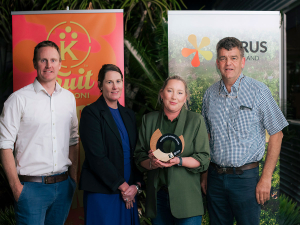
New Zealand's citrus growers were challenged to build their future on the value embedded in their fruit rather than the volume they produce, at Citrus New Zealand's annual gathering in Gisborne on 17 September.

Leading John Deere technicians and apprentices from New Zealand and Australians were recognised at the recent sixth annual JD Technician of the Year Awards, held in Brisbane.
In Dacre, near Invercargill in New Zealand’s South Island, Bruce Dinnington is running a dairy operation unlike any other.
A free online platform aggregating governance vacancies across rural and regional New Zealand has been launched.
Environment Minister Nicola Grigg has announced details of a new rural plastics recycling scheme.
Agricultural drone operators say that a government decision to allow lower-risk drone work without certification won’t lower standards but drive innovation and efficiency.