Fonterra FY26 Results: $9.69 Milk Price, $3.4bn Profit
Fonterra has unveiled its annual results for the 2026 financial year, posting $27 billion in revenue and close to $20 billion returned to New Zealand farmer owners and unit holders.
 increase font size
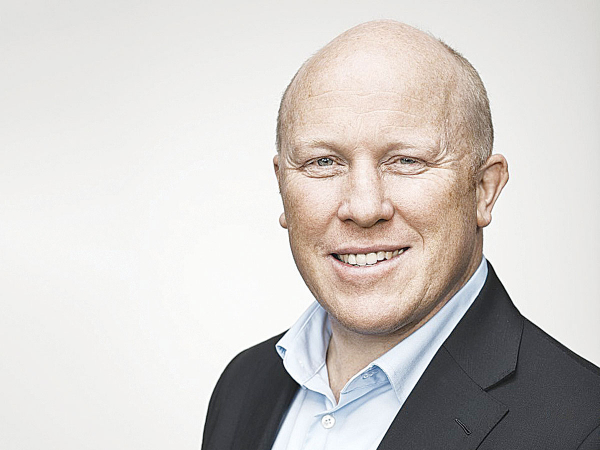 Fonterra chief operating officer Fraser Whineray.
Fonterra is making solid progress towards its sustainability targets, says chief operating officer Fraser Whineray.
The co-operative’s greenhouse gas emissions are 11% lower than 2018 levels and it remains on track to reach the goal of 30% reduction by 2030.
The co-operative is also ahead of target for delivery of Farm Environment Plans (FEP) for its 9,000 farming families.
Whineray says 71% of farmers now have plans, against a target of 67% for the 2022 financial year – on track for 100% by 2025.
The number of Fonterra farmers achieving the Co-operative Difference benefits has almost doubled, with more than 70% achieving it at some level.
From the 2021-22 season, farms became eligible for the Co-operative Difference payment of up to 10 cents/kgMS, based on meeting specific criteria, covering milk quality and an on-farm demonstration of care for the environment, animals, people and community.
Last week Fonterra released its Sustainable Finance Framework which aligns the co-op’s funding strategy with its sustainability ambitions and reflects the evolving preferences of lenders and debt investors in this area.
Fonterra’s Framework outlines how the co-operative intends to issue and manage any sustainable debt, which could include green bonds and sustainability- linked bonds and loans. The Framework has been developed with joint sustainability co-ordinators HSBC and Westpac NZ and has been independently verified by ISS Corporate Solutions, confirming alignment with globally agreed sustainable finance principles.
“This new Framework is a step on our sustainable financing journey – aligning with our Cooperative’s broader sustainability ambitions,” says Simon Till, Fonterra director capital markets.
“Over the next decade we intend to significantly increase our investment in sustainability-related activities and assets throughout our supply chain to both mitigate environmental risks and continue to differentiate our New Zealand milk.
“By FY30 we intend to invest around NZ$1 billion in reducing carbon emissions and improving water efficiency and treatment at our manufacturing sites.
“In doing so, we will be taking significant steps towards our aspiration to be Net Zero by 2050 and we plan to align our funding with this approach.”
The co-operative is also working with partners and other stakeholders on a wide range of potential solutions to help reduce biological emissions.
Fonterra, along with other agribusiness leaders, recently entered into a joint venture with the Government, as part of the new Centre for Climate Action on Agricultural Emissions.
Under the MOU, industry partners have already made an indicative commitment up to around $35 million and potentially $172 million invested over the next four years to develop and commercialise practical tools and technologies for farmers.
“Over the next four years we’re looking to scale up an investment in methane reduction of around $50 million through this joint venture,” says Whineray.
“We know we can, with the Government, achieve more by partnering with others and are looking forward to working together to find solutions that will benefit our farmer owners along with the rest of New Zealand.”
Fonterra has unveiled its annual results for the 2026 financial year, posting $27 billion in revenue and close to $20 billion returned to New Zealand farmer owners and unit holders.
Fonterra Co-operative Group has confirmed the independently assessed candidates standing for election to its board in 2026.
Fonterra has revised its Farmgate Milk Price forecast for the 2026/27 season, lifting the midpoint and narrowing the range on the back of improving global dairy commodity prices.
Outgoing Fonterra Co-operative Council chair John Stevenson says that it has been a privilege to represent the co-op's farmer shareholders.
OPINION: It seems Canterbury processor Synlait is still in the doldrums.



LIC shareholders have elected a new North Island representative to the co-operative's Board, along with five representatives to its Shareholder Reference Group (SRG), following the company's Annual Meeting held in Invercargill.
Farmers across parts of Southland and South Otago are continuing to deal with difficult conditions after a prolonged run of wet weather, with pressure building around feed supply, stock management, pasture damage, farm infrastructure and everyday workloads.
Federated Farmers says it welcomes Labour's commitment to reviewing the Sharemilking Agreements Act, calling on other major parties to do the same.
For Canterbury dairy farmers Sian Meijer and Rick Wobben, wearable technology has become one of their most valuable on-farm tools - helping manage 1850 cows across an expansive, high-performing dairy operation while improving efficiency, mating outcomes and day-to-day decision making.
Fonterra has unveiled its annual results for the 2026 financial year, posting $27 billion in revenue and close to $20 billion returned to New Zealand farmer owners and unit holders.
The first major update to the Dairy Cattle Code of Welfare in more than a decade has been released, marking what DairyNZ describes as an important step in ensuring animal welfare standards continue to evolve alongside scientific evidence and on-farm realities.