Why Now Is the Time to Plan Farm Succession, Findex Says
OPINION: Succession and long-term planning are perennial topics because it is perpetually sidelined on busy farms.
 increase font size

HIGH COMMODITY prices doubled the annual profit of corporate farmer Rural Equities Ltd in the last financial year.
The company’s earnings at least doubled to $24 million on high prices for milk, beef and lamb; earnings before interest and tax reached $6.4m, compared to $3.3m the previous year.
Commenting in the 2013-14 annual report, REL chairman David Cushing says the substantial increase is primarily due to record milk production and milk price; performance gains and improved profitability from the group’s three directly managed Waikato sheep and beef properties also contributed.
REL owns 25 farms totalling 12,087ha, a mix of sheep and beef, dairy, deer and arable farms spread from northern Waikato to Southland. There are 14 properties in the South Island and 11 in the North Island; nine farms are directly managed comprising 5361ha.
Six of the directly managed farms are dairy farms, all with 50/50 sharemilkers, and the remaining three are the Waikato sheep and beef farms. The six dairy farms total 1190ha and milk about 3820 cows. The three Waikato group farms cover 4171ha and run 30,000 stock units.
Cushing says record milk production for the third successive year was achieved on the six dairy farms; the company supplies Fonterra and Synlait.
“We have completed a generally successful farming year. Although there was a significant autumn drought over much of the North Island, overall national climatic conditions were favourable,” he says.
Prices for wool and lamb lifted from the low levels experienced in the previous year and beef remained at attractive levels.
Fonterra’s final milk price for last season is $8.40/kgMS; Synlait paid its suppliers $8.27/kgMS.
Cushing says its two Canterbury dairy farms, Rocklea and Milford, switched to supplying milk to Synlait from August 2013; the four other dairy farms continue to supply Fonterra.
REL’s property values, including its sheep and beef farms, increased by $20m last year.
Cushing says the rural property market was again buoyant with further growth in values nationally, but especially in Canterbury and other dairy regions.
“Of particular note is the welcome lift in rural property values throughout the North Island and for sheep and beef properties generally. The value of these properties has largely been stable for several years and an increase in the value of the Hawke’s Bay and Waikato properties is pleasing.”
Investing in properties held to improve land use, value, earnings and the overall quality of the holding has been a long term strategy for the group, says Cushing.
The conversion of part of the Eiffelton property near Ashburton to a 233ha dairy unit milking up to 940 cows was confirmed during the year; milk production will start August 2015. Like its other Canterbury dairy farms Eiffelton will supply Synlait.
Cushing says the remaining 163ha of the Eiffelton property will provide grazing for replacement dairy stock and grow supplementary feed. It could also be converted to a dairy unit milking up to 650 cows. In the interim, the irrigation system on that block will be added to and upgraded.
Cushing says most of the development of the three Waikato sheep and beef farms is finished, except for fencing particularly at Waikoha.
Pasture renewal continues on all three farms: Annandale, Puketotara and Waikoha are run as a group – 4171ha running 30,000 stock units.
Cushing says two big summer and autumn droughts in a row have crimped productivity and earnings from these farms but production has kept improving.
The company paid a dividend of 7c/share this month; last year it paid 6c/share.
OPINION: Succession and long-term planning are perennial topics because it is perpetually sidelined on busy farms.
OPINION: It seems Canterbury processor Synlait is still in the doldrums.
OPINION: Get offside with New Zealand First leader Winston Peters at your own peril.
Farms across the upper North Island are trialling different pasture mixes as part of a research programme that aims to build greater resilience into farming systems.


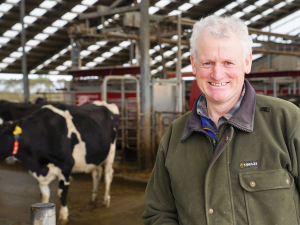
In Dacre, near Invercargill in New Zealand’s South Island, Bruce Dinnington is running a dairy operation unlike any other.

A free online platform aggregating governance vacancies across rural and regional New Zealand has been launched.
Environment Minister Nicola Grigg has announced details of a new rural plastics recycling scheme.
Agricultural drone operators say that a government decision to allow lower-risk drone work without certification won’t lower standards but drive innovation and efficiency.
OPINION: Warning bells are ringing in the arable sector.
Farmgate lamb prices are down by 8%, beef cattle by 4.5% and farm expenditure up by 4.2%.