Four Candidates Confirmed for Fonterra Board Election
Four candidates have been confirmed for two director positions on Fonterra’s board.
 increase font size
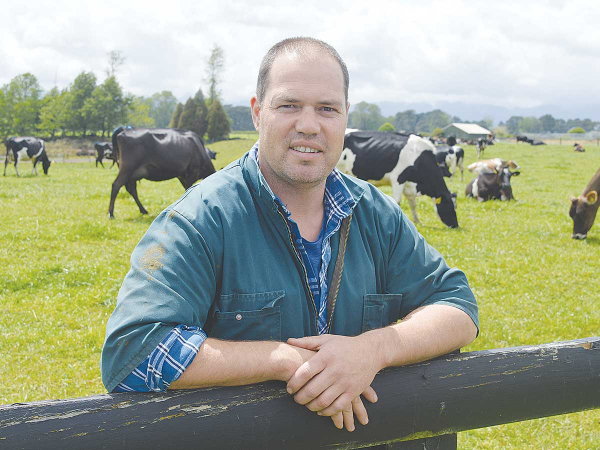 Shareholders Council chair James Barron has admitted in its submission to the review steering group that the council is failing to achieve the trust and respect of its farmers.
The Fonterra Shareholders Council admits that it’s failing to achieve the trust and respect of its farmers.
It has told a steering group about challenges and constraints it faces, including being prevented from sharing and discussing information with shareholders due to market disclosure rules.
A copy of the council submission was obtained by Rural News.
The steering group, chaired by retired senior public official James Buwalda, is reviewing the council’s functions. A final report is expected this month.
In its submission to the steering group, the council points out that its “watchdog and cornerstone shareholder” mantles do not reflect the reality.
The council says that as Fonterra’s cornerstone shareholder, its view should be heard when the board and management are considering matters which affect farmers’ supply or ownership interests.
“This has happened to varying degrees over time. What is meant by ‘cornerstone shareholder’ needs to be more clearly defined and have a more prescribed framework,” it says.
The council isn’t consulted and has no role in the development or approval of, Fonterra’s strategy, business plans and use of shareholder capital.
The council says it learns of these decisions when shareholders do.
“If council is required to be a cornerstone shareholder it must be empowered to be one, but should only focus on matters of importance to a cornerstone shareholder in a co-op context.”
The council performance committee, which monitors the co-op’s performance, also operates under great restraint.
Information provided by board and management cannot be shared with the rest of council, let alone with shareholders.
The council says there’s also a reluctance to provide the committee with information considered sensitive under market disclosure rules.
“These factors frustrate the reporting function, do not enable the committee to empower other councillors with knowledge to assist their discussions in the farmer base, contribute to unrealistic expectations about council’s ability to call out poor performance early or influence investment decisions, and tie council into shareholder perceptions of complicity with the board.”
Some Fonterra shareholders claim the council is a lap dog to the board.
The council says there are differences of opinion with the board but they are resolved behind closed doors.
It told the steering group that there has historically been a desire to keep differences of opinion between board and council in-house …“that is, behind closed doors, resolved constructively and out of the media”.
“This has given rise to a shareholder impression that council is unduly compliant and does not as a matter of course express an alternative view.”
The council maintains that it has a role to play. Some shareholders want the council scrapped.
The council notes Fonterra’s shareholding base is widely dispersed with no substantial shareholders.
“This means that, without a representative body, the collective power of shareholders would be difficult to organise in a way that adequately protects their interests.”
Four candidates have been confirmed for two director positions on Fonterra’s board.
A record farmgate milk price and strong global demand is laying the foundation for continued growth of organic dairy farming in New Zealand.
Waikato milk processor Tatua has again declared a record milk payout to farmer shareholders, leaving other processors in the dust.
Fonterra has unveiled its annual results for the 2026 financial year, posting $27 billion in revenue and close to $20 billion returned to New Zealand farmer owners and unit holders.
Fonterra Co-operative Group has confirmed the independently assessed candidates standing for election to its board in 2026.


A major move is about to get underway to improve the quality and viability of dairy beef and cattle in NZ.
Veterinarians say changes to the code of welfare for dairy cattle provides a positive foundation for improved cattle welfare across the country.
Today, 15 October, is the International Day of Rural Women, which recognises rural women’s contribution to farming, communities and the environment.
Global dairy giant Lactalis has integrated its Australian operations with the Mainland Dairy consumer business it acquired from Fonterra earlier this year.
After almost two decades of sharemilking, saving and building equity, Aaron and Marcia Flay this year realised their long-held dream of settling on their first dairy farm.
Good medium to long term prospects for NZ beef, especially in the US, has heighted the focus on various initiatives to capitalise on this situation.