What Would Synlait Be Worth to Fonterra or a2 Milk?
Speculation of a possible joint move by Fonterra and a2 Milk to buy Synlait raises a much bigger strategic question, says agribusiness expert Dr Nic Lees.
 increase font size
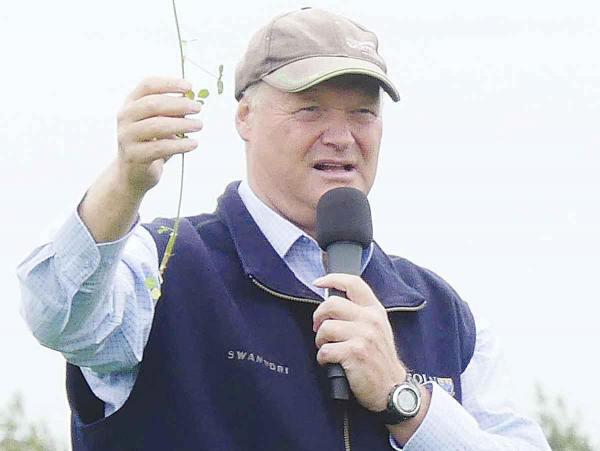 Professor Derrick Moot, Lincoln University.
A quarter-century of weather data from one Central Otago farm is being analysed to see if it could lead to better farm planning for temperature and moisture variations across different altitudes and aspects.
The pilot programme, led by Professor Derrick Moot from Lincoln University, is one of multiple pieces of work being performed as part of the Hill Country Futures Partnership, a five-year project co-funded by Beef + Lamb New Zealand, the Ministry of Business, Innovation and Employment (MBIE), PGG Wrightson Seeds and Seed Force New Zealand.
The $8.1 million programme is focused on future proofing the profitability, sustainability and wellbeing of New Zealand’s hill country farmers, their farm systems, the environment and rural communities.
Moot says the decades of data, which comes from Lincoln’s Mt Grand Station near Lake Hāwea will be compared to data from NIWA’S Virtual Climate Station Network (VCSN).
The VCSN data estimates rainfall, air and vapour pressure, relative humidity, solar radiator, wind speed, soil moisture and evapotranspiration – processes by which water moves from the Earth’s surface into the atmosphere.
“Lincoln has had weather stations at Mt Grand for 25 years, recording temperature and rainfall at three different altitudes. It is easy to predict what is happening on flat land but most of New Zealand is hill country and there is lots of local change, through aspect and altitude or north or south facing slopes,” he says.
“NIWA gets its information from weather stations but also has a virtual network with the climate for the whole of New Zealand. What we want to see is how well the predictions from that match the data from our weather stations.
“Stations at the bottom of the valley do not pick up the difference between sunny and shady slopes so we are trying to quantify the difference in temperature and moisture across different altitudes and aspects and ultimately to help farmers plan better.”
“We are looking to see how big the difference is and how much of a difference it makes, and whether we could use NIWA’s virtual network,” says Moot.
“This is just a pilot, not a solution, but we have the opportunity to do this with the dataset we have available.”
Speculation of a possible joint move by Fonterra and a2 Milk to buy Synlait raises a much bigger strategic question, says agribusiness expert Dr Nic Lees.

Lynnette Hudson's 30-year obsession with Pinot Noir was sparked working vintage in Burgundy, seeing how subtle changes in terroir were expressed in the glass. It was, she says, "an elightening moment in every way".
A four year trial has reaffirmed that mixing plantain into dairy pastures can help reduce nitrogen losses to freshwater while maintaining milk production and profitability, say researchers.
Twenty five secondary school students from around New Zealand recently completed a three day residential programme designed to explore career opportunities across the food and fibre production supply chain.
A Lincoln University student is set to become the first person to contest both the Young Viticulturist and the Young Winemaker national titles in one year.


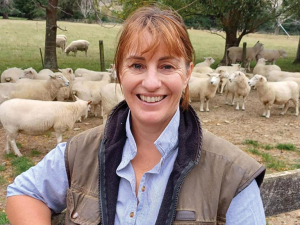
B+LNZ's Wormwise veterinarian Mary Bowron has won the Best Sheep and Beef Vet of the Year Award in recognition of her outstanding contribution to New Zealand’s sheep and beef sector.
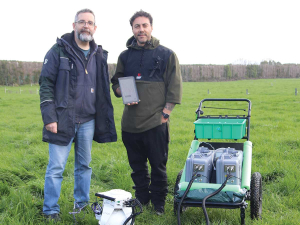
Researchers at Massey University are using a special piece of scientific equipment to improve the measurement of greenhouse gas emissions from pasture soils.
More signs of a booming kiwifruit sector.
OPINION: David Seymour and James Meager's plan to make it easier for farmers and orchardists to operate drones can best be described a 'courageous' move.
New Zealand wool is reaching new heights as air filtration companies move away from synthetic products to biodegradable alternatives.
Opuha Dam's ability to protect South Canterbury communities from major flooding has taken a significant step forward, with Opuha Water Limited (OWL) successfully commissioning a new outlet valve capable of releasing record volumes of water from the dam ahead of a weather event.