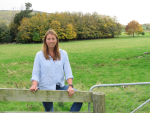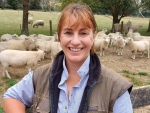
Mary Bowron Named Best Sheep and Beef Vet of the Year
B+LNZ's Wormwise veterinarian Mary Bowron has won the Best Sheep and Beef Vet of the Year Award in recognition of her outstanding contribution to New Zealand’s sheep and beef sector.
 increase font size
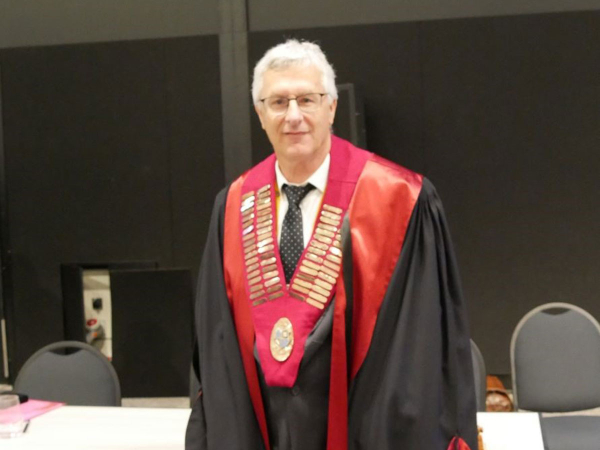 Dr Rob Mills has been named the new president of the New Zealand Veterinary Association.
Taranaki veterinarian Dr Rob Mills is the new president of New Zealand Veterinary Association (NZVA).
He replaces Dr Kate Hill, who was farewelled as president at the NZVA’s annual conference in Wellington today after three years in the role.
Mills said he was humbled to have been selected to follow in Hill’s footsteps.
“Kate leaves very big boots to fill, she is a legend in our industry, but I know am going into the role with a very strong and solid organisation.
“At the same time, as a profession, we are dealing with ever increasing levels of complexity and I know, for a lot of people, there is a feeling that however hard they work, it is never enough.
“I graduated in 1980 and I have seen the profession evolve and have also seen the increasing pressure that people in all roles in the sector are now under.
“A priority for the association is supporting our members as they navigate that, with huge pressure in terms of time, financial demands, the global shortage of vets and the challenges of meeting the highest welfare standards while maintaining a degree of balance in their lives.”
NZVA is dedicated to safeguarding the high skills, continuing development and ethical standards of the New Zealand veterinary profession, helping veterinarians be better recognised and valued for the unique role they play in society.
It advocates to government on behalf of the industry, promotes the profession as a career to young people and, through its Vet Support programme, also provides mental health and wellness resources and support to members.
“The strategic focuses of the organisation are advocacy and care,” says Mills. “But it is also really important that people in the profession can see they are part of something bigger, a supportive community.
“We celebrate the successes of the many different people and different roles and how they positively impact New Zealand and we must ensure we tell that story. I think the collegiality is also very important, providing the opportunity for people to get together, through our branch network and conference.”
Mills said ‘telling the story’ includes highlighting the vital role the veterinary profession plays protecting New Zealand’s all-important biosecurity system.
“There are a lot of our people working at the coalface, with organisations like the Ministry for Primary Industries, helping keep the borders safe and the next epidemic out,” he says.
“New Zealand is seen as a safe haven. We can export product and genetics because we are disease free and many other countries are not. There are a lot of vets working in those industries to make that happen.”
Mills said every day, in vet practices around the country, there will also be people giving time pro bono for the benefit of their community.
For him, that has been a commitment to native wildlife. He was named a Member of the New Zealand Order of Merit in the 2022 Queen’s Birthday Honours list for services to wildlife conservation.
In 2000, he developed a native bird care and treatment programme as CEO of New Plymouth Vet Group.
Since then, he and his team have cared for hundreds of birds including ones brought in by the Department of Conservation, Wildbase Hospital Massey University, and the public.
His work means that species such as the kororā/little blue penguin, ruru and kereru are able to receive care locally, which reduces the stress of travel to other regions.
He previously served as president of the NZVA Taranaki Regional Branch from 2000 to 2003 and Secretary from 2004 to 2007.
B+LNZ's Wormwise veterinarian Mary Bowron has won the Best Sheep and Beef Vet of the Year Award in recognition of her outstanding contribution to New Zealand’s sheep and beef sector.
Equine veterinarians say horse owners need to stay alert and communicate with their vets following an outbreak of the highly contagious bacterial disease Strangles in the North Island.
Vets say they support the responsible use of virtual fencing and virtual herding technology for cattle and wants to work with farmers, manufacturers and government to help shape standards for future use backed by ongoing research to strengthen animal welfare outcomes.
Animal owners can help protect life-saving antibiotics from resistant bacteria by keeping their animals healthy, says the New Zealand Veterinary Association.
Around 97% of New Zealand pet owners value the care provided by their vet teams, but the broader contribution of animal health professionals to society often goes unseen, a new study has revealed.


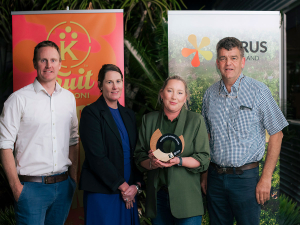
New Zealand's citrus growers were challenged to build their future on the value embedded in their fruit rather than the volume they produce, at Citrus New Zealand's annual gathering in Gisborne on 17 September.

Leading John Deere technicians and apprentices from New Zealand and Australians were recognised at the recent sixth annual JD Technician of the Year Awards, held in Brisbane.
In Dacre, near Invercargill in New Zealand’s South Island, Bruce Dinnington is running a dairy operation unlike any other.
A free online platform aggregating governance vacancies across rural and regional New Zealand has been launched.
Environment Minister Nicola Grigg has announced details of a new rural plastics recycling scheme.
Agricultural drone operators say that a government decision to allow lower-risk drone work without certification won’t lower standards but drive innovation and efficiency.