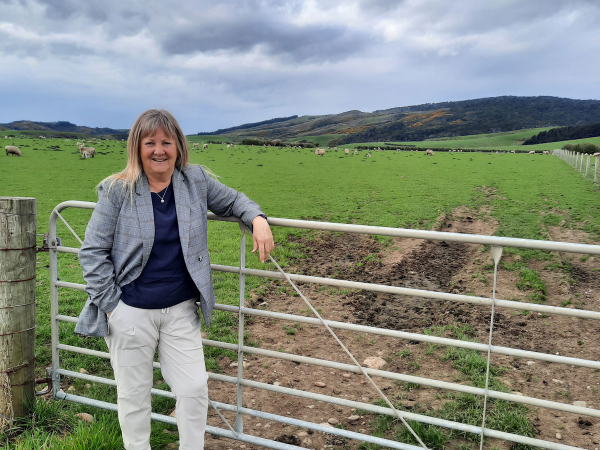
Invercargill MP and National Party Associate Spokesperson for Agriculture Penny Simmonds describes the Government’s recently released emissions plan as another kick in the guts for farmers, one which she claims threatens the future of farming in the South.
The Emissions Plan, released yesterday, has seen the Government accept most of the recommendations from the He Waka Eke Noa partnership, including a farm-level split-gas approach to emissions pricing.
“I’m deeply concerned at the implications of the Government’s proposals, which will effectively price farming off the market for a large number of people within the sector and risk leaving our rural communities in despair,” Simmonds says.
She says that while there has to be change, New Zealand farmers are already the most carbon efficient in the world and no other country has imposed a carbon tax on its agriculture sector.
She claims the proposals will see one-fifth of New Zealand sheep and beef farmers gone by 2030, along with a 5% reduction in the dairy sector, something she claims will send production and jobs offshore.
“It’s a lose-lose situation which undermines everything that our farmers are already doing to lower their emissions,” she says.
Simmonds isn’t the only parliamentarian arguing against the emissions plan, with Act Party leader David Seymour claiming the Government is committing to climate policy with little thought for the impacts on society.
“The consultation document states that dairy farmers will suffer a 6% reduction in revenues while sheep and beef farmers will be savaged by a 21% reduction,” Seymour says. “Based on anticipated export revenues in 2025, this translates to a $1 billion cut in dairy revenues and $2.5 billion in sheep and beef.”
Seymour claims the ramifications of the plan will hit the entire country, with food prices likely to increase as a result.
“They haven’t even thought through the emissions side of things, with emissions leakage likely to increase global emissions from agriculture as less efficient nations take New Zealand farmers’ share of the production pie,” Seymour says.
Previously, the leakage issue was raised by NZ Institute chief economist Eric Crampton when the He Waka Eke Noa recommendations were first released in June.
He claimed that if emissions pricing were to result in fewer cows on New Zealand pasture and more in feedlots overseas, global emissions could go up rather than down.
“The climate doesn’t care where a cow burps,” he says.
Consultation on the Government’s emissions plan will close on 18 November 2022, with final proposals going to Ministers for approval in early 2023.