
Rural Vote Debate on Q&A: Substance or Just Platitudes?
It was billed as a chance for all the political parties to woo the rural vote, but question marks hang over just how effective this was.
 increase font size
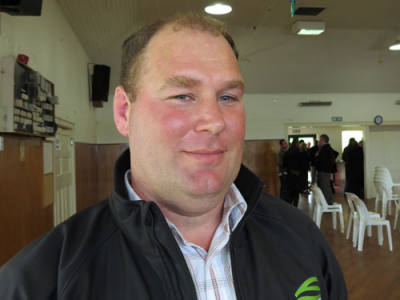 Federated Farmers vice-president Andrew Hoggard.
More farmers are feeling under financial pressure, and satisfaction with their banks has slipped, the May 2018 Federated Farmers’ Banking Survey shows.
The biannual survey drew 1,004 responses, more than double that of the last survey in November.
While results indicate the vast majority of farmers are still satisfied with their banks, those saying they were ‘very satisfied’ or ‘satisfied’ fell from 81% to 79% since November.
The fall was particularly pronounced for sharemilkers (68.5% satisfaction, down from 77%) although for them the drop was mainly driven by more of them having a neutral perception rather than being dissatisfied.
Perceptions of ‘undue pressure’ have also picked up, from 8.1% in November to 9.6% in May. The increase is mainly down to dairy, where the increase was from 10% to 13.8% (with sharemilkers rising from 9.7% to 13.5%). However, this pressure is still less than experienced in 2016 when one in five sharemilkers felt undue pressure.
Just on 15% of arable farmers reported feeling under more pressure from their bank, but there were only 46 respondents from that sector.
Federated Farmers vice-president Andrew Hoggard said while the average mortgage across agriculture has decreased in the past six months, it’s up from $4.6 million to $5.1m for dairy - the highest level since the surveys began in August 2015.
"We need to be careful interpreting these figures. It may just be a reflection of the profile of those who took part in the May survey compared to November participants.
"But it’s a fact that dairy holds two-thirds of the total agricultural debt of around $61 billion, and a growing proportion of that dairy debt is held by highly-indebted dairy farms."
It’s worth noting the Reserve Bank also released its six-monthly Financial Stability Report this week and continues to view dairy debt as a financial stability risk.
"On the positive side, the Reserve Bank observed that better and more stable dairy prices mean most dairy farms are currently profitable, allowing some farms to repay some debt," Hoggard says.
"But it warned dairy farming remains highly indebted and vulnerable to any future downturn in dairy prices. It identified Mycoplasma bovis as an emerging risk that has potential to negatively impact productivity and profitability, and noted that dairy faces long-term challenges, including the impact of response to environmental concerns, such as stricter regulations."
New Zealand Bankers’ Association Deputy Chief Executive Antony Buick-Constable was pleased the survey showed most farmers remain satisfied with their banks.
"Banks work closely with their agri clients, through good times and bad. Keeping the lines of communication open is critical to the ongoing success of farmers and their banks," Buick-Constable says.
The survey, conducted by Research First, also showed interest rates appear broadly stable, although sharemilkers continue to pay higher rates than farm owners, reflecting the fact they don’t have the same levels of security as farm owners.
Just under a third of ‘all farms’ reported having detailed and up-to-date budgets for the season about to begin but as usual sharemilkers did better in that regard, with two-thirds having that budget in place.
Farmers’ satisfaction with communication from their banks remained stable at around 74%, with sharemilkers the least satisfied.
It was billed as a chance for all the political parties to woo the rural vote, but question marks hang over just how effective this was.
Mid Canterbury Federated Farmers arable chair, Bevan Lill, said Beef + Lamb NZ data indicated that for the last six years, the average arable return on investment was about 0.8% while inflation ran about 4% - so the average arable farm was going backwards at about 3% a year.
For the first time in a quarter of a century, Federated Farmers has something positive to say about the Labour Party’s climate change policy leading into a general election.
Rural leader Mark Hooper has been appointed as an independent director to the NZPork board, bringing extensive farming, governance and advocacy experience to the role.
There's been widespread support from the primary sector for the Government's announcement on changes to freshwater farm plans that come under the Natural Environment Bill, which is now set to replace the existing RMA.



Leading John Deere technicians and apprentices from New Zealand and Australians were recognised at the recent sixth annual JD Technician of the Year Awards, held in Brisbane.
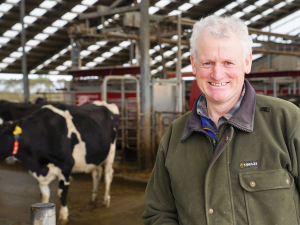
In Dacre, near Invercargill in New Zealand’s South Island, Bruce Dinnington is running a dairy operation unlike any other.
A free online platform aggregating governance vacancies across rural and regional New Zealand has been launched.
Environment Minister Nicola Grigg has announced details of a new rural plastics recycling scheme.
Agricultural drone operators say that a government decision to allow lower-risk drone work without certification won’t lower standards but drive innovation and efficiency.
OPINION: Warning bells are ringing in the arable sector.




