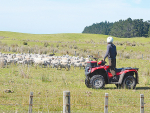
Mark Hooper Joins NZPork Board as Independent Director
Rural leader Mark Hooper has been appointed as an independent director to the NZPork board, bringing extensive farming, governance and advocacy experience to the role.
 increase font size
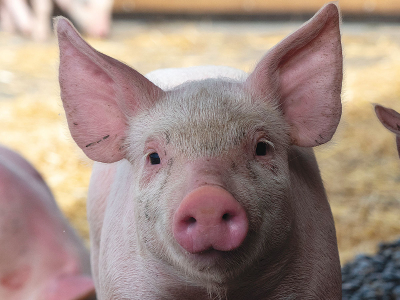 NZ’s $750 million pork industry is at risk if ASF hit our shores.
The $750 million New Zealand pork industry needs farmers’ help to keep out the deadly African swine fever virus.
NZ Pork wants farmers to review their on farm biosecurity precautions especially on farm workers returning from countries confirmed with AFS.
Farmers have been told to look into arranging no-contact time and stand-down periods for workers when they return from overseas, NZ Pork chief executive David Baines told Rural News.
According to the UN Food and Agriculture Organisation (FAO), the virus has spread to 11 Asian countries, including the Philippines, after decimating the pork industry in China.
NZ Pork says the World Organisation for Animal Health (OIE) recommends to all countries that the way to prevent the spread of ASF is for workers and visitors to stay away from pigs for at least five days after returning from overseas.
Additionally no pork products of any kind – local or imported – should be brought onto a pig farm.
Baines says experienced international farm workers, including those from the Philippines, play a large and positive role in NZ’s agricultural sector and work right across the country.
“We’re asking farmers and their staff to take a close look at the risks, for example if workers are travelling home to visit family and may come into contact with backyard pigs, and take precautions to manage them.
“The industry is concerned that the disease could be brought into this country through contact with infected animals or even on an item of clothing and transmitted to the local pig population.
“Even if a farm only raises a handful of pigs or if a worker just comes into contact with another farm that does, our real fear is that this disease could be picked up and spread into the commercial herd – with potentially catastrophic effects on our industry.”
ASF is transmittable when pigs come into direct contact with infected animals, or indirect contact with contaminated objects, or are fed contaminated pork products. While ASF can be fatal for pigs, humans are not susceptible to the virus.
BiosecurityNZ says it is taking the threat of ASF extremely seriously and closely monitoring the situation overseas.
New Zealand doesn’t import live pigs.
“Pork may only be imported into NZ if it meets our strict import conditions.
“We are constantly reviewing our import conditions (including for pork products) and we can implement additional safeguards based on best available science,” it says.
Last month, ASF outbreaks were reported in seven places in South Korea and on 100 farms in East Timor, just north of Darwin.
Baines says while the disease is getting ever-closer to our shores, it is difficult to quantify the level of risk.
“We know there are a number of potential pathways for the disease to reach NZ. One is illegal importation of infected meat.
“For example, earlier this year the Australian Government announced that testing of a sample of intercepted pork products – seized from mail and passenger luggage over a two-week period – had found ASF contamination in about 15% of the pork.
“Australia has very similar tourist profiles to NZ, so it is likely that NZ faces the same level of risk.”
Key points
• African swine fever outbreaks have been confirmed in 11 countries including South Korea and East Timor
• Pork supply in China is diminishing, driving pork prices to record highs
• Pork shortage across Asia will drive demand for higher imports of protein into the region.
Rural leader Mark Hooper has been appointed as an independent director to the NZPork board, bringing extensive farming, governance and advocacy experience to the role.

As the cost-of-living crisis continues to put pressure on household grocery budgets, new figures show pork remains one of the most affordable fresh meat options for New Zealand families.
Pork farmers says a significant influx of imported pork is causing them concern.
Farmer-led charity Meat the Need has expanded its offerings, following a new partnership.
OPINION: Your old mate notes that regulations governing NZ's pig sector could end up seeing us running out of locally produced pork - like we are currently experiencing with eggs.


Pāmu has released its FY26 Integrated Annual Report, reporting a Net Operating Profit of $113 million, more than double the $49 million recorded in FY25.

Meat Industry Association data, released alongside the Red Meat Sector conference in Wellington, shows export value climbing across the US, China, UK and Canada.
Applications are set to open for the 2027 Zanda McDonald Award, a trans-Tasman award recognised for identifying and fast-tracking talented young leaders in agriculture and agribusiness.
The Royal New Zealand College of General Practitioners (the College) and Hauora Taiwhenua Rural Health Network are calling for investment in a proposed new training pathway for rural GPs, warning that many rural practices are struggling to recruit while a large share of the existing workforce nears retirement.
Federated Farmers has called on Central Otago District Council (CODC) to drop or vote down a plan to truck sludge from Alexandra and Cromwell to farmland near Lauder, warning it would compound an "outrageous" situation created by a separate council's decision weeks earlier.
Synlait has swung to second-half profit as operations stabilise, but the dairy processor still posted a $75.4m annual loss.