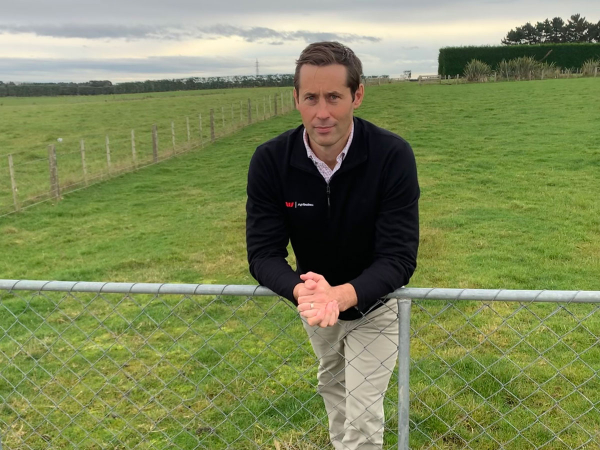
Federated Farmers and a major Australian-owned bank are at loggerheads over emissions reduction targets set for New Zealand farmer clients.
Feds’ banking spokesperson Richard McIntyre is accusing Westpac of setting tougher emissions reduction targets for farmers in New Zealand than for their Australian farming customers
"If I was one of Westpac’s rural banking customers, I’d be putting some serious questions to my bank manager this week," says McIntyre.
"It’s incredibly disappointing to see a big Aussie bank unfairly targeting Kiwi farmers and creating an unlevel playing field with our competitors across the ditch."
However, Westpac NZ head of agribusiness, Tim Henshaw points out that the emissions intensity target set for dairy and sheep & beef portfolios is a smaller absolute reduction than the target set by Westpac Group for Australian farmers.
“This reflects different starting positions, with New Zealand being more efficient today.
“The targets are at portfolio level, rather than for individual farmers, and are for an improvement in intensity rather than absolute reductions,” Henshaw told Rural News.
Read More
Westpac’s new climate targets will require Kiwi farmers to reduce their emissions to 0.75 tonnes of CO2-equivalent per tonne of milk. The bank is asking Australian farming customers to reduce their footprint to only 0.85 tonnes.
McIntyre says in 2023 Westpac estimated the emissions intensity of their New Zealand dairy farming portfolio to be 0.77 tonnes of CO2-equivalent per tonne of milk.
"What that means is New Zealand farmers are already well ahead of where Westpac are asking Australian farmers to get to by 2030. Where’s the fairness in that?" McIntyre says.
"By setting a more ambitious target for New Zealand, Westpac are making it clear they expect our local farmers to go further and faster than Australian farmers - and unfairly carry that cost."
Henshaw says their targets align with what’s required for on-farm emission reductions from the Science Based Targets Initiative (SBTI) pathways for the Oceania region. “We also commissioned research that gave us further confidence the targets are achievable based on current best practices and technology.
“Other companies, such as Fonterra, have used the same pathway to set their agriculture emissions reduction targets, and our targets are similar to other New Zealand organisations working in the agri sector.
“We appreciate our farmers are world leading and we want to help them stay ahead of competitors. That’s why we offer our customers a Sustainable Farm Loan, which incentivises on-farm sustainability improvements. This is proving popular with our customers with over $3 billion of lending - 43% of our agri term lending – now on a Sustainable Farm Loan.”
The bank also rejected McIntyre’s claim that in May Federated Farmers wrote to Westpac NZ chief executive Catherine McGrath raising these concerns on behalf of our members.
“Disappointingly, she never even replied, “according to McIntyre.
But Henshaw says McIntyre’s assertion that we did not reply to a letter from him in May is incorrect.
“We have regularly engaged with Federated Farmers on a range of topics, and our CEO Catherine McGrath sent a detailed reply to Mr McIntyre in May, which he acknowledged and thanked us for.”
The relationship between Federated Farmers and major banks has been testy. The Feds have been successful in calling for a parliamentary select committee inquiry into banking, particularly around the return on capital banks are getting from rural lending and the level of interest rates charged to the sector.
McIntyre says Federated Farmers’ latest banking survey showed that only one in 11 farmers supported banks setting climate change targets.
"Farmers simply don’t trust foreign-owned banks to be setting emissions reduction targets. We don’t want or need them," McIntyre says
"We already have emission reduction targets that have been set by the Government, and further targets set by our milk and meat processing companies. Banks should stay out of it.
"If we had more banking competition in New Zealand, banks like Westpac wouldn’t be able to get away with setting these kinds of unfair targets," McIntyre says.
McIntyre says Westpac’s emissions reduction target is “something Parliament’s banking inquiry, which is currently underway, should be taking a much closer look at”.