Removing Grapevines Safely: Disposal Options Compared
I am often asked by industry people, what are the options for removing a grapevine without producing a phytosanitary problem? Can it be done sustainably? What will it cost me?
 increase font size
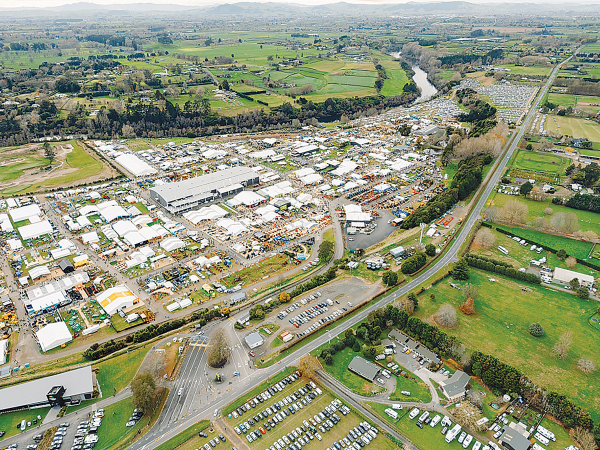 National Fieldays aims to not only reduce its environmental footprint but also to inspire broader change across the sector.
Through collaborative efforts with exhibitors, visitors, and industry partners, Fieldays says it is reaffirming its commitment to environmental responsibility with new initiatives for 2025.
"Our goal is to not only reduce the environmental footprint of Fieldays, but also to inspire broader change across the sector," says Janine Frohlich-Monk, community & sustainability executive at the New Zealand National Fieldays Society.
"From waste management to education, we want to embed sustainability into every part of the event."
In the lead-up to the event, Frohlich-Monk has worked closely with exhibitors to help them set sustainability goals and implement waste reduction practices. She is also piloting a new sustainable exhibitor framework. Selected exhibitors who have previously engaged in Fieldays sustainability initiatives have been invited to participate in trialling the framework. The objective is to raise awareness and shape the future of sustainable exhibiting at Fieldays.
"This pilot is about building a robust, scalable, and genuinely impactful programme for exhibitors and attendees," says Frohlich-Monk.
Among the new sustainability-focused updates this year, the Society is introducing a new initiative by lining all site-wide recycling, compost, and landfill bins with clear bags. previously, only the recycling and compost bins were lined. This new change allows the event's dedicated waste management team, Closed Loop NZ, to efficiently sort and triage the waste as it arrives.
Additionally, as in previous events, the cooking oil used by food vendors will be collected and sent to Direct Fats and Oils. The used oil undergoes an extensive filtration and cleaning process to remove contaminants. This purified oil is then transformed into various products, including biofuel, soap, animal feed, and materials for roading.
The Fieldays Sustainability Awards, in association with Instep, will also shine a light on sustainable exhibitors. Introduced in 2019, the award has now expanded into two categories: Small Business Sustainability, and Large Business Sustainability - ensuring fair recognition across all sizes of businesses.
"These awards aim to celebrate the creative and impactful work businesses are doing, no matter their size," says Frohlink-Monk.
For attendees, sustainability can be part of the Fieldays experience, with environment-focused sessions in the new Fieldays Tent Talks, in association with the University of Waikato. Highlights include 'Predator Control on Farms' with Wildlife Biologist Cam Speedy and a presentation by Frohlich-Monk on the Mystery Creek Community Catchment, a unique local ecosystem working toward a replicable, self-sustaining environmental model. Her talk will detail the collaborative conservation efforts within the catchment area, home to the critically endangered Pekapeka (long-tailed bat) and other native species.
As part of the wider sustainability strategy, the Society recently disclosed its indirect emissions, known as Scope 3 emissions, to show the organisation's commitment to transparency and environmental responsibility.
The report from Instep, an organisation supporting businesses in environmental reporting, details the Society's indirect greenhouse gas emissions, offering a clearer understanding of its impact on the supply chain.
"We believe that it's not about waiting until everything is perfect before sharing your story; it's about sharing your journey as it unfolds. This transparency and honesty can inspire others to take their own steps towards sustainability," says Frohlich-Monk.
I am often asked by industry people, what are the options for removing a grapevine without producing a phytosanitary problem? Can it be done sustainably? What will it cost me?
Pāmu has released its FY26 Integrated Annual Report, reporting a Net Operating Profit of $113 million, more than double the $49 million recorded in FY25.
Environment Minister Nicola Grigg has announced details of a new rural plastics recycling scheme.
Almond hulls sourced from Australian orchards may have the potential to help New Zealand cows reduce emissions, boost milk yield and lower input costs.
The Government is introducing a new nationwide rural recycling scheme that will significantly increase the recovery of farm plastics from March next year, Minister for the Environment Nicola Grigg announced today.


Farmers are being encouraged to rethink how they manage waste on farm with the launch of ruralwastesorted.co.nz, a new website bringing together practical tips, real farmer experiences and resources.

New Zealand Winegrowers (NZW) is celebrating the India-New Zealand Free Trade Agreement (FTA) coming into force today, bringing New Zealand wine improved access to one of the world’s fastest-growing economies.
New Zealand’s red meat sector has welcomed the India-New Zealand Free Trade Agreement taking effect, which removes India’s 33% tariff on New Zealand sheepmeat.
More than 95 per cent of New Zealand’s forestry and wood exports to India can now enter tariff free as the New Zealand-India Free Trade Agreement comes into force today.
Federated Farmers is backing Feilding High School’s call to keep Agriculture and Horticultural Science as a standalone subject in Year 11.
Food and fibre exports have returned a billion- dollar bonus to the country.