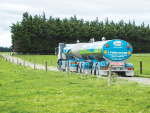
Fonterra FY26 Results: $9.69 Milk Price, $3.4bn Profit
Fonterra has unveiled its annual results for the 2026 financial year, posting $27 billion in revenue and close to $20 billion returned to New Zealand farmer owners and unit holders.
 increase font size
Low milk prices have not only affected farmgate returns in New Zealand, they blew a $44 million hole last financial year in Fonterra's China farm business.
In the last financial year, ending July 31, 2015, the co-op spent $360m developing farming hubs in China; normalised earnings before interest and tax (EBIT) was -$44m.
The co-op is blaming the loss on the low milk price in China, a drop in livestock valuation and farm development costs.
However, Fonterra chairman John Wilson expects the Chinese farm operations to return to profit this financial year.
Wilson says the co-op hopes the milk price in China will reach sustainable levels within six months.
"It's hard to predict how milk prices will move," he told Rural News. "But our Chinese farms are efficient, safe and have good environmental credentials and we are happy with that."
Some Fonterra farmers have questioned the investment in China and the lack of returns.
Wilson says Fonterra farmers understand how important the farms are as part of its commitment to China's dairy industry.
"They also know how important it is to source own milk for value added products in China. Just like farmers in NZ, farmers in China are facing low milk prices and are not making money."
Fonterra has nearly completed its second hub in Ying County, Shanxi Province. Like the first Yutian Hub, near Beijing, the hub will end up with five farms of 3000 cows each.
Sales volume of raw milk for the year increased to 164,000 million tonnes largely due to additional capacity coming online. This equates to 12m kgMS of milk produced for the year.
Fonterra has signalled the future investments in China farms may include funding from strategic partners as well as the co-op, enabling continuing integration.
Despite the loss in the China farming business, Fonterra reported a net profit after tax of $506m for the financial year, 183% more than the previous year.
Fonterra has unveiled its annual results for the 2026 financial year, posting $27 billion in revenue and close to $20 billion returned to New Zealand farmer owners and unit holders.
Fonterra Co-operative Group has confirmed the independently assessed candidates standing for election to its board in 2026.
Fonterra has revised its Farmgate Milk Price forecast for the 2026/27 season, lifting the midpoint and narrowing the range on the back of improving global dairy commodity prices.
Outgoing Fonterra Co-operative Council chair John Stevenson says that it has been a privilege to represent the co-op's farmer shareholders.
OPINION: It seems Canterbury processor Synlait is still in the doldrums.



Federated Farmers says it welcomes Labour's commitment to reviewing the Sharemilking Agreements Act, calling on other major parties to do the same.
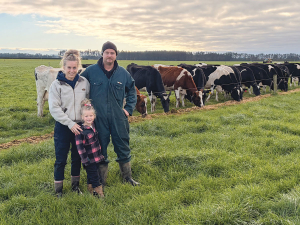
For Canterbury dairy farmers Sian Meijer and Rick Wobben, wearable technology has become one of their most valuable on-farm tools - helping manage 1850 cows across an expansive, high-performing dairy operation while improving efficiency, mating outcomes and day-to-day decision making.
Fonterra has unveiled its annual results for the 2026 financial year, posting $27 billion in revenue and close to $20 billion returned to New Zealand farmer owners and unit holders.
The first major update to the Dairy Cattle Code of Welfare in more than a decade has been released, marking what DairyNZ describes as an important step in ensuring animal welfare standards continue to evolve alongside scientific evidence and on-farm realities.
Ravensdown shareholders have elected Jane Montgomery and Kate Acland to the Ravensdown Board for three-year terms, following a closely contested director election.
Federated Farmers says new legislation replacing the Resource Management Act will cut red tape, unlock investment and help grow New Zealand's export-led economy, after the Planning Bill and Natural Environment Bill passed their third reading in Parliament yesterday.




