MPI Opens New Canberra Position to Support Exporters
In line with New Zealand’s strategy to open up new markets, the Ministry for Primary Industries (MPI) his extending its diplomatic footprint.
 increase font size
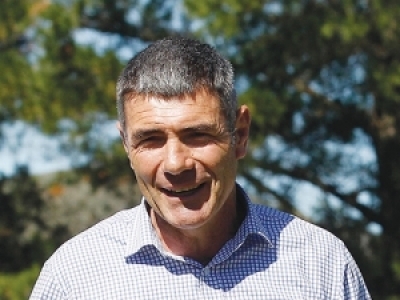 Nathan Guy.
Government funding for the ongoing plan to eradicate bovine tuberculosis has been approved by Minister for Primary Industries, Nathan Guy.
As part of an industry and Government partnership the Crown has committed $69.8m spread over the next four years (on top of $30.2m already contributed).
The remaining funding for the TB Plan of $150m spread over the same period is provided by the beef, dairy, deer and livestock exporting industries.
OSPRI chairman Jeff Grant has welcomed the announcement: "The confirmation of funding for the TBfree programme means we can fulfil our mandate and continue the excellent work done to date.
"Bovine TB has been very effectively managed in New Zealand over the past 20 years to the point where the number of cattle and deer herds showing infection has been reduced below 40."
OSPRI CEO Michelle Edge says the goal of the new TB Plan is to eradicate bovine TB from New Zealand by 2055, with freedom from TB in livestock by 2026 and wildlife by 2040. With funding now confirmed OSPRI can begin planning future operations in accordance with new TB Plan.
Two important changes to the new plan will see the introduction of risk based testing and risk based testing vector control.
Edge says, "Given the scope of these changes it is important to understand that the new plan will be phased in according to the design shaped by our field based research, and according to the new risk-based approach to livestock testing and wildlife control.
"We will be working with our service providers, such as contractors and testing organisations, to work through the implications of the new plan on our operational-based work programmes."
More details about the work to implement the new plan and the associated funding will be made public over the coming weeks.
In line with New Zealand’s strategy to open up new markets, the Ministry for Primary Industries (MPI) his extending its diplomatic footprint.

The head of the Ministry for Primary Industries (MPI) trade and international relations group says New Zealand is well-positioned to secure trade access and compete internationally as the world becomes more complicated, demanding and uncertain.
Three men have been sentenced in District Courts after Ministry for Primary Industries prosecutions over animal welfare, food safety and cattle tracing offences.
New Zealand’s red meat sector has welcomed the India-New Zealand Free Trade Agreement taking effect, which removes India’s 33% tariff on New Zealand sheepmeat.
New Zealand's role is not to compete with Indian growers, according to NZ Apples and Pears.
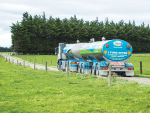


New analysis from DairyNZ highlights the growing importance of efficiency and cost control in maintaining profitability, with a widening gap between New Zealand’s highest and lowest performing dairy farms.
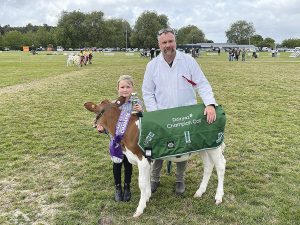
For eight-year-old Myra Smith, weeks of caring for and preparing her Red Holstein Friesian calf, Bell, have paid off, with the young Te Pahu handler taking home the Champion Dairy Type title at the recent Waikato A&P Show held at Claudelands.
A titan of the meat industry but a humble and generous guy.
In line with New Zealand’s strategy to open up new markets, the Ministry for Primary Industries (MPI) his extending its diplomatic footprint.
Demand for dairy products over the next two decades will increasingly be shaped by demographic shifts, rather than population growth alone.
The global dairy industry is fighting back against alternative proteins masquerading as dairy products.