
Rural NZ Welcomes $8.5m Government Health Package
Rural New Zealand is welcoming the Government’s recent package of rural healthcare initiatives.
 increase font size
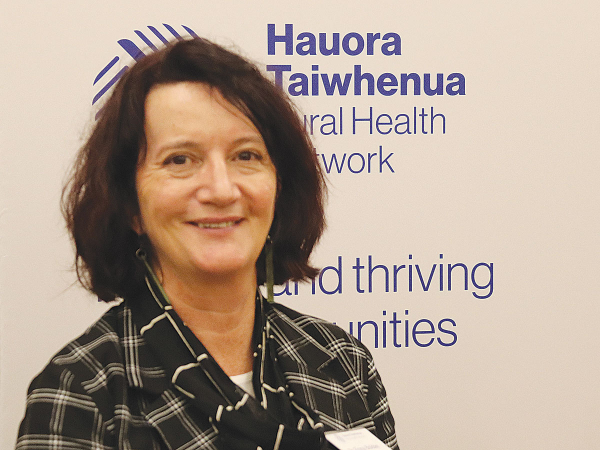 HTRHN chair Fiona Bolden is disappointed that rural health only received one page of specialist attention in the 108 page document.
The Ministry of Health has recently released the Te Pae Tata/Interim Health Plan mapping out the health sector's work programme over the next two years.
Rural communities will be able to determine their own geographical areas to be defined as a 'locality'. This clarification will provide some reassurance that rural communities' needs can be planned specifically for that rural grouping, instead of rural communities and their needs being subsumed within an adjacent urban population.
Hauora Taiwhenua Rural Health Network (HTRHN) says that while rural health getting its own brief section in the report was encouraging to see, they are disappointed that rural populations are not listed under the chapter on priority populations.
Chief executive Dr Grant Davidson notes that the significantly poorer health outcomes of rural populations is a key reason for their inclusion as Priority Populations. Rural health outctomes significantly traile those of their urban counterparts and rural Māori, being up to 200% worse off.
"The principal issue facing rural health is a lack of trained health professionals," Davidson explains.
"While the plan does recognise this shortage and chair Rob Campbell's introduction promises a sustaianable and fit-for-purpose workforce, what it fails to provide is any detail on how this sustainable workforce will be delivered, especially in our rural and remote areas."
HTRHN chair Fiona Bolden also expressed disappointment to Rural News that despite comprising a quarter of the population – and being listed as a priority population – rural health only received one page of specialist attention in the 108 page document. For comparison, Māori health received seven pages.
The section on rural, states that rural areas have lower incomes and a higher number of children, elderly and Māori compared to urban – all three demographics known for extra healthcare needs. A Workforce Taskforce has been established to prioritise a national work programme to address workforce pipelines and staffing shortages.
Nevertheless, there are upsides to the plan. Hauora Taiwhenua says that the Interim Health Plan is strongest for rural people in ensuring health data systems in the future will use the Geographical Classification for Health. This is something Hauora Taiwhenua had been pushing hard for and will mean that health data can be differentiated according to the rurality of the person being treated.
Bolden told Rural News that the flexibility of locality planning and support of telehealth services was a positive note in the report.
“The health system will now be able to be held to account for equitable outcomes for rural people in areas such as cancer diagnosis and treatment rates, access to primary care, people living with chronic health conditions, and more,” Davidson adds.
Bolden added that: “Pay parity for rural nurses and GPs and allowing rural students to train in doctors or nurses in urban areas will need support.”
Rachel Haggerty of Health NZ told Rural News that the definition of rural and how it is used to inform healthcare planning is part of the work Te Whatu Ora has been undertaking to ensure accurate understanding of rural health needs.
Rural New Zealand is welcoming the Government’s recent package of rural healthcare initiatives.

OPINION: It really is getting harder to lampoon government bureaucrats when they do such a good job of it themselves.
Anyone in the primary sector will know about the clowns covering the countryside in the red tape we all have to wade through.
Spare a thought then for media outfit Stuff who were threatened with fines up to $200,000 by a snivelling civil servant from the MoH for illustrating a quiz question with a photo of part of the cover of a 45-year-old copy Playboy.
As Stuff notes, “It wasn’t the Playboy cover which caused offence. No, it was the back page which… featured an advert for a cigarette brand”.
As Regulations Minister David Seymour notes, “The real scandal here is, well, no wonder we’ve got problems in healthcare when they’re doing the Stuff quiz during work time.”
Rural Women New Zealand this month submitted on the Draft Mental Health and a Wellbeing Strategy 2026-2036, because a person's postcode should not determine the quality of their mental health support.
As the first of a new series of interprofessional rural training hubs opened in South Taranaki late September, Rural Health Network has celebrated the move as a "key pathway to encourage the growth and retention of health professionals in rural areas".
Rural health advocates say the Government's decision to establish a new medical school at the University of Waikato augurs well for the rural sector.



LIC shareholders have elected a new North Island representative to the co-operative's Board, along with five representatives to its Shareholder Reference Group (SRG), following the company's Annual Meeting held in Invercargill.
Farmers across parts of Southland and South Otago are continuing to deal with difficult conditions after a prolonged run of wet weather, with pressure building around feed supply, stock management, pasture damage, farm infrastructure and everyday workloads.
Federated Farmers says it welcomes Labour's commitment to reviewing the Sharemilking Agreements Act, calling on other major parties to do the same.
For Canterbury dairy farmers Sian Meijer and Rick Wobben, wearable technology has become one of their most valuable on-farm tools - helping manage 1850 cows across an expansive, high-performing dairy operation while improving efficiency, mating outcomes and day-to-day decision making.
Fonterra has unveiled its annual results for the 2026 financial year, posting $27 billion in revenue and close to $20 billion returned to New Zealand farmer owners and unit holders.
The first major update to the Dairy Cattle Code of Welfare in more than a decade has been released, marking what DairyNZ describes as an important step in ensuring animal welfare standards continue to evolve alongside scientific evidence and on-farm realities.




