
Faulkner: Take Rural Infrastructure Out of Politics
Federated Farmers' new vice president Sandra Faulkner says the issue of adverse events emergency management and infrastructure needs to be taken out of the three-year political cycle.
 increase font size
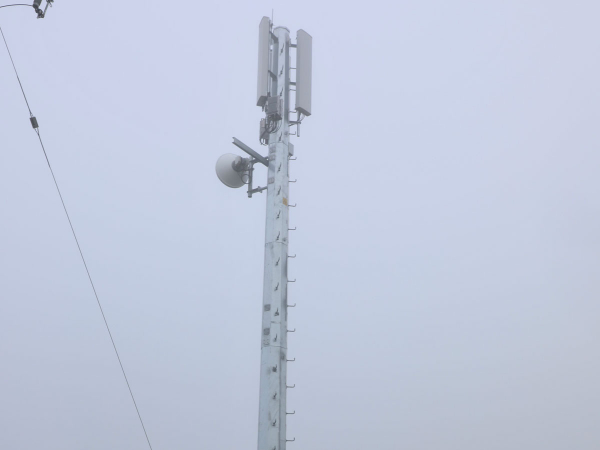 The 250th 4G mobile tower, located in Wiltsdown, south of Hamilton
The Government has welcomed the completion of the 250th 4G mobile tower, as part of its push for better rural connectivity.
Waikato’s Wiltsdown, roughly 80 kilometres south of Hamilton, is home to the new tower, developed by the Rural Connectivity Group to enable improved service to 70 homes and businesses in the surrounding area.
The Government says that nationally, under the Rural Broadband Initiative Phase 2 (RBI2), Government-funded connectivity programmes have improved connectivity for more than 62,000 rural households and businesses.
“This Government is committed to ensuring that more rural communities enjoy the social and economic benefits of fast, reliable broadband connection,” says Minister for Digital Economy and Communication David Clark.
“Along with building new infrastructure to deliver improved digital connectivity to rural areas, the Government committed $10 million in Budget 2021 to open up suitable radio spectrum for rural communities, where broadband capacity and coverage is under pressure.
“This will mean vastly improved broadband for rural communities in the long-term as the 600MHz band, is a lower frequency, better suited to 5G services in rural areas,” Clark says.
The Government says it remains committed to its 2020 Election Manifesto commitment to establish a $60 million fund for improving connectivity and backhaul services in the worst connected parts of New Zealand.
“We understand the need for, and want to see the delivery of, reliable fast internet connections to rural Aotearoa,” says Clark.
Federated Farmers' new vice president Sandra Faulkner says the issue of adverse events emergency management and infrastructure needs to be taken out of the three-year political cycle.

The Infrastructure Commission has endorsed a plan by Chorus to expand fibre broadband to 95% of New Zealand much to the delight of rural women.
Coming to the fore following the carnage of Cyclone Gabrielle, Starlink became well known for providing internet access even in NZ's most inaccessible places.
The director-general of the Food and Agriculture Organization of the United Nations (FAO) says the UN has a role to play in leveraging the power of digital technologies.
Chorus says rural New Zealand is at risk of losing real opportunities if it can’t stay connected.


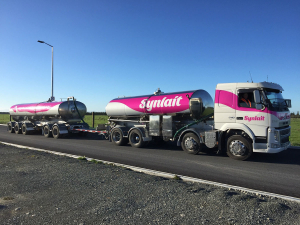
Synlait has swung to second-half profit as operations stabilise, but the dairy processor still posted a $75.4m annual loss.

LIC shareholders have elected a new North Island representative to the co-operative's Board, along with five representatives to its Shareholder Reference Group (SRG), following the company's Annual Meeting held in Invercargill.
Farmers across parts of Southland and South Otago are continuing to deal with difficult conditions after a prolonged run of wet weather, with pressure building around feed supply, stock management, pasture damage, farm infrastructure and everyday workloads.
Federated Farmers says it welcomes Labour's commitment to reviewing the Sharemilking Agreements Act, calling on other major parties to do the same.
For Canterbury dairy farmers Sian Meijer and Rick Wobben, wearable technology has become one of their most valuable on-farm tools - helping manage 1850 cows across an expansive, high-performing dairy operation while improving efficiency, mating outcomes and day-to-day decision making.
Fonterra has unveiled its annual results for the 2026 financial year, posting $27 billion in revenue and close to $20 billion returned to New Zealand farmer owners and unit holders.




