Fonterra Elections 2026: Voting Opens Tuesday 20 October
Fonterra shareholders can begin voting on Tuesday 20 October in the 2026 Board of Directors’ election, a Co-operative Council election in one Ward, and seven Annual Meeting resolutions.
 increase font size
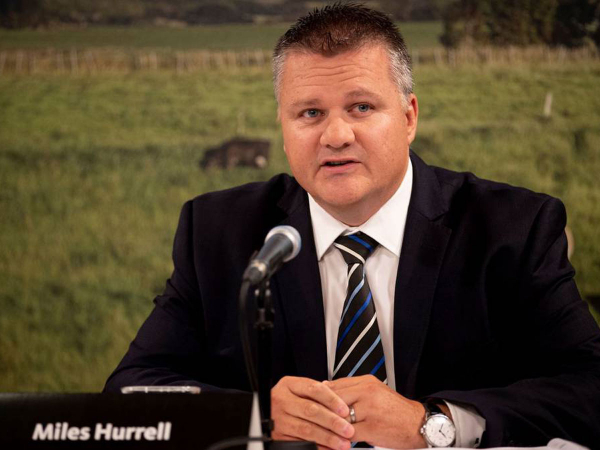 Fonterra chief executive Miles Hurrell.
Soaring whole milk powder (WMP) prices are lifting forecast milk price to Fonterra farmer suppliers but it is also affecting the co-op’s profitability.
Fonterra’s first quarter results have taken a $60 million hit, thanks mostly to WMP prices rising 30% compared to first quarter results last year.
The co-operative has delivered a total group earnings before income and taxes (EBIT) of $190 million for the three months ending October 31.
Chief executive Miles Hurrell says there have been a number of factors at play in the first quarter.
“We’re seeing stable sales volumes in our foodservice channel, but a milk price at these high levels has squeezed margins. Our Chilean business continues to improve but tightening margins and weaker local currency in other markets have impacted our consumer channel overall.
“In our Ingredients channel, we’re seeing margins in our longer-term pricing contracts return to more normal levels, which has helped push Total group gross margin up from the last quarter last year.
“We continue to see the benefit of our focus on financial discipline with lower interest expense, and operating expenditure down 2% on the same quarter last year.”
Hurrell says “looking at the whole picture”, he’s proud of what’s been achieved.
“With EBIT of $190 million and a strong farmgate milk price, we are starting to consistently deliver solid commercial outcomes.”
While the impacts of COVID-19 continue to be felt around the world, Hurrell says the co-op is working hard to deliver for farmer owners, unit holders and customers and supporting employees.
“The resilience of our people and our supply chain means we continue to stay on top of the strong demand for our New Zealand milk.”
“However, it is concerning to hear about new variants, which are potentially more resistant to vaccines. There is also the ongoing question of whether economies can rebound from the pandemic and then sustain their financial health.”
Fonterra shareholders can begin voting on Tuesday 20 October in the 2026 Board of Directors’ election, a Co-operative Council election in one Ward, and seven Annual Meeting resolutions.

Fonterra Co-operative Group chief financial officer Andrew Murray has resigned to take up a role outside the dairy giant.
Four candidates have been confirmed for two director positions on Fonterra’s board.
A record farmgate milk price and strong global demand is laying the foundation for continued growth of organic dairy farming in New Zealand.
Waikato milk processor Tatua has again declared a record milk payout to farmer shareholders, leaving other processors in the dust.


Federated Farmers has welcomed new rural policies released by ACT, saying they align closely with its own election priorities.

Rural Contractors NZ says proposed changes to land transport rules for agricultural vehicles are a welcome response by the Government to out of date regulations which have seen members hit with huge fines.
Alliance is calling for final applications for its 2027 Graduate Programme, with applications closing on Sunday 25 October.
Decades piloting planes has ensured vet and farmer David Hayes is focused on safety. So, after a serious accident while welding on farm, he is sharing his experience so others can learn from it.
Canterbury milk processor, Synlait Milk has confirmed Leon Fung as its chief executive officer.
OPINION: Making it easier to collect rainwater and use it to grow crops and livestock is a no brainer.