DairyNZ Resilient Pastures Trial Expands Across North Island
Farms across the upper North Island are trialling different pasture mixes as part of a research programme that aims to build greater resilience into farming systems.
 increase font size
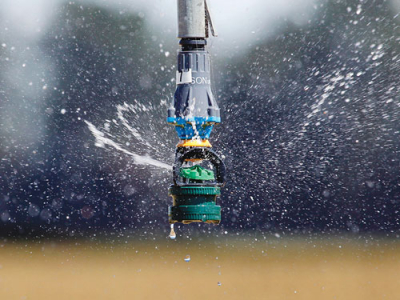
A newly released study suggests major irrigation projects in Kaipara and the mid-north of Northland could create hundreds of jobs and boost the regional economy by tens of millions annually.
Despite relatively high average annual rainfall, a lack of suitable storage means much of this water can’t be conserved for use at other times, including summer and during the droughts that have plagued parts of the region in recent years.
Authorities keen to see the region’s rainfall used more sustainably have looked at the feasibility of setting up more irrigation schemes, not only to ease drought impact but to potentially deliver economic and environmental benefits.
Only about 8500ha of Northland is irrigated (most of it for horticulture) and the region is home to just two 1980s-built irrigation schemes - one near Kerikeri and the other at Maungatapere, near Whangarei.
Penny Smart, who represents the Northland Regional Council’s Kaipara constituency, says any new irrigation ventures would most likely be for horticulture rather than enabling conversion of land to dairy.
She says Kaipara and the mid-north have already been identified as potentially viable locations for larger scale irrigation initiatives and the new study looks in more detail at the availability of water and likely viability of community water storage facilities.
The $300,000 study, called ‘Scoping of Irrigation Scheme Options in Northland’, was jointly paid for by the regional council and central government.
Carried out by a consortium of consultants (led by Opus) over the past nine months, the study found the demand for water was significantly more on a per hectare basis – but varied less seasonally – in the Kaipara than the mid-North. “Water in the mid-North will be utilised over a longer period of each irrigation season.”
Smart says a suggested, larger-scale Kaipara water storage option would encourage diversification of existing land use, as well as provide a reliable water supply within Dargaville and the wider community.
“The study estimates about 6300ha, much of it on the Pouto Peninsula, could be irrigated for about $115 million, predicting this could lead to employment for another 950 people and contribute about $85m to the regional’s GDP annually.”
Smart says while growers couldn’t afford to build the schemes alone, given the likely flow-on economic, environmental and other benefits they would offer the wider community there is a potential case for wider investment, including by central and local government.
“The study acknowledges that the potential cost to develop all four schemes in the scoping report – as much as $300m – would be considerable for Northland alone. With that in mind, it suggests one possible solution could be to establish a special funding body to enable a mix of public, private and iwi investment.”
The council plans to share the report’s findings with its district council counterparts and liaise with them and central government to see what appetite there may be, if any, to progress things.
However, even if support was forthcoming, it could still take several more years – and many millions of dollars of design and engineering work – before construction of any irrigation schemes finally began.
Farms across the upper North Island are trialling different pasture mixes as part of a research programme that aims to build greater resilience into farming systems.
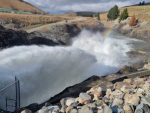
Opuha Dam's ability to protect South Canterbury communities from major flooding has taken a significant step forward, with Opuha Water Limited (OWL) successfully commissioning a new outlet valve capable of releasing record volumes of water from the dam ahead of a weather event.
OPINION: Since when did one and one make three? Who didn't smell an elephant-sized rat when our leaders decided to give $60 million to save the cement factory in Northland?
New Zealand needs to make sure that it continues to focus on its own food security, according to HortNZ board member and blueberry grower Dermott Malley.
A five-year study has found that the cost of reducing emissions without technology may be significant and unsustainable for Northland dairy farmers.


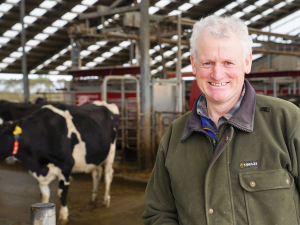
In Dacre, near Invercargill in New Zealand’s South Island, Bruce Dinnington is running a dairy operation unlike any other.

A free online platform aggregating governance vacancies across rural and regional New Zealand has been launched.
Environment Minister Nicola Grigg has announced details of a new rural plastics recycling scheme.
Agricultural drone operators say that a government decision to allow lower-risk drone work without certification won’t lower standards but drive innovation and efficiency.
OPINION: Warning bells are ringing in the arable sector.
Farmgate lamb prices are down by 8%, beef cattle by 4.5% and farm expenditure up by 4.2%.