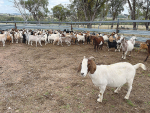
New export records for Aussie goatmeat
The Australian goatmeat industry set a new record for production and exports last year.
 increase font size
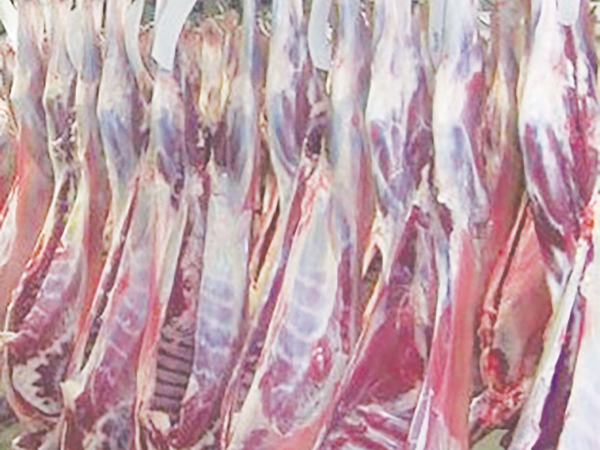 NZ goat meat only needs to capture a small part of the US market to succeed.
The US goat meat market provides profitable potential for NZ hill country farmers, in Garrick Batten's opinion. From his extensive industry background, he discusses this potential in the second of three articles.
USDA information shows about 2 million meat-producing goats in America supply half the consumer demand in the US, with a Muslim population of 3.5 million, more than twice as many Latinos - as well as people of Asian-origin.
The US's national herd and slaughter is shrinking by 1-2% annually. Texas, which supplies 40% of the US market, has dropped 80% in 10 years.
Batten believes that the US goat meat production situation is unlikely to change, with the cost of land and feeds for at least half the farms with small herds often focused on circular, seedstock, parentage-based breeding. He adds the current drought and fires will influence supply from southern range states as well.
According to Batten, NZ goat meat only needs a small part of the US market to succeed.
To provide a realistic comparison for NZ farmers, he uses a 25kg LW – 11.5kg carcase and USDA S2 grading. His analysis of the last 10 years of prices and shows increases from $125 to $215 per head, with December – May festival-influenced premiums adding average 17%. Batten adds that current lower prices, reflect increased supplies and lower summer consumption.
“National average retail meat prices are triple live auction prices, where USDA monthly reports show per kg prices for bone-in leg over $60 and over $45 for ground and stew meat,” he told Rural News.
Batten believes that local lamb prices provide an interesting comparison.
“There is not a great deal of difference in major Texas live auction prices for wool and hair breed lambs and often a better price for goats at similar low weights,” he says. “This also shows average lamb cut prices as being similar to ground and stew goat meat, with up to 50% premium for grass-fed.”
He concedes that the US market does need understanding. For example, corner grocery stores rather than supermarkets sell most goat meat, adding to distribution, logistical and cost complexities.
“Ethnic consumers tend to buy carcases, although lately, more half and quarters and even some retail cuts.”
Batten adds there are notable retail price differences, with fresh at about double that of frozen meat from Australia. He says research shows that ethnic taste panelists could not distinguish the two types of meat for flavour, tenderness juiciness or overall satisfaction.
He suggests that larger, older Australian frozen carcases shape US customer perception, but still return their farmers 50% more than ours.
The Australian goatmeat industry set a new record for production and exports last year.
Hill country farmers cannot ignore the goat meat market opportunities such as in North America, according to goat farming expert Garrick Batten. He outlines why in the third of his three part series on the topic.
"Adding pastoral goats with suitable management is the production base to develop a niche in an existing market,” Garrick Batten claims.
Goats can add simple and low-cost production benefits to bottom-line profitability for sheep and beef operations, explains Garrick Batten.
Long-time goat industry stalwart Garrick Batten looks into why farm gate goat meat profits have not matched FOB prices, potential market returns or other meats.


Waikato milk processor Tatua has again declared a record milk payout to farmer shareholders, leaving other processors in the dust.

A Labour-led Government won’t be bringing back the controversial freshwater rules of 2020.
National’s much-touted free trade deal with India featured in the Rural Issues Debate at Mystery Creek, Hamilton on Wednesday night.
New Zealand's 2026-27 freshwater fishing season has opened, with anglers encouraged to head to rivers and lakes over the coming days as conditions look favourable across much of the country.
Central Otago District Council (CODC) has voted against a plan to spread treated sewage sludge from Cromwell and Alexandra on farmland near Lauder, a decision Federated Farmers says reflects strong opposition from rural residents.
Pāmu has released its FY26 Integrated Annual Report, reporting a Net Operating Profit of $113 million, more than double the $49 million recorded in FY25.