Beef Progeny Test strengthens NZ beef genetics
Mating wrapped up last month at the across-breed Beef Progeny Test on Pāmu’s Kepler Farm in Manapouri.
 increase font size
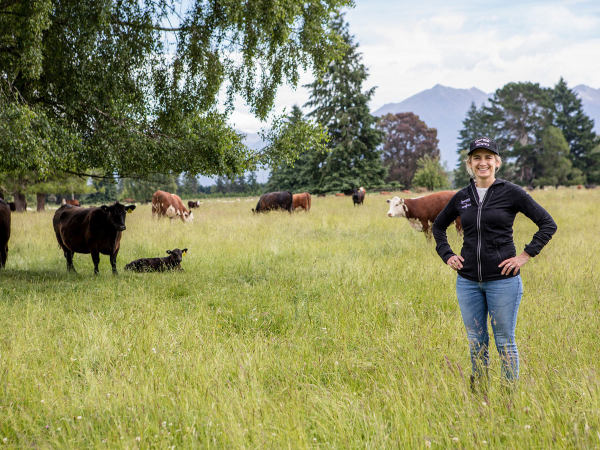 Gemma Jenkins
New Zealand beef farmers are being asked for their views on what cattle traits are important to them as part of a ground-breaking genetics programme.
The Informing New Zealand Beef programme is asking farmers to take part in a Trait Prioritisation Survey to help inform the direction the programme takes in developing the genetic evaluation system for the industry.
The survey aims to gain valuable insights into farmer demographics, views and behaviours around genetics and indexes, and trait preferences. It will also help prioritise traits of importance for those taking part in the research.
“The survey’s findings, along with input from the programme’s Industry Advisory Group and industry experts, will allow us to make decisions on what traits should be developed as part of the INZB programme,” says INZB programme manager Gemma Jenkins.
“We’re really encouraging farmers to take part in the survey as this will help determine the direction of this important programme but also the direction of the New Zealand beef industry.”
AbacusBio has already carried out an independent assessment of potential new traits that could be developed within the INZB programme.
This assessment involved a review of breeding traits used within major global beef evaluations and research programmes.
Traits were evaluated against a range of impact/value and ease of implementation criteria including economic, environmental, cost and time to implement, data availability and reliance on genomics.
Fourteen traits including fertility/maternal, growth/efficiency, carcass & eating quality, health & welfare and the environment were then recommended for further development. Now it’s time for New Zealand’s beef farmers to have their say.
Beef + Lamb New Zealand, with the support of the Ministry for Primary Industries, is leading the Sustainable Food & Fibre Futures (SFF Futures) partnership INZB programme.
The overall aim of the seven-year programme is to improve profitability and enhance sustainability across the beef industry through the development and adoption of improved genetics.
In addition to developing a beef genetic evaluation system to support a sustainable beef farming industry in New Zealand, the programme will also create easy to use tools to enable data to be efficiently collected, managed, analysed and used by farmers to make profitable decisions for their operation.
The survey can be found at: https://survey.alchemer.com/s3/6872592/BLG-Trait-Survey-2022
Mating wrapped up last month at the across-breed Beef Progeny Test on Pāmu’s Kepler Farm in Manapouri.
This is the first in a series of articles from Beef + Lamb New Zealand's Informing New Zealand Beef programme. The seven-year INZB partnership, supported by Beef + Lamb New Zealand and the Ministry for Primary Industries' Sustainable Food and Fibre Futures fund, aims to boost the sector's profits by $460m.
A further ten commercial beef farmers have been selected to take part in the Informing New Zealand Beef (INZB) programme to help drive the uptake of genetics in the industry.
New Zealand's primary sector is being called on to help shape the future of the country's industry by sharing views and insights about the availability and use of genetic tools.
More bull breeders are using genetic tools according to the latest research.
New Zealand dairy farmers are set to be the first in the world to receive access to a new digital physical milk pricing tool that enables them to fix the price for their physical milk.
State farmer Pāmu is opening its farm gates this summer in an effort to give the rural sector the opportunity to see how large-scale, multi-system farming is delivering productivity and profitability across New Zealand.
A five-year study has found that the cost of reducing emissions without technology may be significant and unsustainable for Northland dairy farmers.
DairyNZ says Waikato farmers need certainty on Plan Change 1, but they say that certainty must be matched with practical, workable rules and a clear transition that doesn't get ahead of the new resource management system currently under review.
While the Government has moved quickly to make commercial hauliers' lot easier during the current fuel crisis, they appear to be stuck in the creep box when it comes to the agricultural industry.
Waikato farmers have been told that the Government’s new planning system legislation and the region’s Plan Change 1 (PC1) “won’t mesh together very well”.