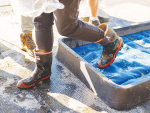
Biosecurity Ranked Top Priority In KPMG Agribusiness Agenda 2026
According to new research, industry leaders have ranked world-class biodiversity as the number one priority for the 16th year in a row.
 increase font size
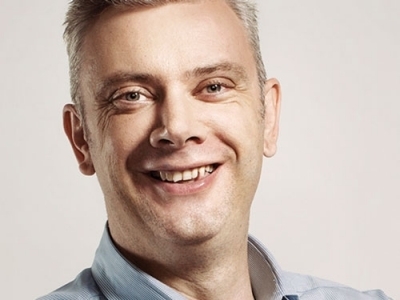 KPMG's global head of agriculture Ian Proudfoot.
KPMG's global head of agriculture Ian Proudfoot, who is British, says the outcome of the Brexit referendum was plain to see for several months.
He was reminded, as he watched the votes flow in, of the words of Margaret Thatcher, who predicted the EU "would shift from an economic community into a pseudo, largely unaccountable political union over time".
Proudfoot says the Brexit debate was an appeal to the hearts of people and the facts were largely ignored.
"Despite the EU evolving as many British people had feared, my head was saying remain. The premature admission of the emerging Eastern European economies, the terrorist risk associated with the free movement of people across the continent, the economic collapse of Greece and the shear cost of the union to the UK all supported leaving," he told Rural News
"But the only way you can make change and improve any organisation is from the inside. Change was critical for the good of the UK, Europe and the global economy. Staying in the EU was Britain's best chance to recover its global influence and leadership."
Proudfoot says UK farmers strongly supported Brexit, due mainly to the strong environmental constraints imposed on them by Brussels. But he says they seem to have forgotten that they receive 55% of their income from the EU and it is unclear what Britain itself will do with agricultural policy.
He says there is talk that the UK will go with an EU type common agricultural policy.
"But actually there is an opportunity for Britain to take a more foresighted view and do what New Zealand did in 1984 and say 'we are going to put in place a process to move our agriculture to become subsidy free'. Think about the benefits this has had for NZ; why can't Britain do the same?"
Proudfoot reckons much of Britain's funding of the EU was directed to the common agricultural policy and international aid. Who will fund this deficit remains to be seen; the risk for NZ is that European farmers will become more competitive.
"The passion European farmers have for the food they produce gives them a significant advantage in the provenance stakes over our products," Proudfoot claims. "That makes it even more critical we get closer to consumers and deliver them the food they really desire."
According to new research, industry leaders have ranked world-class biodiversity as the number one priority for the 16th year in a row.

Biosecurity remains the top priority for agribusiness leaders, according to KPMG’s 2025 Agribusiness Agenda released last week.
Biosecurity remains the top priority for agribusiness leaders, according to KPMG's 2025 Agribusiness Agenda released last week.
OPINION: In the same way that even a stopped clock is right twice a day, economists sometimes get it right.
OPINION: Noted economist and self-promoter Cameron Bagrie took one look at KPMG's recently released Financial Institutions Performance Survey on banks and zeroes in one key number that suggests banks are so risk averse in this country that they are probably stifling growth and innovation.


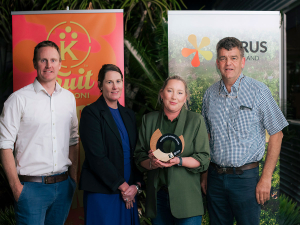
New Zealand's citrus growers were challenged to build their future on the value embedded in their fruit rather than the volume they produce, at Citrus New Zealand's annual gathering in Gisborne on 17 September.
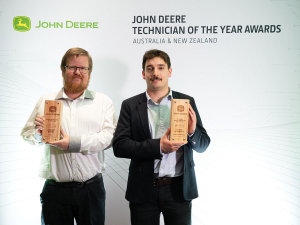
Leading John Deere technicians and apprentices from New Zealand and Australians were recognised at the recent sixth annual JD Technician of the Year Awards, held in Brisbane.
In Dacre, near Invercargill in New Zealand’s South Island, Bruce Dinnington is running a dairy operation unlike any other.
A free online platform aggregating governance vacancies across rural and regional New Zealand has been launched.
Environment Minister Nicola Grigg has announced details of a new rural plastics recycling scheme.
Agricultural drone operators say that a government decision to allow lower-risk drone work without certification won’t lower standards but drive innovation and efficiency.