
Rural NZ Welcomes $8.5m Government Health Package
Rural New Zealand is welcoming the Government’s recent package of rural healthcare initiatives.
 increase font size
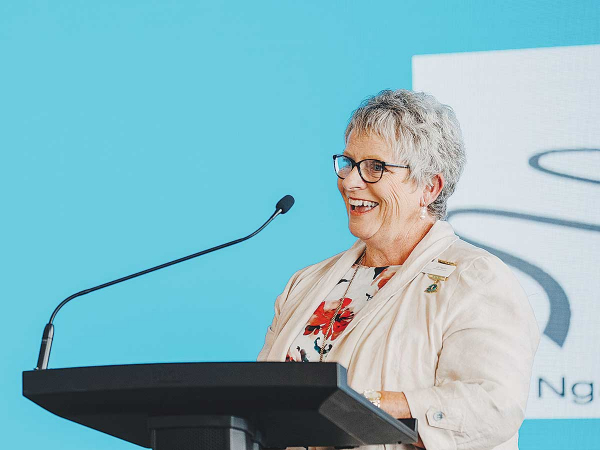 Rural Women New Zealand president Gill Naylor.
Rural Women New Zealand (RWNZ) say it is distressing to see rural communities suffer due to a lack of access to quality health services.
RWNZ president Gill Naylor says the health and wellbeing of rural communities is at risk of further deterioration if something is not done to resolve the issues facing people who live, work and play in rural New Zealand.
In June this year, a rural health strategy was added to the Pae Ora Healthy Futures legislation which came into effect last month. The strategy had been removed during the select committee phase but was added back into the legislation after Health Minister Andrew Little was convinced to add it by his party’s ‘rural caucus’.
Naylor says the challenges rural families face with access to health services are varied and include a lack of rural midwives, lack of rural nurses and GPs, lack of rural mental health services, delays in emergency services such as ambulances and long distances to travel for services like allied health and cancer treatment.
“Whilst we are pleased to see the Government commit to both a women’s health strategy and a rural health strategy – we are wanting to see resource and plans activated to ensure rural women and girls do not miss out on health needs because of their post code,” Naylor says.
She says one solution that has been spoken about is increasing the availability of telehealth, which RWNZ supports, but that will only work when rural communities have access to quality internet and phone service.
“We know the challenges are because of a mixture of business models which don’t suit rural communities and global challenges with the covid pandemic, staffing, and training, however the Government really have to take the lead by resourcing solutions.
“Rural communities are the backbone of Aotearoa New Zealand and deserve equity in the provision of health services.”
Rural New Zealand is welcoming the Government’s recent package of rural healthcare initiatives.

Celebrating 50 years in the rural landscape of Central Canterbury and beyond, Ashburton-based Carrfields, has been the exemplar for all aspects of modern agriculture via its extensive range of services including supply, growing, agronomic advice and marketing.
A huge reduction in ACC claims from on-farm accidents over the last five years is due to thousands of small, practical decisions being made in sheds, yards, paddocks and around kitchen tables across the country, says Safer Farms ambassador Lindy Nelson.
Deputy Prime Minister and ACT Party leader David Seymour says advocacy group Rural Women New Zealand (RWNZ) has submitted against a controversial bill without consulting its members.
Women up and down the country are the glue that hold rural communities together, giving so much to so many, says the inaugural Rural Woman of the year award winner Kate Acland.


New Zealand's citrus growers were challenged to build their future on the value embedded in their fruit rather than the volume they produce, at Citrus New Zealand's annual gathering in Gisborne on 17 September.

Leading John Deere technicians and apprentices from New Zealand and Australians were recognised at the recent sixth annual JD Technician of the Year Awards, held in Brisbane.
In Dacre, near Invercargill in New Zealand’s South Island, Bruce Dinnington is running a dairy operation unlike any other.
A free online platform aggregating governance vacancies across rural and regional New Zealand has been launched.
Environment Minister Nicola Grigg has announced details of a new rural plastics recycling scheme.
Agricultural drone operators say that a government decision to allow lower-risk drone work without certification won’t lower standards but drive innovation and efficiency.