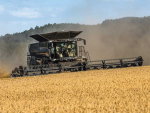
Pāmu and Meet the Need Launch Mince Recipe Cards for Food Banks
A partnership between state-owned enterprise Pāmu (Landcorp Farming Limited) and charity Meet the Need is putting more than quality New Zealand beef into food bank parcels this year.
 increase font size
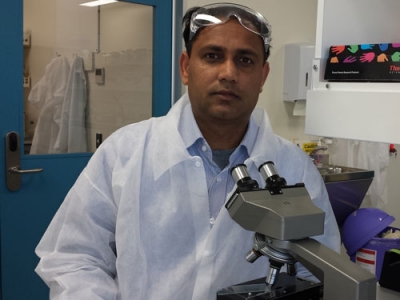 Dr Malik Hussain.
Complex and rapidly changing patterns in global food consumption, manufacturing, and retailing are creating a completely new range of problems in food safety, says a senior Lincoln University lecturer.
With commercial reputations on the line, the situation has prompted senior lecturer in food microbiology Dr Malik Hussain and his colleagues to organise a range of food safety short courses for industry professionals, with the first three courses starting in April.
The courses, run through the Department of Wine, Food, and Molecular Biosciences, will involve participation from industry experts from the likes of AgResearch and The Institute of Environmental Science and Research.
“Food is becoming very complex, and even a simple meal cooked at home or foods bought from the supermarket can easily contain ingredients from several countries or continents,” says Hussain
“This complexity, in what is also a highly competitive global industry, requires a sound understanding of what food safety means from ‘paddock to plate’. This is vital to protecting the health of consumers and the commercial reputation of food manufacturers.”
It’s a sentiment shared by associate professor Ravi Gooneratne, who notes how food safety is gaining global attention, mainly due to an increasing awareness of food poisoning incidents around the world.
“Food safety education and training is crucial for food scientists and staff across the whole food industry. Every member of the food supply chain has a part to play in food safety,” says Gooneratne.
“The rapid and detrimental effects on a company or country’s reputation from food safety issues should be obvious now.”
The industry courses in April include a basic two-day course in practical food microbiology, a one-day course in Hazard Analysis Critical Control Point (a globally recognised food safety system for safe food production), and a half-day course on meat product quality and safety and meat industry legislation.
“These professional development short courses are designed to provide meaningful training that can help industry professionals mitigate risk, but they are also open to members of the public with a general interest in the topic,” says Hussain.
More information on the courses can found at www.lincoln.ac.nz/dwfmb
A partnership between state-owned enterprise Pāmu (Landcorp Farming Limited) and charity Meet the Need is putting more than quality New Zealand beef into food bank parcels this year.
Speculation of a possible joint move by Fonterra and a2 Milk to buy Synlait raises a much bigger strategic question, says agribusiness expert Dr Nic Lees.
Testing confirms H5 bird flu in a single northern giant petrel, found dead on a remote Cape Palliser beach in the Wairarapa, says Dr Mary van Andel, the Ministry for Primary Industries' (MPI) Chief Veterinary Officer.
Lynnette Hudson's 30-year obsession with Pinot Noir was sparked working vintage in Burgundy, seeing how subtle changes in terroir were expressed in the glass. It was, she says, "an elightening moment in every way".
A four year trial has reaffirmed that mixing plantain into dairy pastures can help reduce nitrogen losses to freshwater while maintaining milk production and profitability, say researchers.

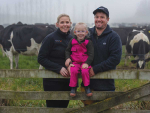
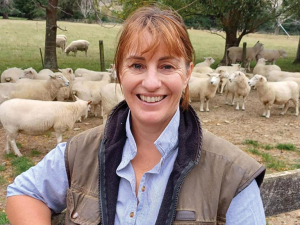
B+LNZ's Wormwise veterinarian Mary Bowron has won the Best Sheep and Beef Vet of the Year Award in recognition of her outstanding contribution to New Zealand’s sheep and beef sector.
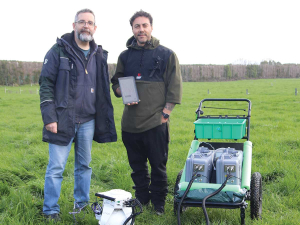
Researchers at Massey University are using a special piece of scientific equipment to improve the measurement of greenhouse gas emissions from pasture soils.
More signs of a booming kiwifruit sector.
OPINION: David Seymour and James Meager's plan to make it easier for farmers and orchardists to operate drones can best be described a 'courageous' move.
New Zealand wool is reaching new heights as air filtration companies move away from synthetic products to biodegradable alternatives.
Opuha Dam's ability to protect South Canterbury communities from major flooding has taken a significant step forward, with Opuha Water Limited (OWL) successfully commissioning a new outlet valve capable of releasing record volumes of water from the dam ahead of a weather event.