Massey Uses Portable Analyser to Measure Pasture Soil GHGs
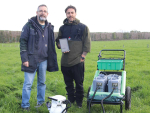
Researchers at Massey University are using a special piece of scientific equipment to improve the measurement of greenhouse gas emissions from pasture soils.
 increase font size
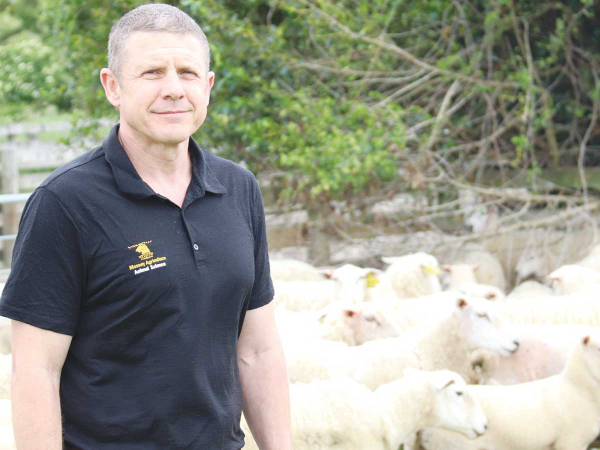 Professor Paul Kenyon
The industry is crying out for graduates with agricultural related degrees.
That’s the view of Professor Paul Kenyon, head of Massey Universities School of Agriculture and the Environment, who told Rural News that graduates from his school are in high demand by employers. He says some students who will graduate in October already have confirmed jobs.
He says those with ag related degrees have no problem getting jobs, especially if they are prepared to work in the regions and not the cities. Kenyon says the Ministry of Business, Innovation and Employment (MBIE) has done some modelling which shows that people with an agricultural or horticultural degree will, in their lifetime, earn a million dollars more than those who don’t have one of these degrees.
Kenyon says enrolments in the School of Agriculture and the Environment have risen steadily over the last three years and now stand at around 370. But he says the option of doing a degree by distance is now proving very popular and that about 40% of the students enrolled in courses are doing it this way, which he says makes perfect sense.
“If you live in the regions and work in an industry that you are passionate about, why wouldn’t you do your degree over five years rather than coming to the Massey campus full time?
“What we are seeing more of is people who have been out of school for a year or two taking the distance learning option. Those that come directly from school tend to do their degree full time at the university,” he says.
Kenyon says a significant number of those working in the horticulture sector go for the distance option, but they also get students in various agribusiness occupations doing this. He says gone are days when 10 years ago a significant number of the students that did ag, hort or agri business came from, and were going back to, a farm, orchard or garden.
“Now they are coming from right across the value chain, including some who are working on farms or orchards. There will be those who are working in the service industries such as exporting, banks and the like,” he says.
There is no formal time limit on how long a student has to complete their degree by distance, but Kenyon says the hope is that they would do this in about six years – double the time it would take a full time student to do the same degree.
To meet the changing needs of industry, Professor Paul Kenyon says in 2027 Massey is offering what is called a graduate diploma in either agriculture or horticulture.
He says this is aimed at people who already have a degree, such as accountancy, and are working for a company in the primary sector and who would like to gain a better understanding of agriculture or horticulture.
“So, they don’t want to do a whole degree, but they would like some upskilling. In which case they might do a set of second year horticulture courses and graduate with a diploma in horticulture. This will help them understand the ins and outs of the industry and what the drivers are, relating to productivity and profitability,” he says.
Kenyon says they may get support from employers but others may do it off their own bat.
Overall, there is an upsurge in young people looking to make a career in some aspect of the primary sector. This is already being reflected in secondary schools where there’s been a high demand for subjects in agriculture, horticulture and agribusiness.
Researchers at Massey University are using a special piece of scientific equipment to improve the measurement of greenhouse gas emissions from pasture soils.

Interest in agritech and production animal systems has prompted Massey University's School of Agriculture and the Environment to new majors to its popular animal science degree.
A four year trial has reaffirmed that mixing plantain into dairy pastures can help reduce nitrogen losses to freshwater while maintaining milk production and profitability, say researchers.
Special courses for secondary school teachers to help excite kids about agriculture and horticulture are now being run at Massey University.
Twenty five secondary school students from around New Zealand recently completed a three day residential programme designed to explore career opportunities across the food and fibre production supply chain.


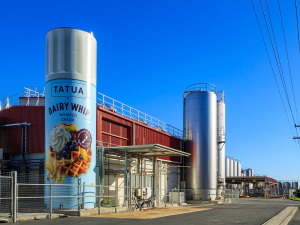
Waikato milk processor Tatua has again declared a record milk payout to farmer shareholders, leaving other processors in the dust.

A Labour-led Government won’t be bringing back the controversial freshwater rules of 2020.
National’s much-touted free trade deal with India featured in the Rural Issues Debate at Mystery Creek, Hamilton on Wednesday night.
New Zealand's 2026-27 freshwater fishing season has opened, with anglers encouraged to head to rivers and lakes over the coming days as conditions look favourable across much of the country.
Central Otago District Council (CODC) has voted against a plan to spread treated sewage sludge from Cromwell and Alexandra on farmland near Lauder, a decision Federated Farmers says reflects strong opposition from rural residents.
Pāmu has released its FY26 Integrated Annual Report, reporting a Net Operating Profit of $113 million, more than double the $49 million recorded in FY25.