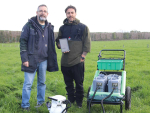
Massey Uses Portable Analyser to Measure Pasture Soil GHGs
Researchers at Massey University are using a special piece of scientific equipment to improve the measurement of greenhouse gas emissions from pasture soils.
 increase font size
 Professor Paul Kenyon
There's been unprecedented demand from secondary school students across the country to study agricultural related subjects.
The demand is so great there aren't enough secondary school teachers sufficiently qualified to teach these subjects, so Massey University, in conjunction with the Horticultural Agricultural Teachers Association (HATA), plans to run a series of courses next year to upskill existing and new teachers.
Professor Paul Kenyon, the head of Massey's school of agriculture and environment, says nationwide there are approximately 100 schools teaching agribusiness and 200 are teaching agriculture and horticulture in some form.
He says in the central North Island, schools are reporting that more students are taking agricultural subjects as opposed to some of the traditional science subjects.
"This is staggering and shows that people can see potential careers in the primary industries and therefore doing subjects at secondary school that will help them in career development and hopefully get them into a rewarding career," he told Rural News.
He says the courses Massey is planning will cover agribusiness, horticulture and agriculture and will be online and in modular form to enable teachers to do the courses in their own time.
He says they will amount to about 50 hours of learning and those doing these modules will be able to cross credit some papers to obtain a tertiary qualification. Some will also involve practical block courses run at Massey's Palmerston North campus.
The idea of running the courses stemmed from discussions between Professor Kenyon and his staff, and a small group of teachers who already run courses at their schools in all of the above subjects.
One of these teachers is Kerry Allen, secretary/treasurer of HATA, a curriculum advisor on agriculture, a teacher at St Paul's College and also part owner of a dairy farm with husband James.
She says the big problem in primary sector education is the lack of teachers who are qualified in that area and have wide understanding of the sector.
"We often have vacancies and we fill them with teachers who have passion for gardening or have three cows in their back yard, but they are not qualified horticultural, agricultural, agribusiness teachers. So we are trying to get keen and passionate teachers who have a teaching qualification and maybe a number of degrees and upskill them in the content knowledge," she says.
Allen says there are no courses available to teach the teachers about the detail around things such as livestock management or soils or other core areas relating to horticulture, agriculture or agribusiness - information which is required as part of the curriculum for these subjects.
Another teacher, Coadette Low, head of agriculture at Mt Albert Grammar School, says she's seen an increase in interest in the primary sector from students.
She believes this is because there are so many different career pathways and opportunities.
"Here at Mount Albert Grammar School, I have seen an increase in demand resulting in the need for three additional classes. Regardless of the number of students wanting to take the subject, they need a teacher in front of them, and providing these courses for teachers to upskill themselves in the subject is important," she says.
Low says the courses will increase the confidence and engagement of teachers, which in turn will benefit the students.
It's planned to pilot the courses in the next couple of months.
Kerry Allen says they will handpick a small group of teachers, with the objective of sorting out any potential problems, and then the courses will go live early next year and open to all teachers.
Coadette Low says the courses have been designed to allow teachers to 'pick and mix' what suits them best, because it's well known there isn't a one size fits all model when it comes to professional development.
Finally, Professor Paul Kenyon acknowledges that to date there has not been a lot of professional development for teachers in the ag hort space.
He says the courses will not only help the teachers themselves, but the teachers will be able to use some of that information in their teaching, so it will have a flow-on effect of improving the knowledge and experience of the students.
Researchers at Massey University are using a special piece of scientific equipment to improve the measurement of greenhouse gas emissions from pasture soils.

Kaikōura families affected by July's severe storm have found a practical solution to a problem that's kept some children away from regular schooling for weeks: a washed-out section of Inland Kaikōura Road, which has stopped the local school bus from running its usual route.
Interest in agritech and production animal systems has prompted Massey University's School of Agriculture and the Environment to new majors to its popular animal science degree.
The industry is crying out for graduates with agricultural related degrees.
A four year trial has reaffirmed that mixing plantain into dairy pastures can help reduce nitrogen losses to freshwater while maintaining milk production and profitability, say researchers.


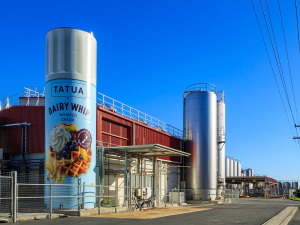
Waikato milk processor Tatua has again declared a record milk payout to farmer shareholders, leaving other processors in the dust.

A Labour-led Government won’t be bringing back the controversial freshwater rules of 2020.
National’s much-touted free trade deal with India featured in the Rural Issues Debate at Mystery Creek, Hamilton on Wednesday night.
New Zealand's 2026-27 freshwater fishing season has opened, with anglers encouraged to head to rivers and lakes over the coming days as conditions look favourable across much of the country.
Central Otago District Council (CODC) has voted against a plan to spread treated sewage sludge from Cromwell and Alexandra on farmland near Lauder, a decision Federated Farmers says reflects strong opposition from rural residents.
Pāmu has released its FY26 Integrated Annual Report, reporting a Net Operating Profit of $113 million, more than double the $49 million recorded in FY25.