NZ Red Meat Exports Hit $867m in August, Up 23%
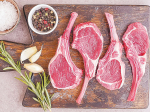
New Zealand's red meat and fifth-quarter exports reached $867 million in August, up 23% on the same month last year, as stronger returns lifted earnings across all major markets.
 increase font size
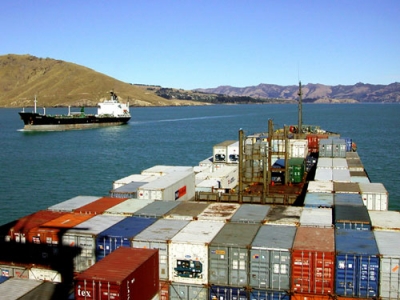 The value of goods exports to Australia surpassed those to China.
The value of goods exports to Australia ($8.7 billion) surpassed those to China for the year ended March 2015, says Statistics New Zealand.
This is the first time Australia has been our top export destination since the year ended November 2013, says international statistics manager Jason Attewell.
For the past five months, exports to China and Australia have both fallen, compared with the same month in the previous year. Falls in exports to China were larger than the falls to Australia.
Total goods exports fell $103 million (2.0 percent), down to $4.9 billion in March 2015 compared with March 2014. Exports to China fell $324 million (29 percent), due to whole milk powder. Exports to Australia fell $26 million.
Goods imports rose $169 million (4.1 percent), to reach $4.3 billion in March 2015. Consumption goods (including clothing) led the rise (up 19 percent).
In March 2015, the trade surplus of $631 million was down from the $904 million surplus in March 2014.
Excluding the re-export of a drilling platform to Singapore in March 2015, the trade surplus was $432 million.
For the year ended March 2015, there was an annual trade deficit of $2.4 billion (4.9 percent of exports).
This was the largest annual trade deficit since the year ended July 2009.
In the March 2015 quarter, the seasonally adjusted value of exported goods fell 0.6 percent ($70 million), down to $12 billion, compared with the December 2014 quarter. Imports fell 3.3 percent, to $13 billion.
The seasonally adjusted trade balance for the March 2015 quarter was a deficit of $490 million (4.0 percent of exports). Excluding one-off imports, the deficit in the December quarter was $623 million.
New Zealand's red meat and fifth-quarter exports reached $867 million in August, up 23% on the same month last year, as stronger returns lifted earnings across all major markets.

Meat Industry Association data, released alongside the Red Meat Sector conference in Wellington, shows export value climbing across the US, China, UK and Canada.
OPINION: The stats speak for themselves.
China remains New Zealand’s biggest market, taking $23 billion of our exports, but it’s no longer a commodity story, says Prime Minister Christopher Luxon.
Fonterra is strengthening its foodservice presence in China with the launch of a new cream for professional bakeries at Bakery China 2026 in Shanghai.



Federated Farmers has welcomed new rural policies released by ACT, saying they align closely with its own election priorities.

Rural Contractors NZ says proposed changes to land transport rules for agricultural vehicles are a welcome response by the Government to out of date regulations which have seen members hit with huge fines.
Alliance is calling for final applications for its 2027 Graduate Programme, with applications closing on Sunday 25 October.
Decades piloting planes has ensured vet and farmer David Hayes is focused on safety. So, after a serious accident while welding on farm, he is sharing his experience so others can learn from it.
Canterbury milk processor, Synlait Milk has confirmed Leon Fung as its chief executive officer.
OPINION: Making it easier to collect rainwater and use it to grow crops and livestock is a no brainer.