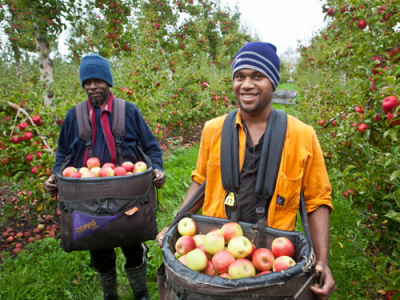
More labourers from the Pacific Islands are coming to work on New Zealand orchards.
The Government has announced that the Recognised Seasonal Employer (RSE) scheme cap will increase by 1,750 to 12,850, providing much-needed labour for the horticulture and viticulture industries.
“New Zealand’s RSE scheme is a ground-breaking initiative introduced by the previous Labour Government in 2007, helping meet labour shortages in some of New Zealand’s most important industries while providing economic support to our Pacific neighbours,” says Immigration Minister Iain Lees-Galloway.
The horticulture and viticulture industries have experienced significant growth in recent years. Industry reports say that since 2015, apple and kiwifruit orchards have increased in value by around 70% each, and the 2018 wine vintage was 2.6% larger than the previous year.
“However this growth has been accompanied by prominent labour shortages across industries and regions, notably in the past year.
Lees-Galloway says this is expected to continue, with growers forecasting 2600 more workers are needed to help support the industry.
Horticulture New Zealand has welcomed the announcement.
"Horticulture is growing rapidly and, combined with wine, we are an industry earning more than $8.8 billion, this includes more than $5.1 billion of exports," Horticulture New Zealand chief executive Mike Chapman says.
"While kiwifruit and apples are the most sought after, we are seeing huge growth in demand for avocados and cherries, as well as some berries,” he says.
Harvest and pruning are intensive periods that require about 30,000 workers; about one-third of these workers come from the RSE scheme. It is a mature scheme which sees workers come from the Pacific Islands for set periods of time.
The Recognised Seasonal Employer (RSE) scheme was announced in October 2006 and came into effect in April 2007.
The policy allows the horticulture and viticulture industries to recruit workers from overseas for seasonal work when there are not enough New Zealand workers.
RSE workers are mostly from Pacific nations, benefitting from income and training opportunities offered by the scheme.